 2002 was probably one of the greatest years for performance excellence in film history, from leading actor right through all the supporting players. They could have easily nominated 10 actors in each of the four acting categories, and still missed some.
Though Adrien Brody won the Oscar for “The Pianist,” which was a huge shock, I have always felt that Jack Nicholson gave one of his finest performances in “About Schmidt.” I suspect he and Daniel Day-Lewis in “Gangs of New York” may have split the vote in some way, allowing for Brody’s win.
Michael Caine was up for “The Quiet American” after that film scored with critics at many precursor fests, and Nicolas Cage was the fifth nominee in “Adaptation.” Great performances all, deserving performances all, but there were so many other noteworthy turns. Like Robin Williams’s chilling performance in “One Hour Photo” as a deranged photo lab worker obsessed with a family. Equally brilliant was Leonardo DiCaprio as the young fraudster in “Catch Me If You Can” while Tom Cruise gave one of his very best performances in Steven Spielberg’s “Minority Report.”
One of the year’s very best films, “Road to Perdition,” contained one of the year’s best leading performances from Tom Hanks, as a lethal killer on the run from his own mob. And though I loathe the work of Richard Gere, I must confess he did some of his finest work in “Chicago,” winning a Golden Globe for his performance, but no Oscar nod.
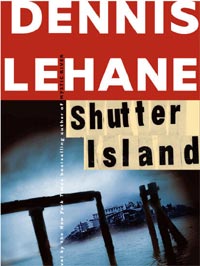 Deep into Dennis Lehane’s 2003 novel noir “Shutter Island,” there’s a wonderfully telling exchange between the two central characters. Reflecting on the gothic heights to which their situation has spiralled, one observes, “It’s all a bit Grand Guignol, don’t you think?” His partner’s reply: “I don’t know what the fuck that means.”