In Contention

Tag: Laurence Olivier

  • On acting

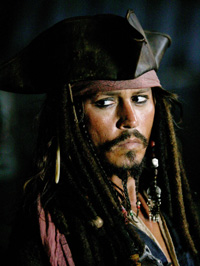
    Johnny Depp in Pirates of the Caribbean: The Curse of the Black PearlWhat constitutes a great performance?  What makes it something that puts it head and shoulders above the rest?  What does an artist do to go to that level of art and achieve something that is both extraordinary and rare?

    Does the Academy, or rather the branch that nominates the actors, look as closely at performance as critics do?  Is a performance considered great because it is an Oscar-winning piece of acting or nominated for one of the acting prizes?

    An actor reads a script and likes both the character he or she is being offered and the story on the page. The actor accepts, and begins (we hope) work on the character.  A year or so later, after shooting and cutting the film, on the screen in front of us the actor’s work will be seen and judged, commented on, praised, perhaps showered with accolades or negative comments, perhaps winning an Oscar or a Razzie, maybe becoming discussed for years to come, or forgotten moments after seeing it.

    I doubt, seriously, that an actor accepts a role with any of that in mind. Perhaps I am overly idealistic, but I hope actors accept roles because they are trying (always) to evolve as an artist, to discover something different in their acting and themselves, and to do something they have never done before. Of the many actors I have interviewed over the years, most of them take a role based on something that speaks to them in the screenplay.

    Meryl Streep once told that me she seeks something that “touches my soul” while Robert Duvall looks for a character that is “real, something that will challenge me, but he has to be real.” Tom Cruise said he “likes to try different things each time out, and hopes he does the part justice”, while Hilary Swank looks “for something that speaks to me, as though the character were whispering to me.”
    (more…)

  • Respect for The Duke

    In light of Kris’s recent westerns piece, I thought it might be worth it to give some space to what I believe to be one of the most underrated actors of all time.

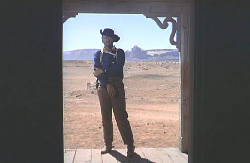
    Cinematical recently carried a marvelous article on John Wayne, supporting the belief that the screen legend was an exceptional actor (in the right role) and that perhaps Hollywood and the critics had not given him his due while alive.  Certainly his work was appreciated by audiences, who made him the top box office star for more than 20 years.

    I grew up watching Wayne and even defended him as an actor some time ago to a very skeptical university professor.  Using the actor’s performances in “The Searchers” and “The Shootist,” I wrote my paper and received an “A.” I figured I must have proved my case. But my professor passed me in the hall a year or so later and told me I had converted him to the Duke, and he had now seen many more of his films.

    Obviously part of the issue had been just that: he had not seen all of Wayne’s work — and he was more than a little attached to Sir Laurence Olivier (in my opinion the most overrated actor in the history of the cinema). But you could always see Olivier acting, working the trade.  I defy you to catch the Duke mugging.

    While Wayne often portrayed a variation of what audiences perceived him to be in real life, there were characters that challenged him as an actor and allowed him to stretch. Though he won the Academy Award for his jaunty performance as the tough old one-eyed geezer in “True Grit,” he certainly should have won for his raging Ethan Edwards in “The Searchers” and been nominated for at least a half dozen others.

    (more…)

  • 1976: a great year and Oscar blew it

    Continuing the conversation on great years for movies (1974 being my pick for the best), I thought I’d dig into a season rich with material that slipped through Oscar’s fingers.
    The American bicentennial year was loaded with wonderful films — ground-breaking works that stunned both audiences and critics with their mastery. Three of them were nominated for Best Picture, some of the others were not, yet the eventual winner was a low budget love story about a boxer that wanted to prove he wasn’t just another bum from the neighborhood.

    The true greats of 1976:

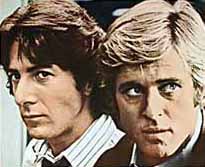
    “All the President’s Men”

    Alan J. Pakula’s superb adaptation of the Pulitzer Prize-winning book written by Bob Woodward and Carl Bernstein about their investigation of the Watergate burglary was born out of an astonishing script by William Goldman. Making sense of the politics within a dense book, incredibly detailed, Goldman’s work had the good sense to make the film a detective-like thriller with well-defined characters.

    This could have been a dull, political film made to exploit the happenings in the United States at the time, but Pakula instead made one of the great films about journalism in the days before the Internet and e-mail. Robert Redford bought the rights to the book and produced the film, starring as Woodward, with Dustin Hoffman as Bernstein, both giving exceptional performances, but it was Jason Robards who blew them off the screen with his excellent performance as the crusty, wise, and ultimately loyal Washing Post editor Ben Bradlee.

    (more…)

  • Where have you gone, Al Pacino?

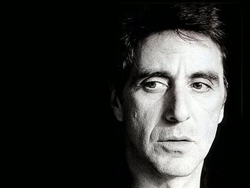
    It has been more than 30 years since Al Pacino gave his career-defining performance as cold blooded Michael Corleone in “The Godfather Part II.” He radiated quiet danger the moment he appeared on screen without ever raising his voice or allowing his mouth to wrap its way around words and spit them out like venom.

    While a one-two punch of “88 Minutes” and “Righteous Kill” slithers its way to theaters this year, audiences are reminded once again that one of the cinema’s all-time legends has immersed himself once again in either sub-par material or, as has become his cliche, the tendency to overreach and overact on his way to becoming a walking spoof of himself.

    There was a time when Pacino was thought of as one of the greatest American actors in movies…period. His work in the 1970s was nothing short of sublime, with strong performances in “The Godfather,” “Serpico,” “Scarecrow,” the aforementioned sequel to Coppola’s study of La Cosa Nostra and “Dog Day Afternoon.” In the latter he gave his most electrifying and properly energized portrayal.

    Along with many of the fresh-faced actors of the day, Pacino owned the decade. Sure he faltered with “Bobby Deerfield,” which meant he was not the type for romantic films…right? Or was this his limitations beginning to become apparent?

    (more…)