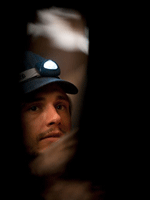
 I’m afraid you’ll find that I’m having trouble getting all that excited about this year’s race for Best Film Editing. How can I when the absolute best editing job of the year (from a true master, no less) was shunned altogether, while a cruel joke was played in the form of “Inception” editor Lee Smith getting the shaft, too.
The below is a decent set of contenders with an array of virtues. It’s just a shame that the editor’s branch is so slavishly devoted to Best Picture frontrunners, especially when truly exceptional work that doesn’t necessarily find itself dovetailing with Oscar bait is ignored each and every year. Nevertheless, the statistic remains: in 30 years, no film not nominated here has gone on to win Best Picture.
The nominees are:
“Black Swan” (Andrew Weisblum)
“The Fighter” (Pamela Martin)
“The King’s Speech” (Tariq Anwar)
“127 Hours” (Jon Harris)
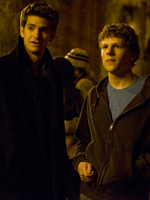
“The Social Network” (Angus Wall and Kirk Baxter)
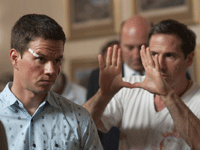
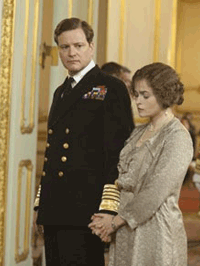 Yesterday I began a final look at the crafts categories. Today, a look at the four remaining fields: Best Art Direction, Best Cinematography, Best Costume Design and Best Film Editing.
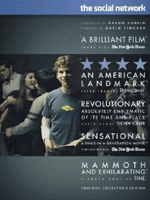 Sony pulled out all the stops last night with a big to-do soiree on behalf of the DVD/Blu-ray release of
 One of the immediately striking things about Aaron Sorkin’s screenplay for
 So important but so hard to notice. That’s how I would describe the work of our best film editors – those cutting artists who blend and juxtapose frames together to make films coherent, establish a flow and also set the mood in a manner that suits the screenwriter’s words and the director’s vision.
 The press release, in part:
 The best films are rarely about just one thing, but rather that one thing as reflected through a variety of narrative prisms. And there is something to be said about a film that manages to distill an era while profoundly conveying a character study within.
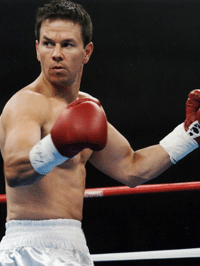 I still remember when I was 12 and getting into the Oscars for the first time. My Dad said, “How can you tell if the film has good editing?” To a very large extent, I had to concede his point, as the best editing is often that which we don’t explicitly notice. Rather, it simply “becomes” the film as we become immersed in what is on the screen, not remembering that everything was staged from different angles on different days.
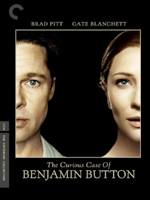 The Criterion release of David Fincher’s “The Curious Case of Benjamin Button” is a superlative piece of home entertainment to say the least, especially on Blu-ray. Claudio Miranda’s photography was absolutely gorgeous as it was in cinemas, but being largely digital, the transition to high definition is seamless and probably belongs in the top tier of Blu-ray releases thus far from a visual standpoint.
 Yesterday was the first of our two-part look at the crafts artists behind “The Curious Case of Benjamin Button.” Today, I feature conversations with cinematographer Claudio Miranda, visual effects supervisor Eric Barba and film editors Kirk Baxter and Angus Wall, who have all received Oscar nominations for their work on the film.