In Contention

Tag: Kathy Bates

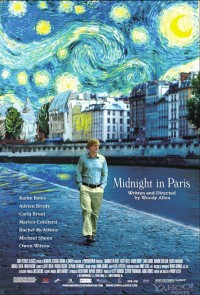
  • REVIEW: “Midnight in Paris” (**1/2)

    Cannes Film Festival
    Opening Night

    “The past is a foreign country: they do things differently there.” Nobody actually quotes L.P. Hartley in “Midnight in Paris,” Woody Allen’s often charming if largely over-explicated ode to the healing and deceiving properties of nostalgia. If they don’t, however, that could just be because a spring breeze stole the last few pages of the script at some point on the shoot of this amiably unfinished choux-pastry film, and Allen didn’t feel much like rewriting them.

    Up until that point, Allen hasn’t exactly shied away from obvious references or externalized subtext — this is a film that trades in emphatic cultural and historical caricature, a picture-book approach that will delight some viewers even as it strikes others as aggravatingly twee, but one Allen commits to with the take-it-or-leave-it dispatch of a 75 year-old master working in quick-sketch mode.

    Either way, the tourist-style filmmaking that surfaced in such recent Allen films as “Match Point” and “Vicky Cristina Barcelona” feels more thematically motivated in “Midnight in Paris,” a study of a character not merely a traveller in his physical surroundings, but his generational ones too. I kept wondering if the film’s narrowness of perspective was that of Allen or Owen Wilson’s Allen-substitute protagonist, and what textual difference the distinction even makes.
    (more…)

  • The Great Performances: 1998

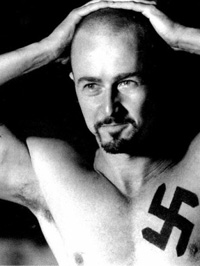
    Edward Norton in American History XFor all my bitching about Roberto Benigni winning Best Actor in 1998 for his incessant mugging in “Life is Beautiful,” I was also thrilled the Academy watched enough films and paid enough attention to realize that Edward Norton was deserving for his magnetic turn as a neo-Nazi who sees the light in “American History X.” Norton was electrifying as Derek, the charismatic leader of a group of skinheads, handpicked by the older gentleman, played with menace and sleaze by Stacey Keach, who believes in what Hitler taught and seeks to spread the word to the youth of California.

    Norton gave the best performance by an actor I saw in 1998, but the Academy got caught up in the groundswell of support of Benigni’s movie, a fable set in a death camp. I’m not a fan, either of his overwrought, over the top performance, or the film itself. No rant, you all know what I think there.

    That said, there was a bounty of great male performances in 1998, many of which went unnoticed by the Academy. They did their best to get it right, though.  Joining Norton and Benigni for nominations were Nick Nolte in “Affliction,” Ian McKellen, superb in “Gods and Monsters,” and Tom Hanks as the weary soldier in Steven Spielberg’s magnificent “Saving Private Ryan.”

    Not even nominated, however, were Warren Beatty for his brilliant turn as the truth-talking senator in “Bulworth,” Joseph Fiennes in Best Picture winner “Shakespeare in Love,” Jim Carrey in “The Truman Show,” George Clooney in “Out of Sight,” Brendan Gleason in “The General” and John Travolta in “Primary Colors” or “A Civil Action,” take your pick.  And perhaps the most deserving of all: Jeff Bridges as The Dude in “The Big Lebowski,” the actor’s finest work, in my opinion.

    Each of the aforemenetioned men gave stronger performances than the eventual Oscar winner, yet failed to nab a nomination.  Jeez!

    (more…)

  • As Ganis prepares to exit, AMPAS searches for a new president

    Sid GanisAs you know, Sid Ganis will close out his fourth-straight one-year stint as president of the Academy of Motion Picture Arts and Sciences in a matter of months (he’ll be packing up his stuff in August).  “If history is any guide,” Michael Cieply writes in this Carpetbagger item, “some deeply internal glad-handing and politicking will be underway in a month or so, as the world’s most glamorous deliberative body decides who will next sit in the big seat.”
    As Cieply notes, the Academy president is decided by and from its board of governors.  He offers up his own best guesses for who might win those “several seconds of annual face time” on the yearly Oscarcast.  After rattling off a list of names like Tom Hanks (could move the ratings meter with the right PR), Kathy Bates (ditto, to a lesser degree), Kathleen Kennedy (producer extraordinaire), Robert Rehme (a former president with lots of fans, Cieply says), Hawk Koch (another producer), he comes to this somewhat more plausible scenario (as I see it):

    Another wild card might be Ed Begley Jr., whose face is not quite as familiar as that of Mr. Hanks, but who would bring a little star power to a post that has lately been occupied by off-screen types like Mr. Ganis, who is a producer, or Mr. Rehme, who is the same, or Frank Pierson, who has done his share of producing, but is probably better known as a writer of films like “Cool Hand Luke” and “Dog Day Afternoon.”

    Whatever happens, you can bet the decision will take some level of publicity into consideration.  How could it not?  I’m sure 99% of the viewing audience has stopped and wondered aloud, “Who the heck is that Guy?” when Ganis graced Oscar’s stage to give the usual AMPAS spiel the last four years.  We’re not all obssessed with this nonsense, after all.

  • REVIEW: “Chéri” (***)

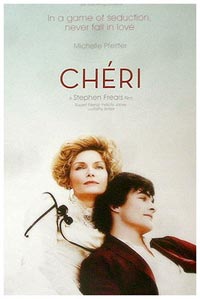
    CheriMy first thought on leaving the theatre after watching Stephen Frears’ crisp, elegantly turned new effort is that it is, in many ways, a consummate Frears film. My second thought, however, ran counter to the first: it has, over the years, become increasingly difficult to define what “a Stephen Frears film” might be.
    We are talking about a filmmaker, after all, who deals in polarities, following up the broad music-hall frivolity of the ghastly “Mrs Henderson Presents” with the austere docu-realism of “The Queen,” or a glib studio bauble like “Accidental Hero” with the jagged domestic comedy of “The Snapper.”

    The uncharitable could call Frears something of a dilettante, subsuming his own long-term artistic preoccupations beneath a veneer of versatile professionalism. That, however, would be to miss the keen emotional detail and bone-dry irony that lace themselves through all of Frears’ best work.

    Whether he finds them in a Chicago record store or an 18th century French chateau, Frears dissects his characters with an amused, academic precision that inevitably reveals the Oxbridge intellectual he is – and it’s a sensibility that meshes beautifully with the prose of Colette, who in 1920, wrote “Chéri” in much the same tartly tragic register that Frears and screenwriter Christopher Hampton tell it. (I discussed the novel in greater depth here.)

    Contrary to the shrill period rom-com that the trailer appears to be pitching it as, “Chéri” remains a cutting, economic study of love thwarted by the twinned obstacles of aging and social expectation. Painstakingly mapping the end of the affair between the eponymous 25 year-old playboy (Rupert Friend) and Léa (Michelle Pfeiffer), the world-weary courtesan twice his age, it becomes something of a dual coming-of-age story, as the lovers are forced to accept the indignities of adulthood and middle age, respectively.

    (more…)

  • PAGE TO SCREEN: “Chéri” by Colette

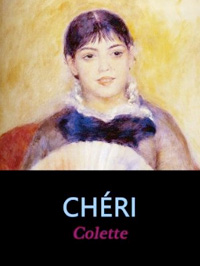
    Cover of Cheri by ColetteMerely casual acquaintances of French literature will likely associate the name Colette with her short story “Gigi” – or rather, the flouncy musical film adaptation thereof that swept the board at the 1958 Academy Awards. A sunny, sanitized interpretation of an intricate study in sexual politics, it captured the author’s sensibility in its lavish set-dressing, but little else.

    I doubt 1950’s Hollywood would have known where to begin with “Chéri,” a darker portrait of the louche demimonde of Parisian courtesans – and we are close to finding out if they do even now. Certainly, those who approach the novel with the jolly peals of laughter from the meringue-light trailer for Stephen Frears’ upcoming film still ringing in their ears, may be taken off-guard by the elegiac, often cruel comedy of manners that awaits them.

    Though “Chéri” is a slender, subtle volume, it’s easy to see what drew Frears and screenwriter Christopher Hampton to the material. Much like their previous collaboration, 1988’s “Dangerous Liaisons” (and other Hampton works such as “Atonement” and “Total Eclipse”), this is a story of sexual awakening gone awry — which is not to say that the novel lacks for romance. Amid the rueful cynicism lies a rather tender love story between two people who only realize they are in love a full six years into their relationship.

    The affair between Fred, an aimless 25 year-old dandy known to all by his family nickname Chéri, and Léa, a wealthy courtesan twice his age, is introduced in the novel as a pragmatic transaction: the beautiful yet increasingly insecure Léa feeds vicariously off her lover’s youth, offering material rewards and a sexual (if not sentimental) education in exchange.

    As such, “Chéri” is truly a coming of age story, a gender-reversed “Pygmalion” even, in which an older, more worldly woman grooms a boy for marriage, before releasing him into gentlemanly society. The twist comes when, the ink barely dry on the certificate of his marriage to sweet, shy debutante Edmée, Chéri discovers that carnal and sensual affections are not merely transferrable between different women. Léa, meanwhile, having undertaken this schooling for multiple men in her career and living by the philosophy that “being disinterested is its own reward,” realizes that she’s more emotionally invested in Chéri’s maturation than she knew at the time.

    (more…)

  • A promising start for ‘Chéri’

    If it isn’t quite the unanimous chorus of approval one might have hoped for, there’s still enough praise for Stephen Frears’ latest film “Chéri,” which premiered in Berlin last night, to mark it as a potential 2009 contender in several areas — among them, Best Actress for Michelle Pfeiffer’s much-anticipated return to dramatic roles. (Thanks, of course, to the ever-diligent Nat Rogers for the heads-up.)

    The Hollywood Reporter’s Kirk Honeycutt is absolutely besotted with the film, gushing that there is “no false moment or off-key note” in the entire production:

    Stephen Frears never makes the same movie twice. What he does do though is make thoroughly professional and immensely entertaining stories that pay particular attention to characters, their flaws, emotions and deepest desires. In “Cheri,” he has another dandy. Whether it will travel as far as his last film, “The Queen,” is hard to say, but with a radiant Michelle Pfeiffer as his heroine, “Cheri” could well be another breakout hit.

    The chemistry between Pfeiffer and (Rupert) Friend is positively combustible. One feels the hunger in each, the rising physical passion and emotional vulnerability in two people who, if asked, would scorn love as a human weakness. The film is in English, of course, but it can’t escape a certain Frenchness: Those who would mock love are done in by love.

    There is also, predictably, much praise lavished on the film’s scrumptious-looking tech credits, with top honours going to Alexandre Desplat’s “nostalgic, romantic, melancholy score.”

    (more…)

  • A film that sticks — why ‘Revolutionary Road’ is a masterwork

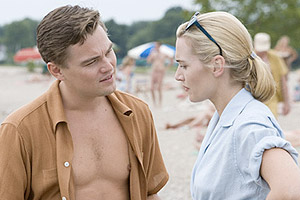
    Leonardo DiCaprio and Kate Winslet in Revolutionary RoadGENTLE SPOILERS WITHIN — READ WITH CAUTION

    Fear of change, fear of risk.

    “If you don’t try anything, you can’t fail,” she tells him, striking at the heart of what has him so afraid of uprooting their family to Paris in the hopes of a better way of life.  Frank Wheeler is terrified of change, but his wife April longs for it.  She needs change to survive as a person, as a wife, believing, wrongly perhaps (perhaps not), that change will help her marriage and better define her place in it.

    The characters in “Revolutionary Road” are in agonizing pain as they go about their daily lives, each trying to keep their marriage intact while also trying to live out their dreams.  Deep down, they must know their dreams have to be sacrificed to a degree.  Way down in their gut, they must know their dreams may never come true, and it is quietly destroying them.

    Is “Revolutionary Road” a classic American film destined to be remembered for decades to come?  Or is it merely an over-praised, depressing work that will be forgotten once it hits DVD, a bizarre blip on the careers of the creators?  I tend to believe the former.  It is a sublime work of art and a demanding piece of cinema that takes audiences on a difficult journey through a rocky relationship that, for me, resembles the young years of George and Martha in Edward Albee’s “Who’s Afraid of Virginia Woolf?”

    (more…)

  • How about some SAG predictions?

    Screen Actors Guild awardWith tomorrow’s SAG announcement hovering, waiting to be the first true litmus test of what the industry thinks of the year’s product (being the first guild out of the gate), I thought I’d take a stab at predictions, fit with alternates for old times’ sake.
    I think this will be the first real trial for a film like “The Dark Knight,” virtually assured a nomination for Heath Ledger in supporting actor, but will the ensemble be taken seriously enough?  Better yet, can another of the film’s cast, like, say, Gary Oldman, show up with a surprise mention?

    Meanwhile, Kate Winslet has been coasting with critics’ nomiations for her performance in “The Reader,” but I’m not completely sold yet.  It’s a great portrayal, but that’s a stacked category that could go a number of ways.  Still, the SAG tends to correctly anticipated the Academy’s list of nominees in both actress categories, so when the names are called tomorrow morning, start locking them away and taking them to the bank.

    Speaking of Winslet, “Revolutionary Road” could really use another shot in the arm.  A nomination for Best Ensemble is somewhat crucial, I think, and would be indicative of deep support for the film from the actors, many of which share membership in AMPAS.  I could see anywhere from five nods (including an ensemble bid and notices for Michael Shannon and Kathy Bates), to a mere two (for Winslet and co-star Leonardo DiCaprio).

    One last note, I’m going out on a limb by predicting a Clint Eastwood snub.  I’m probably wrong but the actor’s fellow thesps didn’t vouch for him in 2004 when the Academy did, so it could play out similarly this year.  We’ll know in due time.

    For now, here’s how I see things panning out:

    Best Actor
    Leonardo DiCaprio, “Revolutionary Road”
    Richard Jenkins, “The Visitor”
    Frank Langella, “Frost/Nixon”
    Sean Penn, “Milk”
    Mickey Rourke, “The Wrestler”
    (alt.: Josh Brolin, “W.”)

    (more…)

  • Oops…sorry Kathy

    I just realized that in this morning’s chart update, I forgot to add Kathy Bates to the list for her performance in “Revolutionary Road.”  She is most definitely in the running.  Next week.

  • OFF THE CARPET: Getting to know you

    Leonardo DiCaprio and Kate Winslet in Revolutionary RoadThis is the first season I can think of, at least since I’ve been covering this crazy beat on the west coast, that studios have become so terrified by the media that guild screenings are preempting press screenings with such consistency.

    Some have whined about “The Curious Case of Benjamin Button” screening for SAG 10 days before the media at large gets a look (with the usual brand of entitlement that turns the stomach).  Others actually snuck into the screening, surely freaking out a few publicists desperate to unfold the film at their own pace (and the pace dictated by the meticulous David Fincher).  I’m just waiting.

    Plenty have taken the altered ending story behind “Australia,” not to mention the film being held from the press until two weeks before it opens, as a sign that the movie is in trouble.  I’m just waiting.

    Lots of anticipation has suddenly been blown into “The Reader”‘s previously deflated balloon.  I’m just waiting.

    But I have to say, seeing a couple of the year’s contenders last week with big industry audiences proved to be just the breath of fresh air this incredibly stifling season needed.

    (more…)