In Contention

Tag: Julia Roberts

  • 1/6 OSCARWEB ROUND-UP: Roberts stumps for Bardem, ‘Valentine’ as class commentary, Affleck’s ‘Town’ inspirations

    • Julia Roberts’s Oscar plea for”Biutiful” star Javier Bardem. [Inside Movies]

    • Patrick Goldstein on “Blue Valentine” as a meditation on the class divide. [The Big Picture]

    • Ben Affleck on “The Friends of Eddie Coyle,” “Amores Perros,” “Breaking Away” and “Heat” as inspirations for “The Town.” [The Envelope]

    (more…)

  • FRIDAY FORECAST: Nerdgasm!

    *All historical figures cited are adjusted to today’s dollars.

    If you are a nerd, this is the weekend for you. It doesn’t matter if you’re an action movie nerd, video game nerd or self-help nerd, Hollywood has you covered. All in all, it’s an abnormally stacked August weekend with three films that all have breakout potential and is especially baffling when you look at the shitshow of titles nobody cares about just seven days away.

    Of the three openers, Lionsgate is going the widest with “The Expendables.” First off, no matter what happens, this will be profitable for the studio since they just bought the distribution rights from Millennium Films, who actually financed the thing. Lionsgate pulled a similar move with “Rambo” and saw that film open with $20.1 million and tap out at $47.3 million. For an ultra-violent sequel to a franchise dead longer than most of our readers have been alive, all were pretty satisfied.

    Expectations are amped up for “The Expendables,” since a bunch of other old guys with muscles are in it. Count me among those not buying the hype that Steve Austin, Terry Crews and Dolph Lundgren add significant interest among any crowd of patrons. Cameos from Schwarzenegger and Bruce Willis have been shamefully advertised and that will dupe a few old timers into thinking there’s something special here, but that trio didn’t really help Planet Hollywood from epic failing. I think a strong Friday will lead to a $32 million weekend and it free falls from there.

    (more…)

  • Can we ‘Eat’ yet?

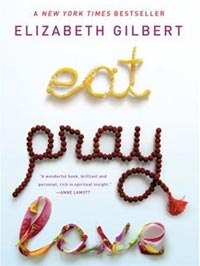
    For a major star vehicle, directed by the current ruler of prime-time television, that is only four days away from release, shouldn’t the profile of “Eat Pray Love” be a little higher right now? I admit I’m on the wrong side of the Atlantic; perhaps American streets, magazines and airwaves are flooded with promotional material for Ryan Murphy’s adaptation of  Elizabeth Gilbert’s chick-lit smash. But the film’s online presence seems decidedly muted, while reviews of any sort have yet to appear. What gives?

    Usually, when critics are kept from seeing or writing about a film until this late in the game, it’s because the product smells decidedly iffy. But that’s hardly the case with “Eat Pray Love”: the source material has a devoted following, the talent involved is top-flight, and the trailer was attractive and thoroughly ingratiating.

    As I made clear in a Page to Screen column recently, I detested Gilbert’s fussy, solipsistic memoir, yet the trailer’s promise of airy romance, luscious scenery and Julia Roberts at her most personable had me pegging the film as one of this summer’s most inviting; if it could win me round, the book’s legions of fans should practically be queuing at the theaters already.

    (more…)

  • PAGE TO SCREEN: “Eat, Pray, Love” by Elizabeth Gilbert

    (Apologies for the delay in posting this column. Page to Screen will return to its regular Tuesday spot next week.)

    Chick-lit, the unflatteringly named brand of light confessional writing intended to universalize the problems of modern professional women, has been a beast of a publishing phenomenon since the near-simultaneous arrival on the scene of Helen Fielding’s “Bridget Jones’s Diary” and Candace Bushnell’s “Sex and the City” in the late 1990s.

    Marked by clear Transatlantic cultural differences, those volumes were nonetheless linked by their semi-autobiographical nature, their urban media milieu, a similar issue slate of sex, career, mild vice and the ongoing hunt for Mr. Right/Darcy/Big and a tone of chatty journalese – both, after all, were spinoffs of popular newspaper columns.

    They also have one other crucial thing in common: massively successful screen translations that continue to bear fruit. A third big-screen Bridget Jones outing is currently in the works, and you may have heard something about a film called “Sex and the City 2” this summer.

    In Fielding and Bushnell’s wake, then, have come a legion of female writers and journalists converting their personal experiences into bestseller status and swift deals with Hollywood: the success of such titles as “The Devil Wears Prada,” “Julie & Julia,” “Confessions of a Shopaholic,” and the male co-authored “He’s Just Not That Into You” hardly discourage the trend. (You could even argue for last year’s “An Education” as an arthouse twist on the formula.)

    (more…)

  • Know your limits, get an Oscar

    Sandra Bullock in The Blind SideVulture’s Bilge Ebiri has written a nice piece on the circumstances that have led to Sandra Bullock becoming the year’s unlikeliest Oscar contender, citing Bullock’s 2009 achievements as a “primer” for comic actors seeking serious Oscar consideration. And the key, it seems, is not taking the word “serious” too much to heart.

    Last month, I wondered why Bullock was gathering Oscar traction this year for a relatively unprestigious film, when a credible dramatic turn in 2005’s Best Picture winner garnered her no awards attention whatsoever.

    But while against-type casting can often reap Oscar benefits, Ebiri argues that actors like Bullock fare better when they don’t veer too far from their established screen persona. Her “Blind Side” character, he claims, does just the right level of tweaking:

    Leigh Anne Tuohy may be a real person, but she’s not the kind of historical or ripped-from-the-headlines figure that usually attracts awards … After misfires like In Love and War, Bullock learned that maybe she wasn’t cut out to play these kinds of parts. So, in The Blind Side, she takes a character who displays some of the all-American spunk and energy of her own onscreen persona and gives it a more serious twist. She doesn’t try to “lose herself” in the part; moviegoers can recognize the Sandra Bullock they know and love in Leigh Anne.

    (more…)

  • The Great Performances: 2004

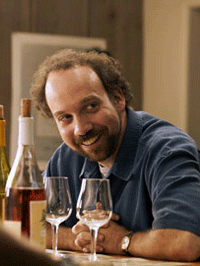
    Paul Giamatti in SidewaysIn Alexander Payne’s “Sideways,” Paul Giamatti gave the best performance by an actor in 2004, so said the New York Film Critics Circle, and how right they were.  So why, why, why was the actor denied an Oscar nomination?  Granted, it was a strong year, but his work was at the top of that heap and that snub was one of the biggest shocks of the year.

    Here was a man giving perhaps the finest performance in a comedic film since Dustin Hoffman in “Tootsie.” His co-stars go were recognized, save for the equally deserving Sandra Oh, but the leading man, around whose performance the film stands, is snubbed.  All I can remember saying is: “Wow.”

    Certainly Jamie Foxx deserved the attention he received for “Ray” and Leonardo DiCaprio was astonishing in “The Aviator,” even though he drew some criticism for before too youthful in the role. Rubbish, I thought.  He was superb, inhabiting Howard Hughes as he must have been in those days, brash, cocky, wealthy and willing to do anything that interested him.

    Clint Eastwood was terrific in “Million Dollar Baby,” while Jim Carrey gave a wonderful performance in “Eternal Sunshine of the Spotless Mind” — a marvelous piece of acting, in fact.  Equally fine, and dark, was Kevin Bacon as a pedophile struggling to start anew in “The Woodsman,” which was one of the most daring American films in a long time.

    (more…)

  • THE LONG SHOT: Popular mechanics

    Chris Pine in Star Trek“My God, they’ve thrown in everything but the Teenage Mutant Ninja Turtles.”

    Quoted by writer Anthony Holden in his gossipy history “The Oscars,” this was one publicist’s dismayed response to the 1990 Academy Award nominations, which included such unusual concessions to popular (as opposed to critical) opinion as a Best Picture nomination for “Ghost” and a Best Actress nod for Julia Roberts in “Pretty Woman.”

    I remember this year well – I was eight years old, and it was the first Oscar race I followed in detail from burbling Christmas hype to the ceremony itself, digging up and scrapbooking all the press and TV coverage I could find.

    And from what I recall of my fledgling research, the unnamed publicist above wasn’t alone in her discontent. In particular, the “Ghost” nomination attracted levels of critical scorn even higher than those usually reserved for the Oscars – the common line being that the Academy had sold out to commerce rather than art, and that the sky would be falling at any given moment.

    Does this situation sound at all familiar?

    It should do. Though it was a response to an outcome rather than a possibility, the kvetching over the 1990 nods more than slightly resembles the panic that set in among certain pundits and fans alike (including, admittedly, yours truly) when the switch to 10 Best Picture nominees was announced in June.

    (more…)

  • The Great Performances: 2000

    Tom Hanks in Cast AwayMichael Douglas was robbed.

    The already Oscar-christened actor gave a career-best performance in 2000 in Curtis Hanson’s “Wonder Boys,” but he got no love from the Academy. Worse, his performance was easily among the five best of the year and won the Los Angeles Film Critics Association Best Actor prize.

    That having been said, I don’t think Douglas actually deserved the Oscar in 2000.  That honor belonged to Tom Hanks in “Cast Away” for a performance that was nothing less than astounding. For two and a half hours Hanks commands the screeen, moving into silent film territory for a stretch, the actor using strictly his body and face for the performance. Anyone who has ever, and I mean ever, doubted his range needs to take a hard look at this film.

    The five nominees for Best Actor in 2000 were Hanks, Russell Crowe for “Gladiator,” Ed Harris in “Pollock,” Geoffrey Rush in “Quills” and Javier Bardem in “Before Night Falls.” For me, Douglas was the most glaring omission, followed by George Clooney’s Gable-esque work in “O Brother, Where Art Thou?,” which I think remains one of the actor’s very best pieces of work.

    (more…)

  • The Great Performances: 1999

    Terence Stamp in The Limey1999 was a strange year.  And it’s hard to believe a full decade has slipped past since.  There were some great award-winning performances, to be sure, but there seemed to be just as many not nominated that certainly should have been.

    Ten years later, I remain stunned that Reese Witherspoon was not nominated for her brilliant work in “Election” as a pathologically ambitious, grasping social climber student doing anything it takes to head up the student council in Alexander Payne’s astute and black comedy.

    Witherspoon won the National Society of Film Critics award for Best Actress, besting eventual Oscar, LAFCA and NYFCC champ Hilary Swank in “Boys Don’t Cry.” What made Witherspoon’s work so incredible was that we all must have known a Tracy Flick during our high school days, and the actress created such an accurate depiction.

    Swank was a most deserving winner for her superb performance, winning over nominees, Annette Bening in “American Beauty,” Janet McTeer in “Tumbleweeds,” Julianne Moore in “The End of the Affiar” and Meryl Streep in “Music of the Heart” (perhaps the perennial Oscar favorite’s least accomplished nominated performance).

    Bening’s performance was brilliant, she won the Screen Actors Guild award for it, and though there seemed to be a swell of support for her as Oscar night approached, there was no denying Swank for her career-altering work.

    (more…)

  • Passing prettiness

    Amy Adams As I’ve mentioned before, David Thomson’s trademark star profiles can exert a kind of car-crash fascination these days, the result of a once invaluable critic giving in to his shallowest impulses. Flashes of insight still show through on occasion, but the navel-gazing (and often inappropriate fawning) of his pieces can be hard to take.

    One of the things that has always distinguished Thomson’s analysis of actors is his preoccupation with physicality. At his best, this manifests itself as artful articulation of the intangibles of screen presence. At his worst, this tilts into ‘dirty old man’ territory, as in his repulsive “biography” of Nicole Kidman, in which he waxes lyrical over her breasts and pubic hair.

    This week, the object of his physical scrutiny is Amy Adams, and this time, his gaze is a lot less admiring:

    If Adams is a star now, she had better make the most of it. This may sound harsh, but she has the kind of look that could shift from trifle to pudding by the time she is 40. You may rise up in wrath and say that a critic is not supposed to make personal remarks about an actor’s appearance – but if you really take away that appearance, there is precious little to talk about in acting.

    Ms Adams is where she is now because of a kind of passing prettiness that carries no threat. By contrast, Reese Witherspoon, Emily Blunt and Natalie Portman all carry the promise of intelligence, character and something to say that will trouble many men and the kind of society that relishes passive, pretty girls. That a movie career can still be made out of meek sweetness is a measure of how little progress we have made.

    (more…)

  • Older and wiser

    Hope Davis’s recent complaint about the issue of Hollywood ageism, prompted by being offered characters well over her actual age, seems to have struck a bit of a chord this week. The Guardian’s discussion of the matter was also recently picked up on in the New York Times, while Cinematical contributed to the discussion by celebrating Julia Roberts’ willingness to acknowledge her over-40 status in “Duplicity.”

    Coincidentally enough, the issue also crops up in a recent Guardian interview with the delicious Catherine Keener. Ostensibly to publicise Michael Winterbottom’s “Genova” (a sadly rather negligible work, though Keener is stellar is always), it’s more of a reflective career profile, opening with the staggering (to me, anyway) revelation that she is 50 years old. (Seriously?!) Here, she describes the pleasures of ageing as a character actress rather than as a movie star:

    “Interesting characters are pretty rare if you really want to be the lead. That’s the usual complaint of actresses my age, and they’re not wrong. They depend on you being beautiful. Since I’m not cast for my physicality, I’m not that interested in those parts. I find that playing so many characters in so many films is a way to stay in the moment.”

    She says she feels sisterly towards other women actors her age, and would concur that Hollywood remains ageist and sexist, especially when it comes to big-budget material. Somehow, she has found a niche that avoids these traps. She despairs a bit of the new generation of women coming up: “Everyone seems so frigging young and naive. They had some survey of younger women and they asked them what they aspired to be. The most popular answer was to be the assistant to a movie star – not the movie star, but the assistant!”

    Yeah, as if Catherine Keener isn’t sexy. Anyway, she’s a really smart, engaging interviewee; read the rest here. Meanwhile, with Michelle Pfeiffer shortly to appear on our screens as Rupert Friend’s decades-older seductress in “Cheri,” something tells me this isn’t the last we’ll hear on the “older women in Hollywood” issue in the months to come.

  • Nice to be wrong: actresses who changed my mind

    Kristin Scott Thomas in I\'ve Loved You So LongHaving been a film critic for more than a quarter of a century now (my God) and a film junkie for more than 40 years, I have never gotten over the joy of surprise when an actor or actress comes out of left field with a performance of such brilliance it eliminates every single bad performance or bad film they have ever been associated with.

    As a critic and a journalist, I tend to call it as I see it, sometimes to a fault.  I remember a stunned Al Pacino looking at me flabbergasted when I asked why the devil an all powerful evil being would have to shout so much as he did in “The Devil’s Advocate.”  He eyed me up and down for a few uncomfortable seconds before answering, beginning with, “So your one of the honest guys.”

    And there have been those delicious moments when I have been forced to eat my words. And you you know what?  I love it.  I love seeing an actor I had written off or dissed deliver a breathtaking portrayal to the point that I can scarcely believe what I’ve seen.

    It happened this year for me with Kristen Scott Thomas in “I’ve Loved You So Long,” a stunning piece of acting from a thesp I had previously loathed. I remember being at press screening for “The English Patient” in the fall of 1996, after barely enduring the film.  Thomas was ice cold, leaving me to wonder who could love this woman, and worse, why would they?  Nothing else she has done since impressed me much until now, and frankly, her performance left me in awe.

    There have been others, of course.  Sally Field had been written off as “The Flying Nun” and Burt Reynolds’s latest squeeze in those goofy “Smokey and the Bandit” films in the late 1970s.  She gave a remarkable performance on TV in “Sybil” as a woman with multiple personalities, but nothing prepared me for her superb performance in Martin Ritt’s beautiful little film “Norma Rae,” about a woman recognizing her potential amid textile union politics. Field was astounding, winning every major acting award there was, including the Oscar.  The performance remains one of the finest ever captured on film.

    (more…)

  • Something for spring

    Ever get taken completely unawares by a film’s existence?

    It’s no doubt my own oversight, but before happening upon this trailer, I had never heard of “Duplicity.” (In my defence, who would remember that title?) Kind of surprising considering it reteams “Closer” co-stars Clive Owen and Julia Roberts, and comes from the hand of recent Oscar nominee Tony Gilroy.

    It’s a pleasant surprise, though: from where I’m standing, it looks like a crisp, stylish divertissement in the “Charade” mold, which is good enough for me. (Owen’s presence is always a plus in my book. And bonus points for the Goldfrapp cue.)

    Am I the only one thinking this looks a lot more fun than “Michael Clayton?” Here’s hoping. (Apple version here.)

  • Lead actress contenders also join interesting group

    As the piece on actors managed to spark some interest and debate, of course I have to explore the women. Though I am studying just the last 20 years, the Best Actress Oscar has often left some of the greatest performances as mere nominees, or in some cases not even that.

    Katherine Hepburn, though nominated for “The African Queen,” “Summertime,” and “Long Day’s Journey into the Night,” sat at home while others won; sometimes they were deserving, sometimes they weren’t. Gloria Swanson gave possibly the greatest performance by an actress never to win the award with her seething work in “Sunset Boulevard,” easily among the most iconic portrayals in film history. Shall I even mention poor Judy Garland? Robbed of her Oscar for “A Star is Born?” Into the 60s we have Anne Bancroft’s Mrs. Robinson in “The Graduate” and Jane Fonda’s brilliant turn in “They Shoot Horses Don’t They?” — each of them Oscar losers.

    Since 1988, there has been an equal amount of questionable winners in the lead actress category, beginning with Jodie Foster’s win for “The Accused” in a year that saw Mery Streep astound audiences in “A Cry in the Dark,” which won the New York Film Critics Circle award. One year later Jessica Tandy won the Oscar for “Driving Miss Daisy,” besting critics fave Michelle Pfeiffer, who won honors from the LA and NYC critics, as well as the National Society of Film Critics. Insiders had stated that Tandy was destined to win the Oscar the moment she was cast, and indeed she responded with the finest work of her career.

    (more…)

  • The LA Times points and laughs at poor bastards

    It looks like LA Times is still beating that Oscar drum for the old media sect. This week, Susan King writes up the lackluster career choices that followed a number of Academy wins throughout the years.

    Here’s a look:

    Just because you win an Oscar doesn’t mean that every subsequent film you make will be Academy Award-caliber stuff. In fact, Oscar winners inevitably make incongruous missteps in their career after they pick up an Academy Award.

    Just look at Kevin Costner. After being on top of the world when he won the best director Oscar for the 1990 best film, “Dances With Wolves,” he made the gargantuan turkey “Waterworld” and then directed a three-hour celluloid nightmare called “The Postman,” which was DOA with critics and audiences alike. No sooner did Julia Roberts earn an Oscar for “Erin Brockovich” than critics soured on her talents in the ill-fated comedy “America’s Sweethearts.” And what was Oscar-winner Tommy Lee Jones thinking when he signed up for the yawn-inducing comedy “Man of the House,” a film so tepid that it wasn’t even screened for critics?

    She goes on to pour salt on the wounds of Al Pacino, Halle Berry, Whoopi Goldberg, Robin Williams and Nicole Kidman, among others. But I’m left wondering what good a piece like this serves.

    Now I’m no elitist. I understand we all have to stretch for awards content and perspective from time to time. And typically, the LA Times and its awards site, The Envelope, nail down interesting subject matter in that regard. But this piece is like one of those throwaway photo galleries that land on a weekly basis over there on a weekly basis.

    Obviously this was a buttress piece for Patrick Goldstein’s latest think piece (regarding the downward spiral of Robert De Niro and Al Pacino), but I don’t know. It seems a little cheap and unnecessary to me.

    Check out the rest of King’s piece here.