In Contention

Tag: John Wayne

  • 1/10 OSCARWEB ROUND-UP: Bridges didn’t give a bleep, Reznor on ‘Tattoo,’ Is Portman overexposed?

    • Joel Coen says Jeff Bridges didn’t give a BLEEP about living up to John Wayne’s legacy in “True Grit.” [The Race]

    • Trent Reznor discusses his next scoring gig: David Fincher’s “The Girl with the Dragon Tattoo.” [The Playlist]

    • Gregg Kilday writes up the Best Picture race as he sees it. [Hollywood Reporter]

    (more…)

  • 12/28 OSCARWEB ROUND-UP: Duke or Dude?, Jonsi’s music video, Karger sticks with his ‘King’s Speech’ guns

    • The Duke or The Dude?  Which Rooster has more true grit? [Entertainment Weekly]

    • Russ Fischer has the music video for Jonsi’s “Sticks & Stones” from “How to Train Your Dragon.” [/Film]

    • Brendon Connelly runs down all of the “Toy Story 3” ads so far featuring the “Not since…” campaign. [Bleeding Cool]

    (more…)

  • The Coens’ no-frills ‘True Grit’ hearkens to western heyday

    I’ve seen the Coen brothers’ “True Grit” twice now, and it’s not because the film is some “Inception”-like, mind-bending narrative maze. Quite the opposite, actually. I saddled up to it a second time yesterday morning because I wasn’t quite anticipating what I got the first time around and I wanted to consider it further knowing what it was.

    You see, this isn’t really “a Coen brothers film” to me. Outside of an opening act bathed in their usual trappings, the film feels almost anonymous, lacking the fingerprint stirringly present in each and every one of their efforts. And it’s all very much by design, by the way.

    “True Grit,” in its second screen iteration, is a classic western cut from traditional cloth. With its wide vistas, simple narrative and focus on character dynamics (as well as a handful of unrefined horse-back riding effects shots), it’s fair to say it bears more of a resemblance to the work of Anthony Mann, John Ford and Budd Boetticher than it does that of the Coens. The film isn’t focused on being as tight and complete as most of their films, and indeed, inchoate was very much a goal here.

    (more…)

  • WEEKLY WRAP: ‘Island’ sighted, ‘Ghostbusters’ quoted

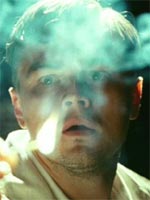
    Leonardo DiCaprio in Shutter IslandA quiet week round these parts — and everywhere else, for that matter:

    • The week’s biggest talking point was the unveiling of the first trailer for Scorsese’s “Shutter Island.” Still mopping the drool from the floor.

    • We celebrated the quarter-century (!) anniversary of “Ghostbusters,” listing the most quotable lines from that eminently quotable film.

    • Our poll of the most influential films of all time finally wrapped … in rather muted fashion. But hey, democracy rules.

    • We had the privilege of interviewing the great Francis Ford Coppola.

    • This week’s Page to Screen examined “Playing the Enemy,” the inspiration for Clint Eastwood’s upcoming “Invictus.”

    • In a rare last-minute coup, “The Hangover” stole “Up’s” thunder at the box office.

    • The 30th anniversary of John Wayne’s passing provided the impetus to wallow in The Duke’s finest screen moments.

    • And finally, yours truly dipped his toe into the murky waters of Oscar predictions.

  • The Duke’s greatest hits

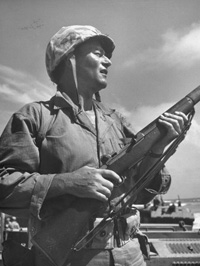
    John Wayne in Sands of Iwo JimaAs Kris mentioned Wednesday, this week marks the 30th anniversary of John Wayne’s death.  I’ve always respected Wayne’s performances and have for a long time, long before it was fashionable, to be sure.

    It was considered somewhat ridiculous for an acting student to admire Wayne’s work in the 1970s and 1980s. My God, we were supposed to be worshipping at the altar of Marlon Brando, Robert De Niro and Al Pacino! Our professors hammered home the importance of truth in a performance, which I of course believe to be essential.  But I’ve always felt that Wayne’s finest performances were as truthful and as real as anything Brando did.

    Wayne could not do Shakespeare, and was horribly out of place in certain genres, but in his element — the American western, the war film, high adventure or romantic comedy — he was as good as anyone working in movies. There were some critics who appreciated his work while he was alive, but most came around after his death in 1979, which to me is rather sad.

    I have proposed a book on Wayne, slightly different from those out there already, that would focus on his best work on film. There are 11 performances in the Wayne filmography that were truly outstanding, in my opinion.  Here is perhaps a primer for Wayne fans, new, old and emerging — a list of his best performances and some comments as to why I think they deserve to be remembered forever. Let me know what you think.

    (more…)

  • Remembering The Duke, 30 years later

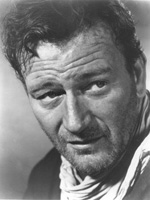
    John WayneAnne Thompson points us to a pair of John Wayne appreciations today that mark the Pearl anniversary of The Duke’s death.  Wayne lost his battle with cancer 30 years ago tomorrow and I have to say, it completely slipped my mind.

    Almost a year ago, our own John Foote wrote at length about The Duke and the lack of appreciation for his work as an actor, rather than merely an icon.  I’m keen to agree with many of John’s points, and having just completed a thesis on the western genre a few months back, Wayne has been very much on my mind as of late.  But that was a piece about how the genre has evolved far beyond that simplistic, iconic persona into something more nuanced, much as the country has done the same.  Still, an occasion such as tomorrow’s anniversary is one for remembering his place and legacy.

    Over at Cowboys & Indians magazine, Joe Leydon writes up The Duke with fond remembrances of his legendary roles and even a tip of the hat to his various steeds, never linked to one horse was Wayne.  Here is a section with thoughts from Wayne’s family:

    Just as important as the film roles for which he is most beloved, Wayne continues to be widely admired as a real-life hero because of the grace-under-pressure courageousness he displayed in his battle against cancer and for his legacy John Wayne Cancer Institute.

    Indeed, even Wayne’s sons and daughters express grateful surprise at the degree to which their father’s legacy continues to survive and thrive.

    “Here it is, 30 years since my father passed away, and he still has the popularity, celebrity, and visibility of a living person,” Patrick Wayne marvels. “That’s a phenomenal feat in the entertainment business. It’s something I can’t really explain — it’s just a fact of life, like he’s a force of nature.”

    “I think that even while he was alive, he had no idea how popular he was and how beloved he was,” says daughter Marisa Wayne. “And I think he’d have no clue that, even after being gone 30 years, he’d still be so popular and so beloved. I think that would mean a lot to him.”

    Roger Ebert, meanwhile, has also penned a love letter to the man, with all the childhood reminiscence you could want from a write-from-the-heart sort such as Ebert.

    (more…)

  • And now for something completely different

    Never let it be said that the Brothers Coen are predictable in their choice of projects. Having had their greatest crossover success to date with a film that dabbled in elements of the genre, Variety reports that they are set to make their first all-out Western — a remake of that hoary 1969 oater “True Grit,” best known today as the film that finally won John Wayne his gold-watch Oscar.

    On the surface, this isn’t the most promising of prospects — the story of a teenaged girl joining forces with a crotchety, aged US marshal to avenge her father’s death, the original “Grit” was a creaky, sentimental work that must have appeared dated even in its own time.

    But the Coens, obviously, are promising an interpretation far removed from that of Henry Hathaway’s film. Their intention is apparently to hew closer to Charles Portis’ source novel, telling the story from the girl’s perspective and placing less emphasis on the veteran character — which sounds like an improvement to me already. I admit I’ve never read the novel, though I gather it’s got harder edges than the 1969 adaptation.

    Encouragingly, the Paramount production will reteam the brothers with “No Country” producer Scott Rudin. Apparently, this project takes priority over their Rudin-produced adaptation of Michael Chabon’s “The Yiddish Policeman’s Union” that was being mooted — which, frankly, I’d have been more interested in seeing. But the Coens work in mysterious ways, so my mind is open.

    Finally, here’s a good omen: the last time they attempted a remake, they took on a masterpiece (“The Ladykillers”) and fell on their faces. Perhaps tackling a lesser work should reap greater rewards.

  • 1/13 Oscarweb Round-up

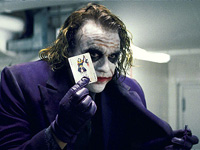
    Heath Ledger in The Dark Knight• Tom O’Neil chats with Pete Hammond and Anthony Breznican about possible repeat victors from Sunday night’s Globe ceremony. [Gold Derby]

    • Sasha Stone reminds that Kate Winslet is much more due in 2009 than Sigourney Weaver was in 1988. [Awards Daily]

    • David Carr catches up with Danny Boyle at the Fox Searchlight Golden Globes afterparty. [The Carpetbagger]

    • John Wayne and Heath Ledger make Steve Mason’s list of the best final performances ever. [/Film]

    • Anita Singh reports the Oscar odds in Kate Winslet’s favor. [Daily Telegraph]

    • Danny Boyle says he’ll never be a “proper director.” [The Guardian]

    • Rebecca Ascher-Walsh gives a quick preview of the 2009 film year. [Los Angeles Times]

    • Christopher Campbell goes with Sam Mendes for the lone director spot.  Hmm… [Spout Blog]

  • THE LISTS: Top 10 ‘right actor, wrong film’ Oscars

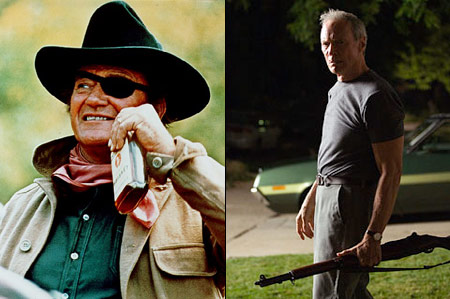
    As we head into the thick of awards season, one of the biggest “will-they-won’t-they” questions about this year’s Academy Awards concerns one of their most favored sons, Clint Eastwood. Specifically: despite wildly polarized responses to the film, and a widespread perception that he has already been amply rewarded in other categories, can Eastwood ride the wave of sentiment to a first acting victory for “Gran Torino?”

    That sneaky National Board of Review award last week suggests it’s still very much a possibility, whether or not people believe that it’s a performance for the ages — and, more to the point, whether or not it ranks with the best of Eastwood’s own onscreen work.

    It’s no secret that, in the acting races, the Academy frequently bases their vote less on the performance at hand than the actor delivering it — one can point to any number of Oscar victories determined less by merit than by personal affection for an already rewarded star (let’s say Michael Caine in “The Cider House Rules”) or industry guilt over an under-rewarded one (most recently, Alan Arkin in “Little Miss Sunshine”).

    Meanwhile, recent victories by the likes of Russell Crowe and Cate Blanchett point to the familiar “deferred-Oscar” syndrome, where an actor widely believed to have been snubbed in the recent past is hastily handed a statuette as a kind of cumulative acknowledgment of their recent strong work, frequently for a performance that doesn’t represent any particular breakthrough. (Kate Winslet might be vying for one of those this year.)

    All are variations of the oft-lamented “right actor, wrong film” Oscars that are peppered throughout Academy history — a solution generally deemed more credible (though I’m not sure why) than the honorary “quick, before they die” lifetime achievement gongs doled out to the likes of Peter O’Toole and Kirk Douglas, actors who continually slip through the cracks in Oscar voting.

    Age isn’t always the determining factor, though.  The Academy has shown in recent years by passing over Lauren Bacall and Ruby Dee — both of whom would have been exemplary “right actor, wrong film” honorees — they’re not always in a sentimental mood.  As the following list shows, reasons for rewarding actors for lesser work are many and varied: genre bias on the Academy’s part, mainstream emergence on the actor’s, or simply the voters’ collective nostalgia for a familiar face at the podium.

    The one thing all these names have in common is that they’re distinguished, even great actors who deserve to have “Academy Award winner” forever attached to their monikers — just not necessarily for that performance. Will Clint Eastwood be the latest name to join their ranks? The jury is out.

    (more…)
  • Oscar nominations that made me cheer

    Over the years I have been watching and studying the Oscars in earnest, since about 1974 (age 13).  It has always been a nice surprise when an unexpected actor, director or film made the cut to the final five.  It’s a special kind of high.

    I remember reacting with surprise and genuine happiness when Giancarlo Giannini was nominated for Best Actor for his performance in “Seven Beauties,” but even better was the inclusion of Lina Wertmuller, the film’s director (becoming the first woman ever to receive a designation in the directing category — nd for a foreign language film, no less).  I loved the film, so this put me over the moon, even though Giannini’s nod likely cost John Wayne his nomination for “The Shootist.”

    In 1997 it was Atom Egoyan, nominated for Best Director and Best Adapted Screenplay for “The Sweet Hereafter,” a brilliant study of grief in small town Canada; the L.A. Times named it the best film of the year but up here in Canada, we never expected Oscar attention for Atom and his film.

    I was equally thrilled when Martin Scorsese was rewarded with a nomination for his direction of “The Last Temptation of Christ,” a bold, passionate film made from the heart by one of our greatest directors.

    (more…)

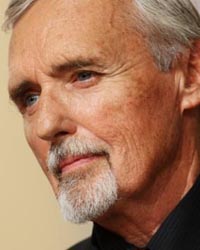
  • INTERVIEW: Dennis Hopper

    Dennis HopperThe voice on other end of the line sounds nothing like the many wild and somewhat insane characters Dennis Hopper has portrayed throughout his career, which now spans more than 50 years. This is a man who has walked with James Dean (his mentor), John Wayne (who affectionately labeled him a “pinko”) and Francis Ford Coppola.
    As a director, Hopper was part of the movement that would bring the New American Cinema into play, closing the 1960s with his biker flick “Easy Rider,” and though he won prizes at Cannes and was hailed around the world, he has rarely directed since.

    Hopper portrayed perhaps the single most terrifying character in a film with his seething work as Frank Booth in David Lynch’s “Blue Velvet.’  The same year he was nominated for an Oscar for his work as the town drunk seeking redemption with his son through basketball in “Hoosiers.”  Even Hopper was stunned that the Academy failed to nominate him for Lynch’s film instead.  He remembers roaring, “HOOSIERS?  You’re kiddin’ me, man” when being told of the nomination. “Blue Velvet” was a film the Academy obviously feared, allowing a single nomination to David Lynch for his dreamy, surrealistic direction of the classic.

    Currently Hopper is celebrating the upcoming DVD release and a low-key Oscar campaign for Best Supporting Actor in “Elegy,” a fine little film in which he portrays the poet best friend of Ben Kingsley’s introspective professor — Sir Ben as Hopper calls him.

    “I was a big fan of Isabel’s [Coixet, the film’s director] work”, he explains. “So when my agent called and said I had an offer to be in a film with Sir Ben Kingsley and Penelope Cruz, I jumped in. It was a very human story, the sort of film I like to see, and being a big fan of Philip Roth helped me along. The film had comedy and tragedy, and most of all characters I think we can all identify with.”

    (more…)

  • 9/26 Oscarweb Round-up

    John Wayne• David Poland takes stock 22 weeks out, and somehow thinks early buzz on Sean Penn’s “Milk” performance is “soft.” [Movie City News]

    • Warner Bros. sends out a mailer offering Academy members the choice of a Blu-ray “Dark Knight” awards screener.  Wally Pfister’s nomination moves further into place. [The Hollywood Reporter]

    • In a nutshell, “Little Children” author Tom Perrotta wonders whether John Hughes was full of shit. [The Guardian]

    • An A.O. Scott overview of the New York Film Festival. [New York Times]

    • Susan King digs into the legacy of John Wayne. [Los Angeles Times]

    • Alright, this is getting out of hand — and just stupid.  Reporting on an alleged bet on the test screening score of “The Reader” for its release prospects? [The Big Picture]

    • Top 10 tear-jerkers. [Premiere]

  • 9/10 Oscarweb Round-up

    Spike Lee• Journos continue to catch up with the two-week-old narrative: Toronto isn’t an Oscar playground this year.  [Entertainment Weekly]

    • Anthony Breznican, thankfully, tries to come at it from a slightly different perspective. [USA Today]

    • James Rocchi sits down with Darren Aronofsky for some choice words in Toronto. [Cinematical]

    • Jeffrey Wells is in the tank for Kathryn Bigelow’s “The Hurt Locker.” [Hollywood Elsewhere]

    • David Poland cranks out a beaming assessment of “The Hurt Locker” as well, with some great words for “Slumdog Millionaire” on the side. [The Hot Button]

    • Noah Forrest sits down with Neda Armian, producer of “Rachel Getting Married.” [Movie City News]

    • Gill Pringle kicks back with Seth Rogen across the pond. [The Independent]

    • Always looking for fresh angles, Michael Cieply comes at Toronto from the perspective of its music showcases this year. [New York Times]

    • In a poorly headlined (if you ask me) Oscar forecast, David Germain rounds up awards quotes from heavies such as Christian Bale, Tom Cruise and Leonardo DiCaprio. [Associated Press]

    • Spike Lee sets his aimless sights on the Duke, in case you don’t get the point the first time early on in “Miracle at St. Anna.” [New York Post]

    • Has James Franco signed on to an Oscar trajectory with the Gus Van Sant-produced “Howl?” [The Hollywood Reporter]

    • Who the hell honestly thinks Rod Lurie was attempting to tell the actual Valerie Plame story, and therefore, “distorted” anything?  Stupid… [Spout Blog]

    • Anne Thompson reports from party central in Toronto. [Thompson on Hollywood]

  • Peter Finch and the posthumous Oscar

    Peter Finch in NetworkPeter Finch’es wide-eyed, frantic performance as newsman Howard Beale in Sidney Lumet’s “Network” became a touchstone for North America in 1976 because we too were “mad as hell and not going to take it anymore.”
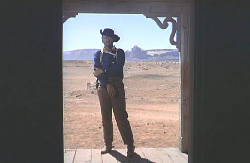
    Vietnam was over, though the vets were struggling with their various personal horrors.  Nixon had resigned, leaving a mistrustful America in his wake.  And up here in Canada, we were dealing with a Prime Minister who was often more playboy than politician.  Lumet’s searing film, from an original screenplay by Paddy Chayevsky, was timely indeed.

    Whispers of a posthumous Oscar have circulated Heath Ledger’s performance in “The Dark Knight” for weeks now, bringing Finch’s seizure of the Best Actor trophy back to the forefront of discussion.  But was Finch’s win a recognition of the performance or was it fueled by his unfortunate dead in January of 1977?

    (more…)

  • Respect for The Duke

    In light of Kris’s recent westerns piece, I thought it might be worth it to give some space to what I believe to be one of the most underrated actors of all time.

    Cinematical recently carried a marvelous article on John Wayne, supporting the belief that the screen legend was an exceptional actor (in the right role) and that perhaps Hollywood and the critics had not given him his due while alive.  Certainly his work was appreciated by audiences, who made him the top box office star for more than 20 years.

    I grew up watching Wayne and even defended him as an actor some time ago to a very skeptical university professor.  Using the actor’s performances in “The Searchers” and “The Shootist,” I wrote my paper and received an “A.” I figured I must have proved my case. But my professor passed me in the hall a year or so later and told me I had converted him to the Duke, and he had now seen many more of his films.

    Obviously part of the issue had been just that: he had not seen all of Wayne’s work — and he was more than a little attached to Sir Laurence Olivier (in my opinion the most overrated actor in the history of the cinema). But you could always see Olivier acting, working the trade.  I defy you to catch the Duke mugging.

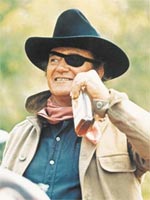
    While Wayne often portrayed a variation of what audiences perceived him to be in real life, there were characters that challenged him as an actor and allowed him to stretch. Though he won the Academy Award for his jaunty performance as the tough old one-eyed geezer in “True Grit,” he certainly should have won for his raging Ethan Edwards in “The Searchers” and been nominated for at least a half dozen others.

    (more…)

  • Greatest non-nominated perfs: too many to count…

    …but I’ll try.  A sprint of sorts through deacades of deserving contenders (in my opinion, of course).

    I ask you this: How did those lovable characters from “The Wizard of Oz,” portrayed so brilliantly by Ray Bolger (Scarecrow), Jack Haley (Tin Man), Bert Lahr (Lion) and Margaret Hamilton (Wicked Witch), fail to be nominated in any of the supporting categories? Any one of them should have won the damned thing let alone be nominated, but in 1939, each and every one of them was snubbed.

    (more…)

  • 1976: a great year and Oscar blew it

    Continuing the conversation on great years for movies (1974 being my pick for the best), I thought I’d dig into a season rich with material that slipped through Oscar’s fingers.

    The American bicentennial year was loaded with wonderful films — ground-breaking works that stunned both audiences and critics with their mastery. Three of them were nominated for Best Picture, some of the others were not, yet the eventual winner was a low budget love story about a boxer that wanted to prove he wasn’t just another bum from the neighborhood.

    The true greats of 1976:

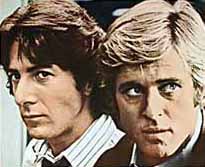
    “All the President’s Men”

    Alan J. Pakula’s superb adaptation of the Pulitzer Prize-winning book written by Bob Woodward and Carl Bernstein about their investigation of the Watergate burglary was born out of an astonishing script by William Goldman. Making sense of the politics within a dense book, incredibly detailed, Goldman’s work had the good sense to make the film a detective-like thriller with well-defined characters.

    This could have been a dull, political film made to exploit the happenings in the United States at the time, but Pakula instead made one of the great films about journalism in the days before the Internet and e-mail. Robert Redford bought the rights to the book and produced the film, starring as Woodward, with Dustin Hoffman as Bernstein, both giving exceptional performances, but it was Jason Robards who blew them off the screen with his excellent performance as the crusty, wise, and ultimately loyal Washing Post editor Ben Bradlee.

    (more…)