In Contention

Tag: John Cameron Mitchell

  • THE LONG SHOT: When you’re strange

    (Updated predictions available here.)

    I shan’t often find room for Gaspar Noé’s name in a space ostensibly dedicated to the Oscar race, so bear with me if this seems an unlikely opening gambit, but inspiration for this week’s column began with a conversation about his fluorescent, drug-addled ghost story “Enter the Void.”

    A friend had recently caught up with it, and found herself disappointed: having been promised a psychotropic headfuck, she instead found something more sentimental and less questioning than his previous work. “At this rate,” she muttered aggrievedly, “he’s about 10 years away from a bloody Oscar nomination.”

    That’s a flip exaggeration, of course, but there’s a kernel of truth in it: the Academy likes its enfants terribles most when they’ve passed the teething stage and begin to play nice — or at least safe. There’s a long and illustrious list of adventurous, iconoclastic directors who scored with AMPAS either by putting a leash on their wilder creative instincts or making sly concessions to the mainstream.

    (more…)

  • OSCAR TALK: Ep. 35 — ‘Secretariat’ hopes, ‘The Way Back’ enters the race, ‘Nowhere Boy,’ ‘Hereafter’ and listener questions

    Oscar TalkWelcome to Oscar Talk.

    In case you’re new to the site and/or the podcast, Oscar Talk is a weekly kudocast, your one-stop awards chat shop between yours truly and Anne Thompson of Thompson on Hollywood. The podcast is weekly, every Friday throughout the season, charting the ups and downs of contenders along the way. Plenty of things change en route to Oscar’s stage and we’re here to address it all as it unfolds.

    Can you believe it’s already October? Next month every film will have screened and before long we’ll be reporting National Board of Review winners. Contenders are beginning to hit theaters as we move into the fall, so let’s see what’s on the docket today…

    (more…)

  • ‘Blue Valentine’ and ‘Rabbit Hole’ depict tortured souls with authentic ease

    Watching Derek Cianfrance’s “Blue Valentine” and John Cameron Mitchell’s “Rabbit Hole” in the same 24-hour span is a brutal exercise.  There are plenty of raw, realistic, dreary emotions flying through these narratives, but the experiences were very rewarding.

    Starting with Cianfrance’s film, which has been making the festival rounds since a healthy Sundance reception, I found it to be a delicate and truthful examination of a relationship in crisis.  (Guy was a fan in Cannes.)  Anyone who has been through the kind of near-numbing emotional spiral depicted in the film, the false fronts of hopefulness that spring up and the crushing disintegration of affection will appreciate the authenticity.

    Ryan Gosling and Michelle Williams star as young lovers pushed into the realities of family too soon and under unfortunate circumstances.  But Cianfrance and his fellow writers don’t focus on those circumstances beyond offering up the information you need to understand the predicament (and, perhaps a bit too tidily, to keep judgment off the table for the viewer).  Mostly the film is a vehicle for Gosling and Williams to take the wheel and go, and boy do they ever.

    (more…)

  • 9/17 Oscarweb Round-up

    • The Chateau Marmont, setting of Sofia Coppola’s “Somewhere,” is ready for its close-up across the pond. [The Independent]

    • Jay Fernandez reports from the Washington premiere of “Waiting for Superman,” which received a “monumental stamp” when Secretary of Education Arne Duncan called it a “Rosa Parks moment.” [Hollywood Reporter]

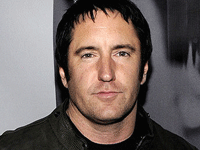
    • Trent Reznor releases five tracks from his and Atticus Ross’s wonderful score for “The Social Network.” [Nullco]

    (more…)

  • Kidman, Alfredson get ‘Danish Girl’ on track

    Nicole KidmanSay what you like about Nicole Kidman, but the lady’s taste in directors is beyond reproach. Fresh from having imaginatively recruited John Cameron Mitchell to guide her pet project “Rabbit Hole,” she’s teaming up with another arthouse maverick looking to cross over — Tomas Alfredson of “Let the Right One In” fame.

    Alfredson will direct Kidman in “The Danish Girl,” another project the actress has been nurturing for some time, but one that seemed to have stalled for a while. I’ve been intrigued by this one ever since it first popped up on the radar, offering as it does a major thesping opportunity for the actress.

    Kidman will play Einar Wegener, the male Danish artist who in 1931 underwent the world’s first sex-change operation. (The film will, however, be proceeding without Charlize Theron, who was earlier attached to play Wegener’s wife. Pity, that — sounded like a plum role for her, too.)

    (more…)

  • 8/31 Web Round-up

    Ang Lee• With “Luke and Brie are on a First Date” finding its way to an Amazon release, our own Chad Hartigan gets his film re-reviewed. [Spout Blog]

    • Stephen Zeitchik wants to know why Ang Lee can’t catch a break. [Risky Biz Blog]

    • Gregory Ellwood sees (er, hears) awards prospects in Alexandre Desplat’s “Coco Before Chanel” score. [Awards Campaign]

    (more…)

  • John Cameron Mitchell on ‘Rabbit Hole’

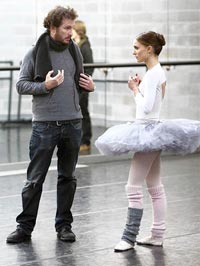
    John Cameron MitchellThanks to Nathaniel Rogers for pointing out a Screen Daily video interview (embedded below the cut) in which John Cameron Mitchell talks in some depth about his next film, “Rabbit Hole,” which goes into production next month.

    We mentioned the project last month, when Aaron Eckhart was cast opposite Nicole Kidman in the screen adaptation of David Lindsay-Abaire’s Pulitzer Prize-winning play about bereaved parents. The cast has grown since then, with Dianne Wiest, Sandra Oh and Giancarlo Esposito all also on board now.

    The setup in the video is slightly odd — Mitchell seems to have been held at gunpoint against a wall and forced to give a monologue — but the director has a number of interesting things to say, particularly on the contrast between working with stars like Kidman and the less seasoned players of his last film, “Shortbus.”

    He also talks up Lindsay-Abaire’s screen adaptation in a big way, describing it as one of the best screenplays he has ever read, and “head and shoulders” ahead of the original play. Unlike the cut-and-paste script jobs of recent Broadway-to-screen transfers like, say, “Doubt” or “Frost/Nixon,” Mitchell promises a complete cinematic reimagining of the material, citing the way his previous films incorporated animation and art into their film language as a point of reference.

    As I said before, he’s a bold choice of director, and it’s clear he’s deeply invested in the material. It’s not often one gets such detailed insight into a director’s plan for a project before shooting begins — here’s hoping he pulls it off. Check out the video below the cut.

    (more…)

  • Eckhart to join Kidman in ‘Rabbit Hole’

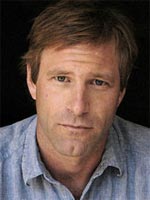
    Aaron EckhartNow this, to my mind, is a star pairing that really makes sense. Nicole Kidman has been attached for some time to star in the screen adaptation of “Rabbit Hole,” David Lindsay-Abaire’s stage play that was awarded the 2007 Pulitzer Prize for Drama. Aaron Eckhart is now reportedly in talks to play opposite her.

    The project represents a major dramatic opportunity for both stars: the play, which is said to be funnier than the thematic material suggests, revolves around a happily married couple forced to re-evaluate their relationship when their young son is killed in car accident. Cynthia Nixon (who won a Tony for her efforts) and John Slattery originated the roles on Broadway — I guess it’s fair to say the casting has been prettied up for film, but what’s new?

    Personally, I’m excited at the prospect of Eckhart getting a role with some significant emotional range to tackle, and for some reason, I imagine his everyman quality and Kidman’s nervous reserve complementing each other nicely. Kidman, meanwhile, continues to choose the most interesting projects but it’s been a while since she had a really meaty dramatic lead in this vein — I’d love to see her pull something sufficiently riveting out the bag to stem the (unwarranted, in my opinion) backlash against her.

    Meanwhile, the project may be an even more intriguing proposal for its director than for its stars. John Cameron Mitchell’s “Hedwig and the Angry Inch” and “Shortbus” have won him a legion of admirers, but this promises to be a very different kettle of fish from those gleefully in-your-face efforts. I’m intrigued to see what he does with more muted material that he hasn’t originated himself. (Lindsay-Abaire will be adaptating his own work.) One to watch, for sure.

  • INTERVIEW: John Cameron Mitchell

    John Cameron Mitchell might be one of the few true artists working in the film medium today. In his much celebrated feature debut “Hedwig and the Angry Inch,” the actor/director pealed his own creation from the stage and molded it into a cinematic experience that became one of the most accomplished films of 2001. His electric performance as a shafted transsexual (let’s say almost transgender) rock star reached new heights on celluloid, claiming a lion’s share of critical honors, while his efforts behind the camera announced the arrival of a promising new directorial talent.

    Now with “Shortbus,” one of the best films of 2006 and undeniably one of the most thematically potent, Mitchell has found his groove as a speaker to the metaphors of primal and cultural humanity. Glaring through, yet paradoxically past the cardinal sexual characteristics we share as frail co-inhabitants of a wicked world, he has tapped into a method of creativity that reawakens the senses to a commercial medium’s true potential.

    “It’s a film about the question we all have to ask of whether we’re going to be alone,” Mitchell explains with a staggering intellectual delicacy. “And sex is just one of the languages we use to not be alone.”

    Indeed, if unsuspecting viewers make it beyond “Shortbus”’s riveting opening sequence, they will find a central nervous system of artistry that speaks to deeper truths than the most well-intended of artfully-minded cinema. A bona fide explosion of sexual expression that dictates the film’s themes in vivid detail, the scene climaxes with a puzzling moment Mitchell describes with measured confidence and candor.

    “You meet James…who is sucking his own dick. It’s kind of comic but there’s this element of poignancy there, too. Who is someone in their 30s who would try that? Why is he trying to be self-sufficient at this point, to self-fertilize? And then burst into tears? That is my way of introducing the character. Sex can be used as metaphor.”

    Therein lays the workings of Mitchell’s unique genius. It’s the standard assumption that inter-character relationships are meant to reveal and reflect the themes of a given film, but to comment upon the human condition through a character’s relationship with him or herself is another level of artistic thinking altogether. Such a motif abounds in “Shortbus”’s eclectic ensemble.

    Mechanically, the film is a dissection of community, largely the result of collaboration and improvisation from amateur thespians. It looks at individual and group reality through the lens of sex, detailing an array of characters Mitchell is quick to admit ultimately represented various facets of his own personality.

    “There’s a part of me that’s like a stalker,” he admits. “There’s a part of me that’s like a non-orgasmic woman who can’t connect. And I’ve had a part of me that feels like I’ll never be with anyone. But everyone sort of brought their own stuff to it and I just directed it.”

    He continues: “We started working on it in 2003, which was when we had our website with our mission statement and our audition to send tapes. It was open call. We avoided agents. [We were looking for] people who could work in an improvisational way, who were smart, who were funny, who were charismatic in some way, a diversity of sexuality and gender.”

    The result was a meaningful interface of creative input, one the director found quite different from the experience of his first major creation.

    “‘Hedwig’ was kind of developed gig by gig,” he explains, “sort of a solo show with a composer. ‘Shortbus’ was through improv, borrowing a page from Mike Leigh and John Cassavettes. I’d love to work with a very tightly-honed script and very virtuosic actors next time. I’d like to do an opera some day. I’d love to write a novel, make an album. I like to work in a lot of different ways and I love to keep it diverse.”

    Set in the culturally booming setting of New York City, “Shortbus” also makes light of our society’s post-9/11 consciousness. One line that sticks out is “You’re taking a picture of yourself at Ground Zero. Do you smile?” It’s a delicate stick and move that actually speaks modestly to what Mitchell describes as President Bush’s favorite weapon: fear. And wrapped up in the natural reaction to what has been considered by many to be an emotionally oppressive regime, Mitchell identifies another pitfall altogether.

    “Cynicism seems to be the currency of the day,” he begins, “especially in such a weird, ‘Bush-whacked’ country. It’s like the only comfort some intelligent people have is cynicism, and certainly humor, but kind of a fatalistic humor where you’re powerless and you think nothing’s going to change, which is just as dangerous. I think there are incredible cultural critics today who point out the absurdity brilliantly – ‘The Daily Show,’ Steven Colbert – but the odd thing is there are not a lot of people presenting alternatives. Though our film has a very small audience and doesn’t provide solutions to problems, it provides perhaps a way of thinking that makes sense, which isn’t based on fear, and which is based on this understanding that we all ‘get it in the end,’ in many ways, and we’re all in the same boat.”

    Through a delicate assembly of organic ensemble interaction, Mitchell makes his points of love and acceptance, emotional necessity and the power of discourse at every step of the way. From his vantage point, there is hope in community, however one chooses to define it.

    “All of these characters are heroes, in a way,” he declares, “because they’re trying to connect. Those who don’t try, those who hide away behind their technology are ultimately not people I’d want to share a drink with. It’s like all this technology that is meant to connect us seems to separate us and just create another shield. The advantage of growing up a sexual minority is you can see there’s surface and then there’s what really is there. You understand metaphor at a younger age because you had to hide something. So art naturally is a refuge for sexual minorities, and all minorities, really, because you’re an outsider and you see it from the outside point of view: satire. Oscar Wilde, Dave Chappelle, all these people have an outsider’s point of view, which is the artist’s point of view.”

    There is a murmur of concern in the already growing positive critical assessment of “Shortbus” that the film will struggle to find an audience. Leaving alone the effort a true independent film has to make to stay above water in this era of faux indie excursions fronted by “dependent” arms of major studios, the sheer sexual intensity of the film will keep many at arms length sight unseen. Mitchell seems to understand his film’s place, however, with somewhat minimal concern for his film’s ultimate fate in the vast marketplace.

    “I try to have low expectations,” he offers. “There are some people who didn’t like ‘Hedwig.’ Some people won’t like this. Some people won’t like it because of the sex, and some won’t like it because it’s soft-hearted. It’s pretty warm and fuzzy compared to most films. But from my point of view it’s an awareness of gender and sexuality being things that unite and divide us and the humor that comes from that. It’s ultimately a boring thing, your sexuality – inherently neutral and kind of dull. It’s what you do with it that’s interesting.”