In Contention

Tag: Heat

  • Zen pulp

    I should really let Matt Zoller Seitz’s words speak for themselves in his ongoing five-part series of video essays concerning director Michael Mann at the Museum of the Moving Image, (“Zen Pulp: The World of Michael Mann”), but I’m a sucker for this stuff.

    Part one (posted July 1), which you can check out below, concerns Mann’s early years, moving from TV’s “Miami Vice” backwards five years to his first directorial effort, TV movie “The Jericho Mile” (a movie I REALLY need to see, already). Then it’s back to “Vice” for some aesthetic analysis.

    “The advertising part of Mann’s sensibility is encoded in the show’s brooding slickness,” Seitz says, “its fascination with clothes, cars, boats, buildings, and bodies as objects worth contemplating apart from their narrative function.” There’s plenty of talk about Mann’s penchant for authenticating the world on screen and the heavy body count and aesthetic violence in the ground-breaking series.  Then it’s a fast-forward 22 years to talk about the 2006 feature film starring Colin Farrell and Jamie Foxx.  Check it out:

    (Keep reading to check out parts two and three.)

    (more…)

  • THE LISTS: Top 10 performances from Michael Mann films

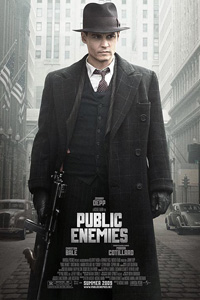
    Russell Crowe in The InsiderWith the forthcoming release of Michael Mann’s “Public Enemies” (review) dominating — quite impressively, I might add — the publicity circuit this week, all eyes are on Johnny Depp.  An Ulmer Scale X factor for this character study posing as a summer blockbuster, Depp’s performance is sure to draw champions and detractors alike for its delicate, internalized particulars.  But of one thing we can be certain: the work is of a piece with Mann’s typically detailed approach to character.

    Mann’s collaborative process with his actors typically involves something called “character acquisition,” a tightly-conceived regimen, of sorts, that gives his films’ characters the authentic touch that makes his work so novel.  Many times these details won’t even be discussed in the overall narrative, but their background impact on the performer is unmistakable.  Take, for instance, the photos of the childhood home of Tom Cruise’s hitman Vincent in “Collateral” that Mann brought to the actor’s attention, merely by way of more fully developing the character’s clearly complicated formidable years.

    The result of this hard work has been a slew of captivating, at times career-best performances from some of the most accomplished actors working today.  A Michael Mann production represents the opportunity to go deeper with a performance and perhaps even learn more about the craft.  Will Smith has frequently discussed his collaboration with Mann as the most rewarding experience of his professional life.  And, as Javier Bardem once told me, “When Michael Mann invites you to his party, you don’t turn him down.”

    So with that, a collective representing the best performances to come from Mann’s 10 feature films to date seemed the best way into this week’s installment of The Lists.  It’s a very personal list, of course, as yours would be.  There are three performances from one film, none from two, and a pair of unconventional supporting turns to shake things up.  After going back through the director’s work last week in preparation for the list, even I was surprised my #1 choice was left standing, but regardless of order, see this as a way to compliment a true actor’s director.

    (more…)

  • Respectfully disagree

    Marion Cotillard in Public EnemiesF.X. Feeney, whose Taschen study on the films of Michael Mann is must reading for fans of the director, has gone on the record with Jeffrey Wells as believing the female characters from Mann’s films to be “deeply observed, self-reliant and fully dimensional.”

    The comment follows an earlier Wells posting concerning Marion Cotillard’s strong performance in “Public Enemies,” opening Wednesday.  And while I have all the respect in the world for Feeney and his opinions, I have to respectfully disagree with his take here.

    In writing about Cotillard’s performance in my review of the film, I praised the actress for finding “the right combination of frailty and strength that has defined the few well-developed female characters from Mann’s films,” and I stand by the passing commentary at the end there.  Most of the females in Mann’s work, to my eye, serve as transitional devices more often than not.  Cora Munroe in “The Last of the Mohicans,” Charlene Shiherlis in “Heat” and now, Cotillard in “Enemies,” represent the few examples of the director tapping into women with a compelling trajectory.

    (more…)

  • REVIEW: “Public Enemies” (***1/2)

    Public EnemiesLos Angeles Film Festival

    There is a moment very early in Michael Mann’s “Public Enemies,” featured today as the centerpiece exhibition of the Los Angeles Film Festival, when Depression-era criminal John Dillinger (Johnny Depp) stares into the dying eyes of friend and mentor Walter Dietrich (James Russo) as his band of cohorts flees the scene of a somewhat botched prison escape attempt. The sequence is at once curiously beautiful and unmistakably somber, of a piece with the filmmaker’s coldly calculated vision of a man caught up in the freedom of his rebellious lifestyle, yet haunted by the specter of his own obsolescence.

    The film marks an exciting return to muscular, patient storytelling form for Mann. After dubious stabs at commercial appeal in “Collateral” and “Miami Vice,” films that certainly have followers and admittedly plumb thematic depths no other filmmaker would have reached, the director has painted his most resonant character study since 1995’s “Heat.”

    Headlined by an emotive, at times unsettlingly internalized performance by Depp, the film amplifies Mann’s penchant for nuance while marrying it with a well-exercised gift for staging unique if not inimitable action set pieces. But for all the director’s classic cinematic accoutrement, the film nevertheless stands apart from Mann’s portfolio for its fully realized vision of a doomed romance highlighted by, rather than merely peripheral to, the machismo on display.

    (more…)

  • Mann and music

    Michael MannI interviewed Michael Mann on Halloween night back in 2006.  Tons of traffic.  And there was a Lakers game, so getting back from the West side was a pain.  The sit-down was part of a larger piece I was writing for The New York Times on Mann’s friend and colleague, screenwriter Eric Roth.  It was a solid hour-long chat and one of the few moments in this business where I really had to buckle down and keep the geekgasm out of sight because not only is Mann my favorite working director, but he’s also a hell of an intimidating cat.

    I pulled out my recorder, set it on the desk for the interview.  He proceeded to do the same thing with his own recorder.  Serious guy.

    Anyway, all of this is a long way of getting around to the point that I was floored by Mann’s music collection.  It may have become exaggerated in my head by now, but I seem to recall a wall of CDs behind his desk — TONS of music.  It made total sense, of course, seeing as Mann has a knack for tossing wonderful, moody, sometimes refreshingly fringe music into his films.

    In the 1980s he had a big crush on Tangerine Dream, for better or worse.  Moving into the 1990s, the Randy Edelman/Trevor Jones score for “The Last of the Mohicans” was beautiful stand alone work (mostly Jones’s contribution), but Mann also made great use of a couple of Moby tracks in “Heat” (the famous closing credits finale and “God Moving Over the Face of the Waters” being a key moment in my own discovery of cinema as something more than I thought it was.

    “The Insider” made fine dramatic use of Lisa Gerrard a year before Hans Zimmer and “Gladiator” made it “cool,” while the opening montage of “Ali” under a live version of Sam Cooke’s “Bring It On Home To Me” is the best part of the film.  “Collateral” and “Miami Vice” allowed for Mann to hold on to an obvious interest in Audioslave for a one-two punch (with some nice Roots and Groove Armada mixed in to the former), and now, the trailers for “Public Enemies.”

    Both have utilized Otis Taylor “Ten Million Slaves,” perhaps the first trailer doing a better job of showcasing it.  The latest example, which debuted today, opens with an eerie tune that I couldn’t place at first.  After doing some digging, I discovered the track is “Black Heart” by Calexico.

    Of course, a number of our musically savvy readers probably knew that already, but it’s new to me.  And further evidence that Mann knows how to use music to drive home his already striking imagery.  Here’s a weird YouTube video with the song played over an old burlesque routine by Amalia Aguilar.  It’s totally twisted and worth a link here at the end of this somewhat newsless day:

    (By the way, there’s also a double CD out there called Director’s Cut: Music from the Films of Michael Mann if you’re REALLY into it.)

  • THE LISTS: Top 20 movie endings of all time

    Anthony Perkins in PsychoAlright, this was painstaking indeed. After The Times of London saw fit to rock out a list of the 20 best movie endings of all time last week, I thought I’d try my own hand at such a collective.

    There are some omissions that might surprise some folks (“Bonnie and Clyde,” “The Graduate,” “Carrie”). At the same time, there are films that, on any other day, would easily slip into the list (“A Clockwork Orange,” “Once Upon a Time in the West,” “Reservoir Dogs”).

    Rest assured they were taken into account, but they didn’t speak to me on whatever levels must have been necessary to push into the top 20. But I can say these are the denouements that most affected me, be it viscerally or emotionally.

    Send in your picks for the top five movie endings of all time and I’ll publish a collective readers’ list in a few weeks. Email me or post your list below in the comments section.

    Here’s what I came up with:

    20. “The Iron Giant” (Brad Bird, 1999)
    “You stay. I go. No following.”
    Animation genius Brad Bird made his feature directorial debut with this effort, packing an emotional punch by film’s end with shades of “E.T.: The Extra-Terrestrial” — and an energizing final shot to boot.

    19.”Jacob’s Ladder” (Adrian Lyne, 1990)
    “He looks kind of peaceful, the guy.”
    Capping off one of the most bizarre cinematic visions ever captured (and, ultimately, quite underrated as well), this closing scene is a twist that has been lifted in various other forms ever since. (see next)

    18. “The Sixth Sense” (M. Night Shyamalan, 1999)
    “I think I’m okay, really. I think it just went in and out.”
    Hot prospect M. Night Shyamalan tainted the original power of the twist ending by attempting to make a career of it, but in the final moments of this early effort, his buried talent poked through the surface.

    17. “The Shawshank Redemption” (Frank Darabont, 1994)
    “Get busy livin’ or get busy dyin’. That’s God damn right.”
    Less a closing scene than a closing sequence, the entire third act of Frank Darabont’s Stephen King adaptation manhandles the heartstrings and lifts the spirit.

    16. “Se7en” (David Fincher, 1995)
    “John Doe has the upper hand.”
    Andrew Kevin Walker crafted a near masterpiece that culminates as perfectly as it could have, death and despair, ambition and art, plus a Hemingway rebuttal for the ages.

    15. “The Conversation” (Francis Ford Coppola, 1973)
    “We’ll be listening to you.”
    The calmly paranoid conclusion to a mind-bender from a mid-“Godfather” Francis Coppola, this finale put Gene Hackman in a position to give perhaps the greatest performance of his career.

    The full list after the jump!

    (more…)
  • What are the best movie endings of all time?

    Kevin Spacey in The Usual SuspectsI was working on this piece yesterday (nothing major — just pulling together the YouTube clips), but I wasn’t aware how the list was going to pan out.  “Carrie” at the top?  Not so sure about that.

    But The Times critics like to be contrarian.  Just take a look at their Top 100 Films of All Time list, which places Paul Thomas Anderson’s “There Will Be Blood” rather brazenly at #2.

    Anyway, debating and sussing out the best of movie endings ever could have us chatting into the night.  Most of my favorites are recent examples, but that’s probably due to what the 1990s did to the screenwriting form.

    Scribes began giving a lot more thought to how the audience would feel when leaving the theater.  Twists and emotional-punches became a currency of sorts, which is probably why there are more films from the decade than any other on The Times’ list.

    I will say I’m glad there was room for “Seven,” “Memento” (which I re-watched recently and absolutely adore) and “E.T.,” three (perhaps) out-of-the-box choices that don’t leap to mind when the subject comes up.  And it’s impossible to argue against “The Usual Suspects,” “Butch Cassidy and the Sundance Kid” and “Planet of the Apes.”

    If I were to suggest a some additions, I might begin with “Heat,” “Citizen Kane,” “A History of Violence,” “Jacob’s Ladder” and “Boogie Nights,” to name a few.

    The Times’ list of the best movie endings of all time:

    1. “Carrie”
    2. “Butch Cassidy and the Sundance Kid”
    3. “Casablanca”
    4. “E.T.: The Extra-Terrestrial”
    5. “Chinatown”
    6. “Breakfast at Tiffany’s”
    7. “Some Like It Hot”
    8. “The Italian Job” (1969)
    9. “The Usual Suspects”
    10. “The Sixth Sense”
    11. “Thelma & Louise”
    12. “The Wizard of Oz”
    13. “Les Diaboliques”
    14. “Dr. Stranglelove”
    15. “Gone With the Wind”
    16. “The Shawshank Redemption”
    17. “Planet of the Apes”
    18. “Memento”
    19. “The Blair Witch Project”
    20. “Seven”

    I might pull together my own top ten soon enough.

    What are your favorite movie endings?

  • Goldenthal to score Mann’s ‘Enemies’

    Exciting news.  This is without a doubt my most anticipated film of next year.  The press release, in part, on Goldenthal jumping on board:

    Oscar-winning composer Elliot Goldenthal (Frida) has been signed to score Universal Pictures’ action-thriller from acclaimed filmmaker Michael Mann, Public Enemies. Currently shooting in Chicago, Public Enemies stars Johnny Depp and Christian Bale in the incredible story of criminal folk hero John Dillinger (Depp), whose wave of bank robberies and the subsequent FBI manhunt, commanded by J. Edgar Hoover and run by Special Agent Melvin Purvis (Bale), fascinated the nation in the 1930s.  The film also stars Oscar winner Marion Cotillard, Giovanni Ribisi, Billy Crudup, Stephen Dorff, Rory Cochrane, Stephen Lang, David Wenham, Stephen Graham, Channing Tatum, and Jason Clarke.  It arrives in theatres in July 2009.

  • Where have you gone, Al Pacino?

    It has been more than 30 years since Al Pacino gave his career-defining performance as cold blooded Michael Corleone in “The Godfather Part II.” He radiated quiet danger the moment he appeared on screen without ever raising his voice or allowing his mouth to wrap its way around words and spit them out like venom.

    While a one-two punch of “88 Minutes” and “Righteous Kill” slithers its way to theaters this year, audiences are reminded once again that one of the cinema’s all-time legends has immersed himself once again in either sub-par material or, as has become his cliche, the tendency to overreach and overact on his way to becoming a walking spoof of himself.

    There was a time when Pacino was thought of as one of the greatest American actors in movies…period. His work in the 1970s was nothing short of sublime, with strong performances in “The Godfather,” “Serpico,” “Scarecrow,” the aforementioned sequel to Coppola’s study of La Cosa Nostra and “Dog Day Afternoon.” In the latter he gave his most electrifying and properly energized portrayal.

    Along with many of the fresh-faced actors of the day, Pacino owned the decade. Sure he faltered with “Bobby Deerfield,” which meant he was not the type for romantic films…right? Or was this his limitations beginning to become apparent?

    (more…)