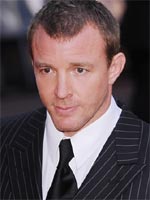
In Contention

Tag: Guy Ritchie

  • Guy Ritchie on ‘esoteric marmalade’

    Guy RitchieCheers to my friend Paul for pointing me to the quote of the week from Guy Ritchie, featured in a recent Esquire interview. It’s the same piece that has already attained a measure of press attention for his description of Madonna as “retarded,” but this metaphor for his filmmaking oeuvre (handily condensed by the Guardian) is the real keeper:

    “What you’ve got with marmalade is fucking bitter and sweet,” Guy explains. “Now, the marmalade at [the place they had breakfast], that’s an accessible marmalade. And my sensibility is accessible. My nature is, I like accessible shit. The first two accessible movies I made, Lock, Stock and Snatch, they are accessible.

    The next two aren’t accessible. First there’s Swept Away, which, well, everyone gets confused on, because of Madonna. And the next one [Revolver] is just conceptual. That one – that’s just pure esoteric marmalade. You can tell a lot by a person’s marmalade. My palate is really a fine shred, it’s accessible. I’m not saying I won’t test you. Because all marmalade tests you.”

    No word yet on what type of marmalade “Sherlock Holmes” will be. Maybe he’s switched to jam.

  • ‘Sherlock Holmes’ trailer

    I have to say, this looks sillier than I anticipated.  It’s comical (not in the way intended) and leans a bit too heavy on the farce throttle.  When the title screen came up, I chuckled.  It’s not to say that the film doesn’t look fun, because clearly it does.  But it has a rather unwelcome gloss to it and, of course, is such a bastardization of the source material that I’m glad we have some time to square ourselves with the direction of the project before release.

    Anyway, that’s me.  What do you think?

  • Why the public should never be allowed to vote for anything

    Guy Ritchie at the Empire AwardsExcept maybe the occasional president. And, okay, a reality-TV contest or two. But film awards — no. As spectacularly wrong as organizations like the Academy, and the odd critics’ groups, can get it sometimes, nobody can rival the collective movie-going public for sheer cluelessness when it comes to determining the best of the art form.
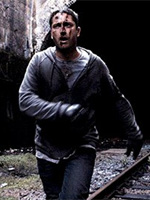
    Case in point: the Empire Awards, voted for by readers of the eponymous film magazine, which took place in London on Sunday. Of course, it’s a fluffy, meaningless ceremony — a good excuse for a party more than anything else — but their choices are, nonetheless, a worrying barometer of just how low independent and/or adult-oriented cinema lies on the radar of most cinemagoers.

    Exhibit A, and the real groaner of the night: the public’s choice for Best British Film. While the rest of us have been singing the praises of, say, “Hunger” or “In Bruges” (both nominated, rather miraculously in the case of the former), the Empire readership apparently lives in some parallel universe where the best that British cinema had to offer in 2008 was, er, “RocknRolla.”

    You’d hardly expect a film as challenging and specialized as “Hunger” to take a public award, but “In Bruges” occupies precisely the same genre territory as Guy Ritchie’s dismal last effort, with the crucial difference that it does so with wit, intelligence and a modicum of originality. It’s hardly news that the public doesn’t place much stock in such virtues, but it’s depressing all the same.

    (more…)

  • Oceans apart

    One of the great things about getting to review a film before the general press has had their say is having no idea where your views will stand in the tide of critical opinion. With only gut expectations to live up (or down) to, one can respond to nothing but the work at hand.
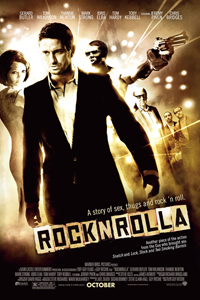
    So it was last week when I reviewed Guy Ritchie’s “RocknRolla,” which screened yesterday in Toronto and opens in the UK today. I thought it a dismal effort, but was quite prepared to be in the minority on that one. Nonetheless, the extreme split in opinion that is emerging has taken me by surprise — not least because it seems to be on geographical lines.

    The UK reception for “RocknRolla” has been decidedly frosty, with the tabloids and the more highbrow broadsheets seemingly united in their contempt for the film. The Daily Mail deems it an “embarrassing turkey,” and The Guardian — in a one-star review that’s not as funny as Peter Bradshaw thinks it is — is right with them, calling it a “shocker.” (Or “shocka,” to use Bradshaw Mockney-aping spelling.)

    The Times is moderately kinder, acknowledging its entertainment value, but complaining that “it brings back too many jaundiced memories and fails to lay any fresh tracks.” The drubbing continues at The Independent, who blame the “inexcusable banality” of Ritchie’s script, while The Telegraph complains the film is “loud and brash but goes nowhere.”

    Cross the pond, however, and the US trade papers seem to have seen an entirely different film at Toronto. Variety loves “RocknRolla,” declaring it “cleverly constructed, sensationally stylish and darkly hilarious,” and predicting strong Stateside business. The Hollywood Reporter seconds that emotion, calling it Ritchie’s “most accessible and enjoyable film yet.” (Have they seen “Lock, Stock and Two Smoking Barrels?”)

    (more…)

  • REVIEW: “RocknRolla” (*1/2)

    Warner Bros. Pictures\'s RocknRollaShort of seeking or citing any legitimate critical opinion, the marketing team behind “RocknRolla,” the fifth feature from Guy Ritchie, have gone to much effort to portray it as a creative comeback for the much-maligned filmmaker.

    Here in the UK, the words “return to form” are splashed prominently across billboards for the film (set to make its North American bow at the Toronto fest): a frank admission that Ritchie’s last two efforts, “Revolver” and “Swept Away,” were across-the-board disasters. They appear to be working the angle that this is something of a back-to-basics effort, a happy reunion between Ritchie and knockabout gangland comedy.

    And indeed, for the first few minutes of “RocknRolla,” hopes are high that Ritchie has rediscovered the fleet-footed timing and lightness of touch that made his trend-setting 1998 debut “Lock, Stock and Two Smoking Barrels” such a delight, and its lesser follow-up, “Snatch,” such a guilty pleasure. The animated credit sequence, as you may have heard, is a thing of considerable beauty. More importantly, the opening scene, which employs swift, sexy cuts between multiple actors and locations to maintain a multi-voiced monologue on the fortunes of present-day London (Ritchie presumably wrote this before the recession), is something to behold.

    But then the pace settles, the actual narrative reveals itself — and the whole enterprise, shorn of these initial stylistic tics, steadily falls apart. Ritchie has dialed down his style of story construction since the incomprehensibly convoluted “Revolver,” but he may have overcompensated — the size of the ensemble notwithstanding, there is really very little storytelling motor here.

    (more…)