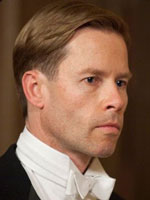
 Unless you really haven’t been paying attention, you’ll have noticed by now that a few people have taken issue with the history lesson given by “The King’s Speech.” Or more specifically, with the one not given: that George VI supported British PM Neville Chamberlain’s policy of appeasement towards Adolf Hitler, while his brother Edward VIII was an outright Nazi sympathizer, none of which is acknowledged in the film.
Writing for The New Republic, Isaac Chotner took the film to task both for “grossly misrepresenting real events and people” and for shortselling its own dramatic potential through these omissions, while none other than Christopher Hitchens raised the same issue in a recent Slate essay, damning the film as “a major desecration of the historical record.”
Whatever my own issues with the film, its historical filleting hasn’t been high on the list. As much as I think the gray political alliances of the Royal Family would make for a far richer narrative, the bottom line is that screenwriter David Seidler was more interested in George VI’s personal struggles — as a dramatist, it’s his right to frame the story as he wishes, free of the obligation to furnish the audience with every historical detail.
 The word of the day Friday will most certainly be
 In one of the weakest years in memory, not just for performances but for great films, 2001 saw Denzel Washington and Halle Berry knock “two birds out with one stone,” as the former declared on Oscar night, as two African Americans won the top acting prizes for the first time ever. And it was difficult to argue with either.
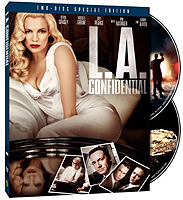 One of the greatest experiences I have ever had at a Toronto festival was the North American premiere of Curtis Hanson’s “L.A. Confidential,” which was instantly declared a masterpiece and one of the great film noirs in movie history.
 Listening to the conversations of the other critics in the various theaters, it becomes very clear that this year’s fest has been something of a disappointment, the first in a long, long time.