In Contention

Tag: Gladiator

  • LIFE WITHOUT OSCAR: 1999 and 2000

    Catch up with the idea behind this series here.

    We’ve all heard that 1999 is the best year in movies since 1939 or possibly ever, but it’s hard to defend that statement if you actually believe “American Beauty” is the cream of the crop like the Academy did. Yet another “you had to be there” award that the Academy seems so prone to, while Cannes can pick timeless classics more often than not.

    At least the Academy saw fit to reward true ingenuity in the form of three nominations apiece for “Being John Malkovich” and “Magnolia.” They even stuck a toe in the water of bravery by nominating a song from “South Park: Bigger, Longer & Uncut,” even if it was the worst and least offensive one in the film.

    The first year of the new millennium was conquered by “Gladiator,” but will perhaps be better remembered for Steven Soderbergh’s near-unprecedented double Best Director nomination and the record-breaking 10 nods nabbed by “Crouching Tiger, Hidden Dragon,” the most ever for a foreign film.

    Academy members also seemed to have popped in their “Dancer in the Dark” soundtrack CDs but couldn’t be bothered to do the same with the actual movie, which is the only way to explain Björk landing a nomination for Best Song and not Best Actress.

    This year marked Steve Martin’s first time at the helm and he remains my favorite Oscar host ever thanks to deadpan gems like, “You know, I saw the movie ‘Crouching Tiger, Hidden Dragon,’ and I didn’t see any tigers or dragons. Then I realized, it’s because they’re crouching and hidden.”

    Here’s what I recommend you spend your time watching.
    (more…)

  • THE LONG SHOT: Bait, switch

    Whether you choose to believe them or not – and speaking for myself, I don’t quite – the media powers that be have currently reduced the 2010 Best Picture race to just two titles: “The Social Network” and “The King’s Speech.” That’s entirely (and hopefully, lest things get too dull too soon) subject to change over the next four months, but given what we’ve seen at this point, it’s difficult to devise a could-win theory for many of the films most fancied for the remaining eight slots, be it “Inception” or “Another Year.”

    I don’t really blame those in the blogosphere who are narrowing things down to this pair of films: after a lackluster Toronto fest failed to turn up a hidden dragon along the lines of “Slumdog Millionaire,” the slate of contenders looks much as it did before the fall festival season began. With expectations for “Network” and “Speech” pegged high all along, meeting them was enough to seal frontrunner status.

    Moreover, the temptation to pit David Fincher’s modish Facebook story and Tom Hooper’s tony royalty porn against each other is hard to resist, given how conveniently the films are opposed: both acclaimed biopics after a fashion, but one concerned with present-day American youth, the other with British aristocracy of yore. “It’s the time-capsule piece versus the time-warp piece,” snarked one friend of mine recently, anticipating a narrative that will likely run all season, even if other frontrunners enter the fray.

    (more…)

  • ‘Amelie’ tops list of decade’s best cinematography

    The folks at Movieline got their hands on a list of the top 50 films of the decade, from a cinematography standpoint, as laid out by voters at American Cinematographer magazine. Topping the list: Bruno Delbonnel’s work on “Amelie.” Delbonnel is a favorite among DPs. After all, “A Very Long Engagement” won him the ASC honor in 2004 and he received his third Oscar nomination of the decade for last year’s “Harry Potter and the Half-Blood Prince.” But it’s still a surprising call.

    Another delightfully unexpected pick is Jeff Cronenweth’s lensing of “Fight Club,” but I was personally irritated to find John Toll’s serene, thematically potent work on “The Thin Red Line” go completely unrecognized in the top 10 (he finally shows up at #17).  I’d also say Roger Deakins, though at his usual top notch on “No Country for Old Men,” probably should have seen top 10 representation for “The Assassination of Jesse James by the Coward Robert Ford” instead.  His work on the western just misses at #11.

    I’ve been asked many times to offer up a list of the top 10 shots of the decade as a bonus to my annual top 10 shots of the year columns, but I don’t think I can do it.  For one thing, it’s obviously a ton of work, but with so many shots in so many movies, I just think it would be tough to whittle it down.  Too tough.

    Check out the full list from American Cinematographer after the jump.  (Note they’re picking from 1998 to 2008).

    (more…)

  • The kids are NOT all right (or alright, for that matter)

    This post is so unnecessary because it is an obvious lost cause. It really shouldn’t even be enough to get a rise, but in me, it just…does.

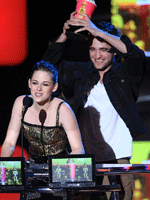
    You know, once upon a time the MTV Movie Awards (which are voted on publicly) actually seemed to reflect an edge in America’s youth. Think about it. “Terminator 2: Judgment Day” won the MTV award for Best Picture. “Menace II Society” won the MTV award for Best Picture. “Pulp Fiction,” “Seven,” “Scream,” “There’s Something About Mary,” “The Matrix,” “Napoleon Dynamite,” etc.  Room was even made here and there for prestige pics that tapped a pop culture vein.  “A Few Good Men,” for instance, or “Titanic,” “The Lord of the Rings” trilogy and “Gladiator,” one of only two times the award matched the Academy’s choice.

    And in the last five years?  Scary.  “Wedding Crashers,” “Pirates of the Caribbean: Dead Man’s Chest,” “Transformers” and far and away the two worst films to win a popcorn statue: “Twilight” and “The Twilight Saga: New Moon.” (Why, Bill, why?)  What the hell happened to the MTV audience?  What happened to the kids’ edge?  Who are these people?

    (more…)

  • THE LONG SHOT: What is an “Oscar movie” these days?

    George Clooney in Up in the Air“God, that thing’s just going to shit Academy Awards out of its ass next year, isn’t it?,” I overheard a journo behind me remark to his companion, as I made my way out of the “Up in the Air” press screening on Sunday. “It’s such an Oscar movie.”

    Two things struck me as interesting about this throwaway remark, both relating to the lack of care with which both Oscar pundits and “serious” film lovers tend to regard the Academy Awards.

    The first was that, isolated and in print, the guy’s words appear dismissive of “Up in the Air,” yet they actually capped a mostly enthusiastic response to the film. His tone dipped almost apologetically as he applied the “Oscar movie” label, as if it somehow sullied an otherwise fine effort.

    More to the point, however, the remark seemed indicative of the transitive stage the Academy Awards seem to be in at the moment, as simultaneously resistant and vulnerable to industry change as the protagonist of Jason Reitman’s film – and facing a similar crisis of purpose. For 15 years ago – if not necessarily 15 years before that – “Up in the Air” wouldn’t have been decreed an “Oscar movie” at all.

    (more…)

  • THE LONG SHOT: What are precursors for, anyway?

    Anne Hathaway at the 2009 Critics Choice AwardsI didn’t time my holiday to coincide with the sleepiest week of awards season, but that’s how it panned out anyway. While I spent 10 days drinking my way along the canals of France’s Burgundy region, divorced from my computer screen and, I admit, any thoughts of Oscar whatsoever, the industry, too, took a collective siesta.
    As people assimilated the minimal revelations of this year’s festival run (Gosh, people like “Precious?” Who knew?) and steeled themselves for the annual madness ahead, the Producers Guild of America clearly aimed to take advantage of the lull by announcing the expansion of its feature film nominees to 10. The blogosphere stirred briefly, dutifully posted the press release, and went back to sleep.

    The PGA was probably hoping for more of a reaction than it got, but that’s what happens when you ape a larger organization’s move three months after the fact…as everyone suspected you would, anyway.

    The truth, however, is that the news was as dispiriting as it was unsurprising. Because for all the organization’s feeble claims that the copycat move was made purely in the interests of artistic diversity, all it does is expose a serious identity crisis that afflicts many of the season’s precursors.

    (more…)

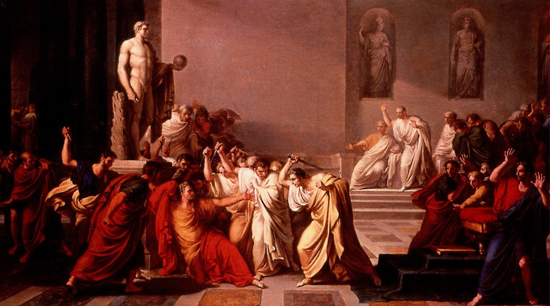
  • Happy Ides of March

    Two days before you get your drink on, raise a cup to dear departed Caesar.  By the way, it’s been 56 years since Joe Mankiewicz’s adaptation of Shakespeare’s play and nine years since the facts of Marcus Aurelius’s reign were twisted for drama’s sake (in a film I quite like, regardless).  When are we going to get another great Roman epic, or better yet, THE great Roman epic?  A solid revisiting of the Bard’s material would be good enough, I guess, though I never saw the Jeremy Sisto TV thing.

    Beware the Ides of March

  • The new millennium Oscars?

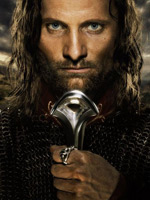
    Viggo Mortensen in The Lord of the Rings: The Return of the KingLooking back over the previous Oscar winners for Best Picture since 2000, the start of a new century (and a new millennium), I find myself wondering sometimes what the hell the Academy was thinking.  It’s no secret I disagree with the Academy a lot, but I can also admit that when they get it right, they get it right.

    But since 2000, their Best Pic choices have run the gamut from incredibly ridiculous, “Gladiator” and “A Beautiful Mind” being just goofy, to bang on, with “The Departed” and “The Lord of the Rings: The Return of the King.”  I am told the Academy is moving in a more progressive direction, willing to take more risks, and I suppose some of these winners do just that.  But they could have gone further.

    Year by year, here’s a quick look, with some thoughts about who might have won, and who should have at least been nominated…

    (more…)

  • The Guardian dashes Ledger’s Oscar hopes

    Not particularly new or earth-shattering perspective, but worth a link nontheless.  From a Xan Brooks item this morning in The Guardian:

    History…is not on [Ledger’s] side. James Dean was twice nominated in the wake of his death and yet still finished up as a posthumous loser on the night. More recently, Oliver Reed (for Gladiator) and Ulrich Mühe (The Lives of Others) were both tipped in vain for at least a nomination. In fact, the only actor ever to be awarded a posthumous Oscar was Network’s Peter Finch. Felled by a heart attack during the voting period, he swept to glory on a tidal wave of grief.

  • Best actor contenders join an eclectic list of recent winners

    Sean Penn, Benicio Del Toro and Frank Langella seem to be the names bandied about for Oscar consideration this year, which would place them in some impressive company of nominees and winners these last 20 years. Of course, that said, there have also been some bizarre choices for the Best Actor award, which has often left me shaking my head in disgust and wondering what these voters were actually seeing.

    Since 1988, there have been 10 winners that perhaps should not have been, the award arguably deserved by another of the nominees, or worse, an actor not nominated! Consider Dustin Hoffman in “Rain Man,” a widely acclaimed performance that asked that he not connect with anyone in the film, never make eye contact, rock back and forth and speak in a nasally voice.

    Stop what you are doing right now and try what he did in the film, and trust me it is very easy to do. Now do you deserve an Oscar for doing what Hoffman did in that film? The real perfortmance in “Rain Man” was that of Tom Cruise, who we watched evolve over the course of the film, and of course the best performance of that year was Gene Hackman as the tough investigator in “Mississippi Burning.” Hackman was nominated, but he stood no chance in the wake of the juggernaut of support for Hoffman, who in fact should have won years before for his miraculous work in “Tootsie!”

    (more…)