In Contention

Tag: Gaspar Noe

  • ‘Enter the Void: Bigger, Longer and Uncut’

    Gaspar Noé’s “Enter the Void,” which was finally released in autumn after lying in distribution limbo since Cannes 2009, is not exactly a film that inspires widespread agreement.

    My own 2009 review of the French enfant terrible‘s deranged follow-up to “Irréversible” dismissed it as “fatuous… deploys an arsenal of tricked-out technique and a colossal running time of 163 minutes to make the startling revelations that death is, like, sad, and that drug-dealing is generally not a good idea.”

    Kris, by contrast, couldn’t have landed any further from me on this one, going so far as to name the film in his Top 10 of the year. It’s that kind of conversation-piece picture, and we’re grateful for them — and even more grateful now that IFC has announced plans to re-release the film theatrically in the form its maker intended.

    (more…)

  • ‘Enter the Void’ poster

    Gaspar Noé’s “Enter the Void,” a three-hour melange of bad-trip imagery, medium-core sex and approximately 1,736 swooping crane shots, has hovered in distribution limbo since last year’s Cannes festival, and no wonder: these days, it’s hard enough for perfectly innocuous foreign festival fare to find American friends, let alone a film that chucks a graphic abortion sequence in the final act just to check that you’re still awake. Nonetheless, IFC has been brave enough to adopt this jolly romp; it hits U.S. arthouse screens on September 24.

    I was less than whelmed by the film at last year’s London fest, writing that Noé’s “fatuous follow-up [to “Irréversible”]  deploys an arsenal of tricked-out technique and a colossal running time of 163 minutes to make the make the startling revelations that death is, like, sad, and that drug-dealing is generally not a good idea.” (And I was pro–“Irréversible.”) Others differ considerably: Manohla Dargis, for one, all but credits the film with rewriting cinematic language. Expect the disagreement to continue this autumn; for now, check out the suitably lurid poster (courtesy of Vulture) after the cut.

    (more…)

  • LONDON: ‘Enter the Void,’ ‘Wolfy’

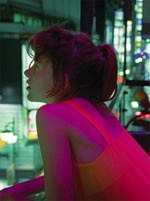
    Paz de la Huerta in Enter the VoidAs if sympathetic to the fact that I’d have a pounding hangover from Wednesday’s swish opening party in Chelsea, festival organizers were kind enough to schedule a film I’d already seen, “The Men Who Stare at Goats,” for the next morning, affording me a much-needed lie-in.

    Still, George Clooney’s second go-round on the LFF red carpet in as many days was the day’s major event. I already weighed in on the film at Venice, though from conversations I’ve had with others, I’m not finding many supporters for my view that the film is big, silly fun.

    Anyway, missing this stop on the Clooney-London express afforded me the chance to catch up with two artier prospects that had been high on my festival priority list, one big (Gaspar Noé’s latest Cannes-endorsed provocation “Enter the Void”) and one small (Russian playwright Vassily Sigarev’s filmmaking debut “Wolfy”). Guess which one was the keeper.

    “Enter the Void” (**)

    Back in 2002, more column inches were spent on two isolated scenes — an agonizing rape sequence and that fire-extinguisher bludgeoning — than the whole of Gaspar Noé’s “Irréversible,” but amid the shrill cries of the moral police, the film arguably received insufficient credit for its thoughtfulness (and structural verve) in probing and evaluating the way we respond to onscreen violence. An astonishing technical feat by any measure, it was that rare film that revealed something of the viewer to himself, albeit in an unpleasant fashion.

    (more…)

  • Final Cannes contenders unveiled

    Paz de la Huerta in Enter the VoidThat’s it — all 20 Palme d’Or contenders have now screened for critics, and the final deliberations can begin. Most of the media attention in the past two days has focused on Gaspar Noé’s new film “Enter the Void,” though it hasn’t aroused anything like the firestorm of controversy that his “Irréversible” did in 2002. (Perhaps the media simply hasn’t the energy for a fight after “Antichrist.”)

    Although reportedly as violent and sexually explicit as one would expect from Noé, the film, which screened at the Croisette in still-unfinished form, seems to have prompted more confusion than outrage from the press. The critical response, meanwhile, is more positive than might have been expected. Manohla Dargis leads the cheer team for the film:

    An exceptional work, though less because of its story, acting or any of the usual critical markers. What largely distinguishes it, beyond the stunning cinematography, is that this is the work of an artist who’s trying to show us something we haven’t seen before, even while he liberally samples images and ideas from Stanley Kubrick and the entirety of American avant-garde cinema. The grungy milieu and calculated shocks might have been designed to make you flee – even while your attention is tethered to the camera – but, really, these aren’t the point. The point is the filmmaking.

    ScreenDaily’s Mike Goodridge is somewhat awed, describing the film as “a wild, hallucinatory mindfuck” that is “nothing short of hypnotic,” even suggesting the film as a future staple for narcotic-fuelled viewings — though like Dargis, he dismisses the characterisation and narrative as being of secondary quality and importance. Variety is less forgiving, labelling the film “tiresomely gimmicky” and implying it is less “pure cinema” than “pure trash.”

    (more…)

  • Cannes soup

    Palme d'OrThere’s a bewildering wealth of quality Cannes coverage out there, and it tests the realms of possibility to mention it all. In the interests of economy, however, here’s a selection of the more interesting festival-related nuggets I found today:

    Eugene Hernandez at IndieWire has a superb piece up in which he approaches a broad selection of industry figures and bloggerfolk with the question of whether Cannes matters much these days. The response of many is sad yet predictable: that the festival does indeed matter from the purist’s perspective of showcasing artistically nourishing films, but that with the commercial window for foreign and/or arthouse fare increasingly narrowing, it has less bearing on the U.S. market than it should. Still, I liked the succinctly idealistic take of one interviewee: “When Cannes no longer matters, film will no longer matter.”

    Back to the films themselves, the New York Times’ Joan Dupont offers her own rundown of the key titles in the mix, picking up, as others have,on the prevalence of controversial auteurs in this year’s lineup. She also provokes this soundbite from the fest’s executive director Thierry Frémaux, explaining why this year’s Competition line-up is so heavy on previous winners and established names:

    “Yes, the big names are back, and with big films … The selection reflects our concern for auteurs — that’s our job. You need to be strong to be in competition; everybody’s watching you. That’s why we think that many films are better off in Un Certain Regard. The filmmakers don’t always agree.”

    I can’t say I agree, either. It’s precisely two decades since a miniature character study from a 26 year-old first-time director walked off the Palme d’Or and changed the face of American independent filmmaking in the process — would Steven Soderbergh have been relegated to the Un Certain Regard sidebar today? I suspect so, and that demonstrates a cautiousness that can only curb Cannes’ capacity for trend-setting.

    (more…)

  • Cannes: sizing up the Competition, part two

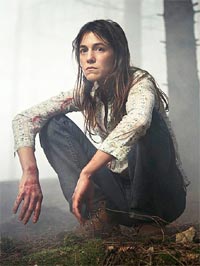
    Charlotte Gainsbourg in AntichristContinuing yesterday’s survey of the runners and riders in the race for the Palme d’Or…

    “ANTICHRIST” (Lars Von Trier)

    The pitch: You’ve seen the trailer. Charlotte Gainsbourg and Willem Dafoe star as bereaved parents who retreat to a remote woodland cottage to nurse their grief, only to be terrorised by unnamed forces of evil. (English dialogue)

    The history: Over his seven previous Competition appearances, Von Trier has enjoyed a gradual ascent from the Technical Grand Prize for 1984’s “Element of Crime,” to the Jury Prize for 1991’s “Europa,” to the Grand Prix for 1996’s “Breaking the Waves” (1996) to, at last, the Palme d’Or for 2000’s “Dancer in the Dark.” Nothing since then, however, with his masterful “Dogville” coming up surprisingly (and undeservingly) empty-handed.

    The outlook: The film may appear to be familiar (albeit bloody terrifying) horror fare in the trailer, but we should know by now never to presume what a maverick like Von Trier has up his sleeve. Cannes is usually averse to the genre, so whether the film made the lineup because it’s something more subversive, or simply because it’s directed by one of their favourite sons, remains to be seen. Either way, the film will need to be something special to get Von Trier back in the winner’s circle – after all, “Dancer in the Dark” proved so polarising, juries have been unwilling to take a chance on him since. He tends to put his actresses through the wringer, so perhaps there’s a chance for Charlotte Gainsbourg here – but who knows?

    “SPRING FEVER” (Lou Ye)

    The pitch: Erotic drama follows a young man hired to survey a married man’s homosexual affair; tangled relationships ensue as the spy and his girlfriend become sexually drawn to the adulterous couple. (Mandarin dialogue)

    The history: Not counting an unfortunate 2006 withdrawal after his “Summer Palace” fell foul of Chinese censors, this is Lou’s second Competition appearance.

    The outlook: There is a great deal of goodwill in the world-cinema fraternity for Lou, who has fought a continuous battle with the Chinese censorship board. His last film, the politically charged “Summer Palace,” resulted in the director receiving a five-year ban from filmmaking – a ruling Lou is flagrantly flouting by screening his new film (which was shot in secret on handheld cameras) at this year’s festival. It’s a courageous move, and I think there’s a strong chance the jury might like to demonstrate their support for the embattled auteur with a prize of some variety.

    (more…)

  • Troublemakers united

    IrreversibleYours truly began a two-part Cannes preview this morning, but there is plenty more such coverage around if you’re beginning to get festival fever. I particularly liked Jonathan Romney’s rundown in the Independent, in which the critic points out an interesting trend in this year’s lineup: namely the convergence of several renowned enfants terribles in one year.

    There’s almost always one title in contention whose extremities — whether of sex, violence or other — set tongues wagging along the Croisette, but this year looks to be particularly hard on the faint-hearted. Quentin Tarantino’s bound-to-be-grisly “Inglourious Basterds” looks positively milquetoast compared some of the other fare on offer, including “Oldboy” director Park Chan-Wook’s decidedly adult vampire tale “Thirst” and Lars Von Trier’s seemingly unnerving foray into horror territory, “Antichrist.”

    Michael Haneke’s new effort doesn’t look like a box of kittens either, but as Romney writes, none of these filmmakers instil quite as much fear in mild-mannered filmgoers as Frenchman Gaspar Noé:

    These days, the shocks come a little stiffer. A hardened colleague of mine walked out of Gaspar Noé’s Irréversible (2002) after the opening salvo of 13 blows to the head with a fire extinguisher – thereby missing considerably worse to follow … With Enter the Void, it’s more than likely that he’ll attempt to up the ante on Irréversible. Touted as “a hallucinatory maelstrom”, it involves a stripper’s brother who reviews the violent circumstances of his death, from the afterlife. Laden with special effects and screeching neon colours, Noé has promised it will be more psychedelic than violent – but at two-and-a-half hours, it certainly won’t be an easy ride.

    I’m interested to see whether Noé can build more critical cache this year beyond the controversy that greeted his previous work — for all its look-at-me theatrics, “Irréversible” is a much better film than it’s usually given credit for. With several other title jostling for the attention of the more excitable media outlets this year, perhaps there’s more of a chance people will find the film beneath the fuss.

    And as Romney points out, if anyone can handle it, it’s a jury that includes such notably fearless figures as Isabelle Huppert and Asia Argento. Bring it on.