In Contention

Tag: Frank Capra

  • LIFE WITHOUT OSCAR: 1943 and 1944

    Catch up with the idea behind this series here.

    The Academy and America were in the thick of World War II and patriotism or sentimentality were the order of the day. “Casablanca” and “Going My Way” were the two big winners in the history books and while I can hardly argue with the former, the latter hasn’t aged well at all. It was the first film to win Best Picture in front of a nationwide audience as ABC broadcast the ceremony for the first time… on the radio. The event was still filmed for newsreel purposes though. Don’t believe me? Ask the dishes (Youtube!)

    The ceremony was beginning to look more and more like what we are used to, with Best Picture getting whittled down to five, powerhouse films taking more and more of the awards and one guy getting nominated for Best Actor and Best Supporting Actor for the same performance. Okay, maybe we never got used to that last one. A quickly changed rule made sure that never happened again but it’s too bad they can’t as easily change the history books to reward these films instead.

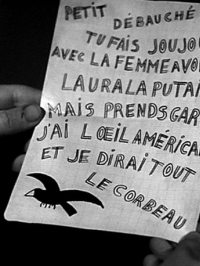
    1943 – “Le Corbeau” (Henri-Georges Clouzot)

    I’m not sure why some foreign titles retain their original title in popular conversation and some don’t, but the American DVD release of this film goes by “Le Corbeau” and so shall I. Translated as “The Raven,” it’s an early film made by one of my absolute favorite filmmakers of all time, Henri-Georges Clouzot, who only ever received one nomination for Best Foreign Film in his life.

    (more…)

  • THE LISTS: Top 10 Oscar nominee fields

    Ralph Fiennes in Schindler's ListIn exactly one week’s time, we’ll have a brand new list of Oscar nominations to pore over, pick apart and eventually file away in our subconscious with the other 81 editions of this annual collective. For Oscar geeks, nomination day is in many ways more exciting than the ceremony itself, celebrating a broader spectrum of work and throwing up far more surprises along the way.

    For all that, once the winners are announced, the nomination list as a whole tends to be disregarded, returned to only by trivia buffs and the geekiest of Oscar geeks. (Guilty on both counts.) And that’s shame, because a field of five nominees can often be more illuminating viewed collectively than even the worthiest of individual champions.

    Today’s list, then, is devoted to that most elusive of Oscar holy grails: the perfect nominee field.

    Yes, more often than not, the Academy will nominate several notable achievements in a single category. But rarer than hen’s teeth are the robust Oscar categories that feature a full house of five outstanding nominees, five contenders that would all be worthy of a win in any other year. No unremarkable coaster nominees sliding in on the coattails of a popular picture. No bad films with an expensively studio-bought  nominations. No filler. No fat. Just five superb achievements.

    (more…)

  • REVIEW: “Capitalism: A Love Story” (***)

    Capitalism: A Love StoryVenice Film Festival

    It was well before Michael Moore dropped an extensive archive-footage chunk of a Franklin D. Roosevelt speech into the last reel of “Capitalism: A Love Story” that the following thought entered my head, but the appearance of FDR and his homespun common sense crystallized it: Michael Moore is this generation’s Frank Capra.

    By that token, “Capitalism: A Love Story” – an artlessly effective slice of rah-rah rhetoric more sincerely idealistic than anything the director has yet put his name to – represents Moore’s “It’s a Wonderful Life.”

    A film made in the infant stages of vast social healing (substitute the end of WWII for the beginning of the Obama presidency), it uses its transitional timing to examine alternately the America that was, could have been and hopefully will be.

    As with the prototypical Capra film, “Capitalism” places its faith in the American everyman, while blanketing evil as a vaguer collective, defending the rights and ability of the former with unashamed sentimentality and sledgehammer subtlety.

    The bait for the filmmaker’s multiple critics to seize upon is left prominently and deliberately exposed – the film is a veritable compendium of all Moore’s most manipulative muckraking tactics, whether it’s the wilfully decontextualized use of vintage news clips or the breathtaking exploitation of having an ordinary Joe tearfully read a love letter to his deceased wife on camera. No button is left unpushed in the service of an argument that already doesn’t have to work very hard to win over the liberal public, but Moore isn’t one to leave much to chance.

    (more…)