In Contention

Tag: FIPRESCI

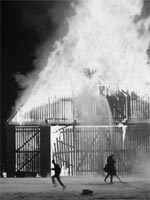
  • FIPRESCI names ‘The Tree of Life’ film of the year

    Well, did anyone expect otherwise? FIPRESCI, the international association of film critics that routinely hands out its own award at film festivals, has named Terrence Malick’s “The Tree of Life” the winner of its annual Grand Prix award — for the film voted the year’s finest in a poll of their 200-plus membership.

    (Before anyone protests that it’s a little early to be dishing out Film of the Year honors, the eligibility bracket is an autumn-to-autumn deal, scheduled to fit with a presentation at the San Sebastian Film Festival. A 2010 critics’ favorite like “The Social Network,” for example, would have been up for consideration this year.)

    A slight irony is that Malick’s film didn’t actually win FIPRESCI’s own award at May’s Cannes Film Festival — it was pipped to the post by Aki Kaurismäki’s still-unreleased “Le Havre.” The discrepancy, of course, can be explained by the difference between jury and mass voting patterns: the Cannes prize is determined by a select handful of members, while a collective membership vote is more likely to favor big-league critics’ darlings.

    (more…)

  • FIPRESCI names ‘Ghost Writer’ Film of the Year

    This news actually dropped a few weeks ago, but I neglected to mention it while I was distracted with Venice goings-on. Anyway, since the award was presented at the San Sebastián Film Festival this past weekend, it seems appropriate to bring it up now.
    FIPRESCI, the international critics’ association, is best known for the independent awards they dish out at most major film festivals — which, obviously, tend to line up more with critical consensus than jury decisions. (At Venice last week, for example, they chose the widely admired Russian entry “Silent Souls.”)

    However, once a year, they poll their collected membership to elect a Grand Prix winner for Film of the Year. A list of past winners of the prize, awarded since 1999, reads rather like a greatest-hits compilation of recent arthouse cinema: “There Will Be Blood,” “4 Months, 3 Weeks and 2 Days,” “All About My Mother,” and so on.

    So, what’s their Film of the Year for 2010? Roman Polanski’s “The Ghost Writer.”

    (more…)

  • Justice for ‘Lourdes’

    Sylvie Testud in LourdesAs I wrote in my reflection on the Venice festival awards yesterday, the biggest surprise (and by no means a pleasant one) of the jury’s winners list was the complete lack of recognition for Jessica Hausner’s excellent, quietly subversive religious drama “Lourdes,” a favorite of critics and pundits alike.

    Happily, FIPRESCI is there to set things right. The international critics’ organization, which hands out its own awards at every major festival (and many minor ones, too), has honored “Lourdes” as the best film at Venice this year.

    It’s a prestigious citation, often given to films with broader arthouse appeal than those the jury might select: recent Venice FIPRESCI honorees include “The Queen,” “Good Night, and Good Luck” and “The Secret of the Grain” (or “Couscous,” to my fellow Brits). They’re not always contrarian, either: they matched the Cannes jury this year by picking “The White Ribbon.”

    (more…)

  • FIPRESCI names ‘White Ribbon’ best film of the year

    A scene from The White RibbonIt’s been a very good week for Michael Haneke’s Palme d’Or winner “The White Ribbon.” One day after being selected as Germany’s official entry in the Oscar race, it has received a prestigious addition to its trophy cabinet in the shape of the FIPRESCI Grand Prix for Film of the Year. (Before you complain that the award is a few months premature, the eligibility period runs from July 2008.)

    You probably recognize FIPRESCI (International Federation of Film Critics) as the body that hands out its own awards at a wide range of film festivals throughout the year. (Of course, “The White Ribbon” also nabbed a Cannes FIPRESCI gong back in May.)

    But the Grand Prix, which was inaugurated in 1999 and is (rather randomly) handed out at the opening ceremony of the San Sebastian fest in September, represents the culmination of a year’s worth of honors, and must rank as one the most all-inclusive awards in existence. As you can see from the list of previous winners below the cut, Haneke’s win here places him in some illustrious company.

    (more…)