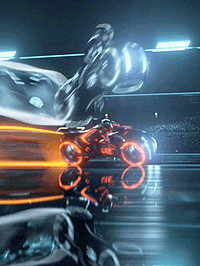
 It’s somewhat intriguing to note how far the visual effects side of filmmaking has come in the last three decades. When “TRON” was released in 1982, it’s FX wizardry was disqualified from Academy Award consideration. The reason: the use of computer technology to achieve its look and environment was deemed, believe it or not, “cheating.”
Today, hard drives and databases are considered vital tools in the filmmaker’s arsenal, and not simply in the blockbuster realm, either. Not only that, but digital production is very much the future of the medium. And the craftsmen and women at Digital Domain are a big part of that ever-changing equation.
A few weeks back I trekked out to the company’s Venice, CA production facility to talk about the work put into that film’s sequel, “TRON Legacy,” with CEO Cliff Plumer, commercial division head Ed Ulbrich, visual effects supervisor Eric Barba and animation head Steve Preeg. That new vision was very much at the forefront of discussion.
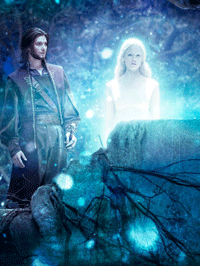 I find it somewhat appropriate to be ending my in-depth looks at the crafts categories with a discussion of Best Visual Effects. This is, after all, a category which awards the sort of behind-the-scenes crafts work that is often prominently displayed in advertisements and talked about with reverence after the film ends.
 After six months of Tech Support previews and interviews, the films have arrived, the nominations have been announced and the guilds, the critics and BAFTA have all announced their preferences. Today we take a final look at the races before the envelopes are opened on Sunday.
 Yesterday was the first of our two-part look at the crafts artists behind “The Curious Case of Benjamin Button.” Today, I feature conversations with cinematographer Claudio Miranda, visual effects supervisor Eric Barba and film editors Kirk Baxter and Angus Wall, who have all received Oscar nominations for their work on the film.