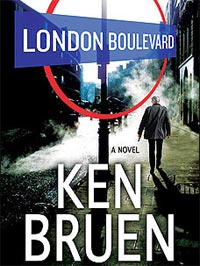
 When Oscar-winning screenwriter William Monahan (“The Departed”) brings Irish crime writer Ken Bruen’s 2001 novel “London Boulevard” to screen in his directorial debut, he won’t be adapting the text so much as returning it to its natural source.
A short, sharp, deliciously black-hearted thriller that reads not unlike a readymade screenplay in its brisk, dialogue-dominated prose, Bruen’s novel makes its debt to Hollywood clear not only in its construction (brief, propulsive chapters of only a couple pages’ length resemble individual cinematic scenes) and its assorted winking namechecks of bygone films and stars, but in its very conception.
The title – not a location (locals will know that there is no London Boulevard in the British capital) but a metaphor of sorts – is our first clue to what Bruen is up to: the novel is itself an adaptation, and Billy Wilder’s gothic Hollywood noir “Sunset Boulevard” is the source material.
The novel’s allusions to the 1950 classic aren’t exactly subtle. Where Wilder’s film gave us Joseph C. Gillis, a destitute L.A. screenwriter who seeks shelter in the mansion of faded movie goddess Norma Desmond to escape the repo man, “London Boulevard” crosses the Channel, jumps a half-century forward, and replaces Gillis with Mitchell, a middle-aged ex-con who dodges the ghosts of his past (and his own compulsive criminal urges) by shacking up in the plush Holland Park pad of Lillian Palmer, a washed-up theater diva plotting her triumphant West End return.
 The London Film Critics’ Circle have just
 What else is there to say? Tomorrow we’ll have a new president and the last eight years will, hopefully, start to fade away. In four days we’ll have a fresh slate of Oscar nominees and the last four months of awards speculation will suddenly be a distant memory. The big wheel keeps on turning.

 This is just like the National Society of Film Critics. Sorry, just coming around to this (football has taken some precedence this afternoon as I unwind post-vacation). “Waltz with Bashir” may have taken the top prize, but “Happy-Go-Lucky” was the clear favorite. Perhaps added fuel to the film’s Oscar fire. Lone director nomination? Hmmm…
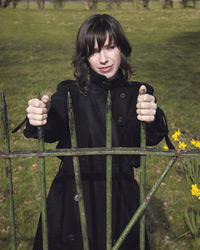 “We didn’t necessarily set out to create someone as perpetually sunny as Poppy,” says Sally Hawkins of her radiant performance in Mike Leigh’s “Happy-Go-Lucky,” which is currently
 Shocking. “WALL-E” is officially the most overrated film of the year, but that having been said, this is one hell of a ballsy move on the part of the L.A. film critics (whose vote came down a lot earlier than I expected).
 Thanks to bright-eyed, bushy-tailed commenter Silrone for pointing out that the winners of the British Independent Film Awards were announced while I was mired in technical problems.
 I happened upon
 The British Independent Film Awards are an odd, under-the-radar institution that frequently like to avoid the obvious and champion the underdog. Last year, for example, they bypassed the starrier likes of “Eastern Promises” and “Notes on a Scandal” to award their top prize to Anton Corbijn’s magnificent, under-rewarded “Control.” The previous year, they were even more daring: Best Film justly went to “This Is England” over “The Queen,” while Helen Mirren and Forest Whitaker — gasp — lost to the unknown leads of Andrea Arnold’s “Red Road.”
 Apologies for the slightly delayed wrap. Much to discuss this week — here are the highlights:
 It is somehow fitting that I meet Eddie Marsan not in the lounge of some swanky West End hotel or members’ club, but amid the worn wooden chairs and scuffed 1970s wallpaper of his local pub in the villagey West London suburb of Chiswick. For Marsan is not a movie star, but an actor — and that’s the way he likes it.
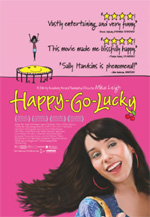 Wow. I was expecting a warm Stateside reception for Mike Leigh’s “Happy-Go-Lucky,” but even so, this is exceptional. For those who place stock in such things, the film’s
 Uh-oh.