 As far as I know, Nora Ephron’s “Julie & Julia” is still under a reviewing embargo, but the New Yorker’s Ariel Levy has sneakily buried a brief, incisive critique of the film at the tail of a substantial profile of Ephron. (Thanks to Jeff Wells for pointing it out.) You’ll need a subscription to read the whole thing, but here are the juiciest bits on the film — which will no doubt please the numerous Streepophiles out there:
The truth is, “Julie & Julia” is not a fair fight. For half he film we are in Paris with Julia Child played by Meryl Streep. It is pretty transcendent. For the other half, we are stuck in Long Island City, Queens, with the ‘lowly cubicle worker’ Julie Powell, a character who is immature, self-pitying, and frazzled (which is to say, an average human being). Powell is played by Amy Adams, who is a talented actress, but she is up against the queen herself.
When Adams, as Julie, is on the screen, it necessarily means that Streep, as Julia, is not, and you come to resent her for this. It is possible that the film would not have worked if it were simply a biopic of Julia Child — that it derives its narrative thrust and commercial potential from the interplay between a young woman idolizing and relying upon Child in the more-or-less present and the splendid story of Julia Child’s past. Perhaps Child is able to emerge in this film as an almost mythical creature because she is presented in contrast to a mere mortal.
But there may be another reason the Julia Child portions of “Julie & Julia” are so irresistably vivid and the Julie Powell bits feel a little flat. It is possible that Nora Ephron no longer understands half as well what it’s like to be ordinary as she understands being remarkable.
 (Expanded thoughts and reasonings on yesterday’s list of predictions.)
 Tariq Khan thinks so. Tom O’Neil
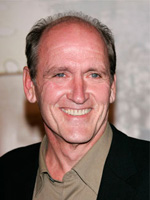 Unfortunately, “Happy-Go-Lucky” star couldn’t make it to tonight’s presentation of the Virtuoso Awards at the Lobero Theatre due to surgery recovery, but Viola Davis, Richard Jenkins, Rosemarie DeWitt, Melissa Leo and Michael Shannon were on hand to talk their roles in five of the most critically acclaimed films of the year. James Cromwell did the honor of presentation.
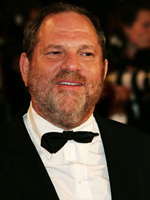 For all his marketing and campaigning genius, Harvey Weinstein’s tactics have become — well, have been — a bit thuggish. In Peter Biskind’s extraordinary book “Down and Dirty Pictures,” a stunning look at the independent film world in the late 1980s and all through the 1990s, we are made privy to many of Harvey’s tantrums, eyewitness accounts of his bullying behavior, and crazy belief that because he is rich, he can do whatever he wants. He can always buy his way out.
 As I
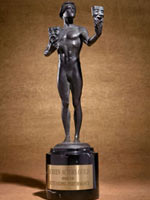 I’ve been giving my picks out to various aggregators this weekend but haven’t bothered with a post of my own. Go figure.
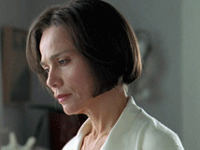
 What else is there to say? Tomorrow we’ll have a new president and the last eight years will, hopefully, start to fade away. In four days we’ll have a fresh slate of Oscar nominees and the last four months of awards speculation will suddenly be a distant memory. The big wheel keeps on turning.
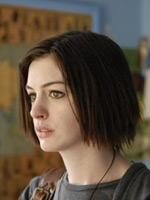 Rarely does the lead actress category provide more suspense than leading gentlemen and rarely is it as packed with fine performances as it is this year. I can remember years when it was a struggle to come up with five nominees for best actress, 1975 and 1992 springing to mind. It might have less to do with quality female performances than it does the amount of quality female roles Hollywood provides.
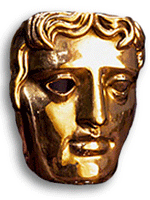 Each year, the BAFTAs never fail to find new and frustrating ways to surprise me.
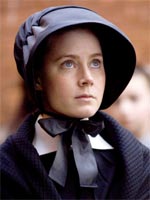
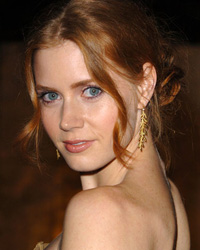 Amy Adams has arrived. No “doubt” about it.