 • David Seidler: Confessions of a 73-year-old Oscar virgin. [Los Angeles Times]
• Ageism and the Oscar party Bollywood would throw. [The Huffington Post]
• Anne Thompson talks to “In a Better World director Susanne Bier. [Thompson on Hollywood]
• David Seidler: Confessions of a 73-year-old Oscar virgin. [Los Angeles Times]
• Ageism and the Oscar party Bollywood would throw. [The Huffington Post]
• Anne Thompson talks to “In a Better World director Susanne Bier. [Thompson on Hollywood]
 The race for Best Original Screenplay is full of worthy competitors this year. Four Best Picture nominees and the year’s best screenplay period make up the field, and even if there are a few that should have been in the mix, I find it difficult to argue with what squeaked through in the end.
The writing categories can sometimes be interesting to watch on Oscar night. The Academy can mix things up, but only within the Best Picture landscape, as these awards have gone to a non-Best Picture competitor just six times in the last 20 years. Nevertheless, all signs seem to be pointing to one film to dominate the show, and this category is no exception.
The nominees are:
“Another Year” (Written by Mike Leigh)
“The Fighter” (Screenplay by Scott Silver and Paul Tamasy & Eric Johnson; Story by Keith Dorrington & Paul Tamasy & Eric Johnson)
“Inception” (Written by Christopher Nolan)
“The Kids Are All Right” (Written by Lisa Cholodenko & Stuart Blumberg)
“The King’s Speech” (Screenplay by David Seidler)
 Today saw Santa Barbara’s annual “It Starts with the Script” writers panel, moderated by Anne Thompson. Participating were Michael Arndt (“Toy Story 3”), Lisa Cholodenko (“The Kids Are All Right”), C. Gaby Mitchell (“Get Low”), David Seidler (“The King’s Speech”), Scott Silver (“The Fighter”) and Aaron Sorkin (“The Social Network”).
I was a little late to the event but it was an, as always, spirited discussion about the nuts and bolts of the screenwriting process.
Seidler, Silver and Sorkin were the three tasked with writing scripts (each of them original, interestingly enough, give or take a “book proposal”) detailing real individuals. Thompson asked for their various experiences with that. Silver recalled the first screening of the film for members of boxer Micky Ward’s family, and how he expected sparks might fly.
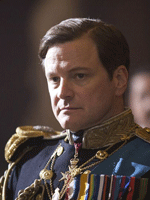 At Telluride in September, Geoffrey Rush revealed to me that the script for “The King’s Speech” originally came to him in play format. Writer David Seidler had penned the story of King George VI overcoming a speech impediment in broad theatrical strokes. But it was too vast and, the actor thought, the central idea would be better suited to film. Soon enough a film was underway and Rush was called upon to take a role.
It still has that contained vibe. Guy noted in his London Film Festival take on the film that “if I came to the film cold, I would immediately, but incorrectly, peg it as an adaptation of a stage work.” So it’s interesting to note that the story may come back full circle.
Arts Beat’s Patrick Healy reports today that Broadway producer Michael Alden has acquired the stage rights to the film. The piece also notes that Seidler wrote it originally as a screenplay and later as a stage work in order to work out various relationships but the news is you might see the film transition to Broadway or London’s West End very soon (depending on how it does on screens, of course).
 Unlike, say, the Venice fest – where the jury’s failure to reward any of the (lousy) Italian films in competition is cause for a media strop — the London Film Festival has often seemed somewhat embarrassed by the homegrown portion of its programme, perhaps granting a big red-carpet date to the odd bit of tony Oscar bait while shoving newer and/or independent British filmmakers into shadowy side slots.
This year, however, the festival appears to be wearing its flag quite contentedly. This week’s lavish gala screenings have included such big-draw Britpics as “Another Year” and “The King’s Speech” – but rather less predictably, Peter Mullan’s hard bit of Scottish urban realism “Neds” was afforded similar treatment, while tonight’s hot ticket is local TV comedian Richard Ayoade’s Toronto-acclaimed (and Weinstein-acquired) debut “Submarine.” With Joanna Hogg’s bare-bones sophomore feature “Archipelago” also premiering tonight – and unexpectedly shortlisted for the fest’s Best Film award – programmers seem bent on drawing attention to the multitude of approaches in contemporary UK cinema.
 Telluride Film Festival
For actor Geoffrey Rush and director Tom Hooper, David Seidler’s script “The King’s Speech” came to them by serendipity. Still in stage play format, it arrived at Rush’s Melbourne residence with a note apologizing for a cold call avoiding the traditional agency pipeline. For Hooper, it came to him because his mother happened to be Australian.
“My mom was invited by some Australian friends to a fringe theater play reading of this unproduced play, having never been to a play reading in her life,” the director says, tucked into a booth with Firth and Rush at Telluride’s Rustico restaurant. “They were like, ‘We need some Aussies in the audience, would you come along?’ She called me up and said, ‘I think I may have just seen your next film.’ She sent it to me and it sat on my desk. Two or three months went by and I read it in one sitting. I rang her up and said, ‘You’re absolutely right.’”
Rush politely declined the offer to star in a play that was “trying to be ‘Henry V,’” but noted that the central idea of Australian speech therapist Lionel Logue assisting King George V with his stammer could make for quite the film. His copy of the script, by the way, was accompanied by a DVD of the very reading Hooper’s mother attended.