In Contention

Tag: Dardenne Brothers

  • CANNES: ‘Tree of Life’ wins Palme d’Or, Dunst takes Best Actress

    And so it came to pass that the pre-festival bookies’ odds were on the money. The most talked-about film at this year’s Cannes Film Festival, Terrence Malick’s “The Tree of Life,” was handed the Palme d’Or by Robert De Niro’s jury — a major vindication for a film that has been labelled both a masterpiece and a failure by duelling factions of critics on the Croisette.

    Malick, to the surprise of precisely nobody, did not pitch up to the ceremony, though I imagine he’s feeling somewhat relieved. However it performs outside the insular festival environment, his film’s cultural landmark status has been sealed: armed with this prestigious bit of hardware, Fox Searchlight can set about readying the film for the US awards season, though approval from more mainstream bodies could yet be an uphill battle.

    “The Tree of Life” isn’t the film I would have picked for the Palme by a long shot — as I wrote in my review, I think it’s an intermittently stunning work that ultimately overreaches, never marrying its three disparate sections — but it’s not an unintelligent pick: De Niro and his fellow jurors have opted for the title that looks likely to have the longest shelf-life in popular culture. In that respect, it’s a preferable choice to the film widely viewed as the favorite going into the awards tonight, Aki Kaurismäki’s charming but wafer-thin comedy “Le Havre” — which, in the evening’s most surprising turn, won not a single prize.

    (more…)

  • CANNES: ‘The Kid With a Bike,’ ‘House of Tolerance,’ ‘Michael,’ ‘Footnote’

    Perhaps lulled by the twin effects of the Côte d’Azur sun and copious amounts of cheap rosé between screenings, I’ve fallen behind somewhat on the reviewing front — but lest you think I’ve only seen one film a day before heading back to the swimming pool at Villa Romance, it’s time for a bit of a Competition catch-up. (I’ll get round to a handful of Un Certain Regard and Critics’ Week titles — a couple of them very strong — as soon as I can.) Tomorrow brings another of my most anticipated titles of the festival, Lars von Trier’s “Melancholia,” which should steer Croisette conversation forward after a low-level day of screenings, over which talk of “The Tree of Life” has remained the dominant hum.

    “The Kid With a Bike” (***)

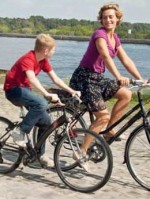
    “More of the same, but less,” I tweeted immediately after seeing the latest finely-honed study in urban realism from Belgium’s two-time Cannes champs, the Dardenne brothers. It’s a statement I stand by — it’s difficult not to think that after the muted acclaim for “Lorna’s Silence,” their 2008 flirtation with higher-concept storytelling, they’ve retreated to a safe space — even as I admit it doesn’t factor in some subtle novelties in the new film. “The Kid With a Bike” is literally their brightest film to date, for starters, shot mostly in crisp summer sunlight and poppy primary hues, which may also be why it feels like their most uncomplicatedly redemptive.

    (more…)

  • CANNES CHECK: ‘The Kid With a Bike’

    The directors: Jean-Pierre and Luc Dardenne (Belgium)

    The talent: Dardennes regulars Jérémie Renier and Olivier Gourmet (who won Best Actor at Cannes for the brothers’ 2002 film “The Son”) return in supporting roles, but “The Kid With a Bike” is headlined by perhaps the most established star they’ve yet worked with: Cécile De France, the Belgian actress mainstream audiences will remember from her recent turn in Clint Eastwood’s “Hereafter.” Still, the directors’ proven knack with untested actors stands to continue: starring opposite De France is pre-teen newcomer Thomas Doret. Meanwhile, the Dardennes’ usual crew, including DP Alain Marcoen, is once more on board.

    The pitch: Abandoned by his father in a children’s home, 11 year-old Cyril (Doret) escapes and returns to an empty apartment; pursued by social workers, he seeks refuge in the arms of a stranger (De France) in a doctor’s waiting room. The synopsis and recently-released trailer suggest the blend of humanism and hard realism we’re accustomed to from the Belgian brothers, though perhaps less grim than some of their work. (The film’s reasonably upbeat shooting title was “Set Me Free!”)

    (more…)

  • No surprises as Cannes jury surprises

    Well, I missed that one badly. As is so often the case, the Cannes jury threw a curveball, handing their top prize to a late-breaking film that had generated very few column inches. Admittedly, I should have paid more attention to “The Class,” French auteur Laurent Cantet’s school-based docudrama.

    I was a huge fan of Cantet’s 2001 film “Time Out,” an ingeniously constructed character study, and while his 2005 follow-up “Heading South” was a major disappointment, Cantet’s name on the competition list should have rung more bells – not least when the very warm reviews started rolling in yesterday. Variety called it “one of the most substantive and purely entertaining movies in competition at Cannes this year.”

    Congratulations to Cantet then, and to France, scoring their first home victory at Cannes since “Under Satan’s Sun” triumphed in 1987. The other awards threw up fewer surprises, with Benicio Del Toro taking Best Actor as I, and many others, predicted. Meanwhile, “Three Monkeys” and the Italian one-two punch of “Gomorra” and “Il Divo” all took home major silverware, if not necessarily in the categories that I anticipated.

    I must admit to being shocked that the widely beloved “Waltz With Bashir” went home empty-handed; an omission for which Sean Penn and fellow juror Natalie Portman seemed almost apologetic. No matter: Ari Folman’s animated war documentary leaves the festival with a dedicated following, and I’m certainly putting it on my Best Animated Feature shortlist.

    The full list of competition winners follows:

    Palme d’Or: “The Class”

    Grand Jury Prize: “Gomorra”

    (more…)

  • Cannes update: Italy’s ‘Gomorra’ wows ’em

    (EDITOR’S NOTE: New Cannes poll in the sidebar as of this morning, FYI.)

    We’re at the halfway point now, and this year’s Cannes Festival seems to have been a pretty staid affair so far. With the dust settled, “Blindness” appears to have been labelled an honourable disappointment. Meanwhile, some of the big arthouse names in the competition are widely agreed to be treading water.

    Walter Salles’ “Linha de Passe” appears to be worthwhile, but hasn’t generated the critical heat of “Central Station” or “The Motorcycle Diaries.” “Lorna’s Silence,” the latest from Belgium’s hitherto unimpeachable Dardenne brothers, here aiming for a record third Palme d’Or, has garnered respectable notices (and an outright pan from Jeff Wells), but doesn’t seem to be up to the standard of “Rosetta” or “The Son.”

    There have been some international successes. “Three Monkeys,” the latest from Turkey’s great Nuri Bilge Ceylan, has gathered predictably excellent reviews, of which The Hollywood Reporter’s take (a “brilliant, gorgeously visual film”) is typical. If I were to bet on a Palme d’Or winner (always a silly thing to do), this would be it – though I fear this will have as much trouble crossing over to the US and UK markets as Ceylan’s previous work.

    One of the real breakout films of the festival so far, however, appears to be Italian director Matteo Garrone’s “Gomorra,” an intricate documentary-style look at the Camorra crime empire of Naples, based on a bestselling expose by Roberto Saviano. Amid generally enthusiastic reviews, The Hollywood Reporter states:

    Powerful, stripped to its very essence and featuring a spectacular cast (of mostly non-professionals), Matteo Garrone’s sixth feature film “Gomorra” goes beyond Tarantino’s gratuitous violence and even Scorsese’s Hollywood sensibility in depicting the everyday reality of organized crime’s foot soldiers.

    In his always-worthwhile Cannes roundup, The Guardian’s Peter Bradshaw concurs:

    The competition films have been more than a little upstaged by Matteo Garrone’s Gomorra, a gut-wrenchingly brutal film about notorious Naples gangsters, the Camorra. The title’s twist implies the whole area is sunk in a kind of self-created hell, almost literally, since the mobsters are responsible for unsafe nuclear dumping. Perhaps it tells us nothing we don’t already know about gangsters, but there’s no denying the film’s power.

    I confess I am not very familiar with Garrone’s work, but I, for one, am intrigued by this. It will be interesting to see how this one plays out. From the sounds of things, if the film finds the right buyer, there could be “City of God”-style crossover potential here. Or nothing. You never can tell at Cannes.