 In case you missed the first part of our look at the best shots of 2009, go ahead and catch up here. Before getting into the top five, however, I’d like to spotlight a few examples that almost made the cut but just missed.
First and foremost, “Inglourious Basterds” is obviously a favorite around these parts. Robert Richardson, as we’ve come to expect, offered a wonderful visual context for Quentin Tarantino’s story, and though none of the shots particularly spoke to me on a thematic level, it is nevertheless worth pointing out the aesthetic impact of Shoshana’s cackling specter projected on smoke and the gripping crane down to reveal a hiding Jewish family in the countryside of Nazi occupied France.
One of the unsung heroes of the season in the field was Greig Fraser, whose soft touch gave Jane Campion’s “Bright Star” a beautiful identity. The shot that has always stuck out for me was Fanny Brawne on her bed, intoxicated with love as a strong afternoon breeze blows in her window.
I was also captivated by the visual aesthetic of Tom Ford’s “A Single Man,” shot by Eduard Grau. The disorienting nature of an image featuring a “Psycho” poster always stuck out to me. It is also worth noting a shot of Jeremy Renner standing in a grocery aisle in “The Hurt Locker,” speaking volumes about his character’s disposition, lost in a safe world (though lenser Barry Ackroyd was not involved with the U.S. portion of the shoot, it should be noted). And I always smile when I see the image in “Crazy Heart” of a passerby reflected in the window of Bad Blake’s wrecked suburban, rushing down the hill to help.
Finally, Roger Deakins should never go unmentioned in a discussion of cinematography, and what he did on the Coens’ “A Serious Man” was trademark organic beauty. The image that sticks out to me is, ultimately, the final image of a tornado bringing the arbitrary wrath of the film’s themes to a tangible form.
In any case, it was, as always, a joy digging through the year’s visuals and coming up with this collective. Even in a weak year for the medium, there are always gems worth spotlighting. I hope you enjoy the second half, so let’s get down to it.
The top five shots of 2009…
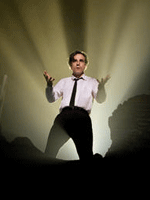 Along with the WGA, the American Society of Cinematographers will also be announcing nominees Monday. Guesses as to which way they’ll go?
 Almost three months ago, I described how our cinematographers bring movies to life, by lensing the director’s vision, the actors’ performances, the production designer’s and the writer’s mood, just to begin. In the absence of these talented individuals, there would truly be no cinema.
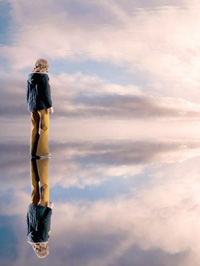 LIGHTS…CAMERA…you were probably waiting for the word “action,” no? Action is, after all, what many individuals go to a film to see. But the “lights” and the “camera” in this classic phrase bring a film beyond a book or a radio show…and capture the “action.”
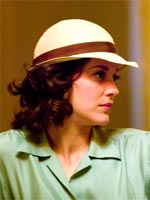 I’ve had a busy week, so I’m a bit late to
 With Stateside critics somewhat split on “Public Enemies,” I was interested to see what the UK reception for the film would be like. For all the brawny Americanness of his aesthetic, Michael Mann has many passionate apologists on these shores — he even received a BAFTA nod in 2005 for “Collateral” — perhaps to some degree because Britain is where he studied film and began his career.
 “Public Enemies,” opening nationwide today, is the first film to bring Michael Mann back to his native Chicago since his feature filmmaking debut, 1981’s “Thief.” Fellow Midwesterner Ignatiy Vishnevetsky was on the set for a few days in the summer of 2008 and has been collecting his thoughts over at
 During our week away, materials landed for one of my own most anticipated films of the year: Michael Mann’s “Public Enemies.” I haven’t taken a moment to really dig in to this yet, but here goes…