In Contention

Tag: Claudio Miranda

  • ‘Button’ sparkles on Criterion Blu

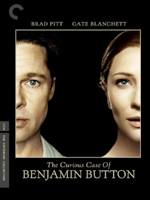
    Cover of The Curious Case of Benjamin Button Criterion Blu-rayThe Criterion release of David Fincher’s “The Curious Case of Benjamin Button” is a superlative piece of home entertainment to say the least, especially on Blu-ray.  Claudio Miranda’s photography was absolutely gorgeous as it was in cinemas, but being largely digital, the transition to high definition is seamless and probably belongs in the top tier of Blu-ray releases thus far from a visual standpoint.

    Technical attributes aside, I can’t say enough about the epic making-of documentary that is featured on the film’s supplemental materials disc.  At nearly three hours, it all but dwarf’s the film’s already massive running time.

    Opening with a rather emotional personal story from Fincher that recounts his father’s death at the hands of pancreatic cancer, the brief intro gives you more than enough insight into the director’s reasons for taking on the project, which of course had been bouncing around Hollywood for two decades when the wheels were finally put into motion.

    In fact, the doc does a brilliant job of showcasing the years of non-starts that producers Kathleen Kennedy and Gary Marshall had to suffer through on the way to finally realizing the project on screen.  No matter your opinion of the film, you have to respect that kind of dedication.

    There is an exceptional amount of behind-the-scenes footage stitched together by talking-head interviews with principles both above and below the line.  But most interesting were accounts of the day-to-day troubles of working in post-Katrina New Orleans, which ranged from a depleted trolley car fleet (which the production was dependent on for period correctness) to a lack of public works personnel to assist in the production (because the department had been whittled down considerably due to countless lay-offs).
    (more…)

  • Want to win cinematography? An art direction nod helps.

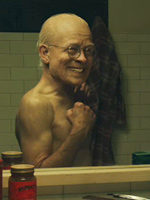
    Brad Pitt in The Curious Case of Benjamin ButtonI’m surprised I completely forgot about this little, some might say meaningless statistic, but with all the predictions for “Slumdog Millionaire” taking the cinematography win at tomorrow night’s Oscar ceremony, the Oscarweb seems to be in the same boat.
    You have to go back to 1999 and “American Beauty” to find a film that won the Oscar for Best Cinematography but was not even nominated in the art direction field.  Before that, 1995 and “Braveheart,” 1992 and “A River Runs Through It” and 1991 and “JFK.”

    “Mississippi Burning” (1988) and “The Killing Fields” (1984) were the only examples from the 1980s and then you see some more frequency in the new American cinema hey-day of the 1970s.  But if you stretch the timeline back to 1979, you only find six films in 20 years that managed to win the lensing trophy despite coming up short of a nod with the designers.

    The only films nominated in both categories this year are “Changeling,” “The Curious Case of Benjamin Button” and “The Dark Knight.”  Most might use that as the ultimate excuse to throw their money behind “The Dark Knight,” which was revolutionary behind the camera with it’s implementation of IMAX technology and because, dang it, it looks amazing.  And God knows my fingers are crossed for Wally Pfister, but I think all of this might make a better case for Claudio Miranda and “The Curious Case of Benjamin Button.”

    (more…)

  • TECH SUPPORT: Final predictions

    Tech Support at In ContentionAfter six months of Tech Support previews and interviews, the films have arrived, the nominations have been announced and the guilds, the critics and BAFTA have all announced their preferences.  Today we take a final look at the races before the envelopes are opened on Sunday.
    BEST ART DIRECTION
    After guild and BAFTA wins, I would say “The Curious Case of Benjamin Button” has cemented its frontrunner status in this category. Spanning decades of the 20th Century, Donald Graham Burt’s production design was impossible not to notice and gave us gorgeous backdrops for its character’s predicaments.

    The other nominees all have the odds stacked against them, whether similar work has been seen before (Michael Carlin’s “The Duchess” and Kristi Zea’s “Revolutionary Road”), is just not showy enough (Nathan Crowley’s “The Dark Knight”) or the nominee is otherwise along for the ride (James Murakami’s “Changeling”).

    Will win: “The Curious Case of Benjamin Button”
    Could win: “The Duchess”
    Should win: “The Curious Case of Benjamin Button”

    (more…)

  • TECH SUPPORT INTERVIEW: The crafts of ‘Benjamin Button,’ part two

    Tech Support at In ContentionYesterday was the first of our two-part look at the crafts artists behind “The Curious Case of Benjamin Button.” Today, I feature conversations with cinematographer Claudio Miranda, visual effects supervisor Eric Barba and film editors Kirk Baxter and Angus Wall, who have all received Oscar nominations for their work on the film.
    When asked about the enormity of the project, Wall rhetorically asks, “‘How do you eat a whale? One bite at a time.  The metaphor we always used is that we always look not at the peak but our feet. It was a two-year process and you have to be sure of every decision you make every day because it affects the end project.”

    Miranda admits he was intimidated by the task of breaking down the script. “I had to just try to imagine how this would be realized on screen,” he says, “going through each task at hand, devising a plan for all the different looks, especially with some things on blue screen.”

    Barba was especially scared that the main character would have to be created by visual effects for the first 50 minutes. “We had to make it work or else it wouldn’t be believable,” he says. “I had to think of the enormity of having to do what up until now hasn’t been done.”

    As regards the man at the helm, Baxter agrees with his colleagues who were featured yesterday that David Fincher is “extremely helpful and very very clear. He knows when to be loose and when to be a lot more specific. He’s got great intuition on what his crew needs from him.”

    (more…)

  • Top lensers praise ‘Slumdog’ cinematography

    Slumdog MillionaireOver at Variety, Robert Koehler has put together a survey of sorts of some of the industry’s top DPs to gauge their reaction to the year’s work behind the camera.  It could be a nice hint toward what the ASC will chose as the year’s best lensing, and judging by Koehler’s results, Anthony Dod Mantle’s “cherry on top of a career” efforts on “Slumdog Millionaire” gets the gold star.

    It’s really quite an achievement.  Even though I’ve long been on the record in favor of Wally Pfister’s innovations on “The Dark Knight,” I have to say Dogme 95 veteran Mantle broke unexpected new ground in Danny Boyle’s film.  In lieu of an Oscar win for the highly deserving Pfister, I would be very content to hear Mantle’s name called.

    Here’s a taste from Koehler’s survey:

    Mantle’s “Slumdog” was “the biggest technical achievement of the year,” says [Roger] Deakins, “because even though part of the film was shot on a 2K digital camera and part on 35mm, my eye could never detect the difference…it was quite a feat to maintain a consistent quality of image throughout.”

    Adds [Janusz] Kaminski: “I like cinematography that feels alive, and Anthony’s work felt that way for me. The shooting got the sense of the Mumbai streets, the reality of the gameshow, the nostalgia of the romance.”

    Goldblatt agrees, noting that “Slumdog” was “a very adventurous mix of media, fun and beautiful and very courageous. I’ve worked in India as a photographer and know how tough it is there, so I was quite impressed with the results.”

    McGarvey “loved how Anthony thought about how the various formats he shot in would serve each milieu in the story, so that the images never patronized the characters. It was such a ride.”

    Koehler then goes on to say Claudio Miranda’s gorgeous work on “The Curious Case of Benjamin Button” was close behind in his unscientific poll, followed by Pfister, who McGarvey says “can work on the grandest of scales but can also be terrestrial, and is able to provide an anchor to fantastical situations — a talent he shares with (director) Chris Nolan.”

    I was happy to see Maryse Alberti (“The Wrestler”) and Hoyte Van Hoytema (“Let the Right One In”) also mentioned, but hey, you’ve heard that kind of stuff out of me in this space over and over again. It’s nice to see the trades pumping up their crafts coverage, since no one seems to be willing to give them the proper attention this time of year beyond the expected outlets (American Cinematographer, Below the Line, etc.).

    For a crash course in the year’s best cinematography, have a look at our Top 10 Shots of 2008 column from last month, laced with insights from an esteemed crop of lensers.

  • The top 10 shots of 2008: part two

    The Dark KnightToday we wrap up my list of the year’s best shots.  In case you missed it, have a look at part one here.
    Before digging into the top five today, I thought I would give a shout out to the images that almost made the cut, and there were a few.  For instance, who can forget the fateful shot of Harvey Milk ascending the stairs of San Francisco’s City Hall as Dan White stalks the corridors in the distance?  Similarly, how about the image of White from behind as he psyches himself into assassinating his fellow politician?

    Meanwhile, there was an array of images to choose from in “The Dark Knight,” certainly too many to name here.  As beloved as the image of Heath Ledger’s Joker is, breathing in his freedom and tearing off into the night in a Gotham patrol car, I chalk that up to performance as much as if not more than Wally Pfister’s work behind the camera.  But the iconography of James Gordon standing, arms crossed in front of the Bat signal was a difficult one for me to snub (for reasons you’ll find out after the jump).

    “Let the Right One In” will show up on today’s list, but one other image that came very close to making the cut for me was that of Eli’s victim bursting into flames on a hospital bed once exposed to sunlight streaming in through the window.  And though Maryse Alberti’s work on “The Wrestler” has already been represented, I was always tickled by the creativity of The Ram’s walk through the bowels of a supermarket deli, mirroring his walk to the ring.

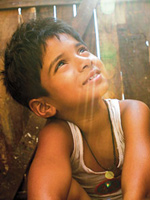
    Finally, Danny Boyle’s “Slumdog Millionaire” is loaded with wonderful cinematography.  The image I chose yesterday had personal value, but I also loved the long shot of young Jamal and young Salim on the roof of a train to start the film’s exciting montage, as well as the three-shot overhead view of the Mumbai slums during the film’s opening sequence.

    This is to say nothing of the work from fine lensers on films that just didn’t make the cut for whatever reason, but were nonetheless wonderful examples of cinematography this year.  “The Fall” (Colin Watkinson), “Gomorrah” (Marco Onorato), “The Reader” (Roger Deakins and Chris Menges) and “Vicky Cristina Barcelona” (Javier Aguirresarobe) are just a few examples.

    But enough of the also-rans, right?  Let’s get on with the real show: the five best shots of 2008…

    (more…)

  • ‘Button’ didn’t happen

    Brad Pitt in The Curious Case of Benjamin Button(Alright, I’m coming back to this item now that I don’t have to deal with iPhone-posting.)
    Tonight’s screening of “The Curious Case at Benjamin Button” was supposed to be a great night for producers Kathy Kennedy and Frank Marshall (correction appended — it was a late night, apologies).  They introduced the film as a project 18 years in the making, a true labor of love, and the crowd of press, guild members and industry types sure was excited.

    About a half hour into the screening, D.P. Claudio Miranda had had enough.  Apparently a color channel on the digital projector was faulty and wasn’t going to be fixed any time soon.  The image looked washed out but in a stylized way, so none of us really noticed.  But it was painful for Miranda to watch.  Publicists put the call into director David Fincher, who was on his way to the theater for a post-screening Q&A, and he made the decision: pull the plug.

    The audience was understandably agitated.  “Come on, it looks beautiful,” one chimed in.  But they all knew Miranda would have felt terrible showing his film in that fashion (and talking to some who’d see the film already, there was a considerable difference, as well as a sound quality issue afoot).  “Don’t do it,” another guy said, siding with Miranda and clearly a below-the-line guy that gets it.  When your art and your craft is compromised out of the gate, it’s better to cut your losses.

    The good news is, I hear the same thing happened to “The Pianist” and “Dances with Wolves” for their first big industry screenings.  So maybe you do get a second chance to make a first impression.  The SAG screening went swimmingly over at the Arclight, by the way, so there is that.  But on the whole, what a bummer.  Next to “The Dark Knight,” this had become my most anticipated film of the year.

    All of that said, I think we liked what we saw.  And after just 30 minutes, I’m pretty sure the film will take the Oscars for Best Makeup and Best Visual Effects walking away.  Pure magic.

    Saturday we’ll all get a second chance.  These things happen, I guess.

  • TECH SUPPORT: Best Cinematography — Volume One

    Tech Support at In ContentionToday we begin our in-depth looks at the individual crafts categories.  I’m a sucker for starting with my favorite: Best Cinematography.

    The art of film is reliant on the motion picture camera and those men and women who lend their talents behind the lens.  The Director of Photography is in charge of charge of capturing the director’s vision on film, not only by ensuring mood through lighting, thematic comment through juxtaposition, etc.  This work has to be done in tandem with the director, which makes it not surprising that many cinematographers and directors work together frequently.

    This category tends to award “pretty” films.  Big epics and gorgeous landscapes frequent the nominated five each year, as do war films and anything generally considered a labored task in this department.  That is not to say such efforts have a monopoly on this category –- just that they are especially apt to be nominated.

    Last year it was sad to see Roger Deakins lose for the sixth and seventh times on the same evening. I cannot deny that Robert Elswit -– a longtime favorite of mine –- was an excellent choice for “There Will Be Blood,” but the great Deakins is once again searching for his first statuette!  He will be back in contention this year, lensing Sam Mendes’ “Revolutionary Road.” This film clearly has Oscar in its sights.  While I still remain skeptical on how it will be received overall, Deakins will almost certainly be in contention should the film deliver in the slightest.

    Deakins will also be lensing “Doubt” this year, which also has the potential to be a major awards player.  Though I’m doubtful (no pun intended) about its chances in this category.

    In what would be a historic nomination, Mandy Walker will likely be in contention for Baz Luhrmann’s “Australia.”  She would be the first ever woman nominated in this category.  Yes, that’s right.  No woman has ever been nominated for Best Cinematography in 80 years of Academy history.  Lurhmann’s films are always visually spectacular and this effort in particular fits in perfectly with the sorts of epics usually nominated in this category.

    (more…)