In Contention

Tag: Citizen Kane

  • CINEJABBER: The “M” word

    I received an email today from a reader addressing a concern I’ve long had at the back of my mind, but I never really figured out a way to deal with it. In a nutshell, we discuss films early, generally before release around these parts, and when a large majority of you get a chance to have a look, the conversation ship has sailed.

    I don’t want that, obviously, and I imagine it’s difficult to find a place to re-inject the talking points with our day-to-day topics running full speed, so I figured the best way to deal with it would be a general discussion post every weekend for you to cut loose about what you might have seen or what you’d like to discuss amongst yourselves.

    It’s a no-brainer, really, but I just never got around to actually, you know, doing it.

    So we’ll call it “Cinejabber” (I guess) and I’ll kick start the conversation this week, in case no one has any ideas (though I imagine there are those who’d like to discuss any number of films finally in release).

    Reading Sasha Stone’s recent “hold your horses” item about the comparisons to “Citizen Kane” surrounding “The Social Network,” she noted peripherally, “When ‘Inception’ came out and was hailed as ‘masterpiece’ it angered critics, and viewers, that anyone would dare use a word like that to describe a big studio movie out of Warner Bros. Or maybe it was that the word shouldn’t really be applied to a film until a decade or so has gone by.”

    (more…)

  • The films you’re supposed to love, but don’t

    Gene Kelly in Singin' in the RainBound to raise many a film buff’s hackles, The Guardian carries an entertaining piece today by novelist Tim Lott on the subject of “the worst best films ever made” — in other words, the roundly lauded and canonized classics that routine appear on “all-time greatest” lists but, well, simply aren’t all that.

    It’s a wholly subjective issue, of course, and Lott is unashamedly provocative (if overly glib) in tackling it, taking down some seriously big targets along the way. Films in the firing line include “The Searchers” (which he accuses of both racism and “rude mechanicals”), “Les Enfants du Paradis” (“dated, overlong and absurdly wordy”), “On the Waterfront” (“a masterclass in ham acting”) and “Death in Venice” (“a colossal piece of soft-focus masturbation”).

    I disagree on most counts, but now and then his venom strikes a chord of with me. I wouldn’t go as far as he does in calling “La Dolce Vita” a “turgid, lazy mess of half-realised conceits,” but I agree that it’s not a film that has aged particularly well; compared to the still-pristine “8½,” its experiments in anti-narrative look idle and incomplete. And I’m glad someone else has the courage to say that subsequent decades of radical reinvention in the field of the movie musical make “Singin’ in the Rain” look like a very ordinary achievement indeed. (I’ll just come out and say it: I can’t stand Gene Kelly.)

    (more…)

  • Your ranked list of the 10 most influential films of all time

    Citizen KaneAnd with that, our poll series comes to a screeching halt.  I’ve already offered some thoughts on how all of this turned out.  I hope readers unfamiliar with some of the films I’ve been harping on will take that to heart and at least seek them out.  You owe it to yourself as a film lover, believe you me.
    Here is your ranked list.  For background on all of these shenanigans, click here.  I want to thank everyone who participated in the polls and made this a real community effort.

    1. “Citizen Kane” (Orson Welles, 1941)
    2. “Star Wars” (George Lucas, 1977)
    3. “2001: A Space Odyssey” (Stanley Kubrick, 1968)
    4. “The Godfather” (Francis Ford Coppola, 1972)
    5. “The Wizard of Oz” (Victor Fleming, 1939)
    6. “Psycho” (Alfred Hitchcock, 1960)
    7. “Jaws” (Steven Spielberg, 1975)
    8. “Pulp Fiction” (Quentin Tarantino, 1994)
    9. “Snow White and the Seven Dwarfs” (David Hand, 1937)
    10. “Toy Story” (John Lasseter, 1995)

    Honorable mention: “Annie Hall,” “Apocalypse Now,” “Battleship Potemkin,” “The Birth of a Nation,” “Casablanca,” “The Godfather Part II,” “Gone with the Wind,” “The Matrix,” “Metropolis” and “Rashomon”

    One of these days I’ll cook up my own list.  Until then, once again, thanks for participating.

  • Which moments hooked you?

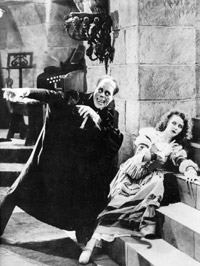
    (from left) Lon Chaney and Mary Philbin in The Phantom of the OperaI love the current poll series about the most influential films of all time, but it got me thinking about the moments in movies that hooked me on cinema forever. You know, the ones we see as kids that have an enormous impact on us, forever bonding us to this art form we all so love?

    For me, as I’ve mentioned before, it was a scene in “The Ten Commandments,” Cecil B. DeMille’s remake of his own epic, which I saw in 1972 (I think) in a re-release of the picture. In the days before video (yep, that old) the studios would re-release their films every few years and this was a major re-release for Paramount. My dad, also a movie junkie (though not as bad as his son), had talked about this for years and now that it was back we were going.

    Admittedly, I was a tad cynical at 12 years old.  I fully expected to be disappointed.  Still I wanted to see it because I enjoyed going to the movies. Little did I know my life would be changed forever.

    We piled into the car and made the drive to the theater, which was packed with familes similar to ours. The lights went down and for the next four and a half hours I was swept back in time, stunned by the size and scope of the film, amazed at the colors, and most of all, astonished at Charlton Heston. Never before had I realized how an actor could command the screen.  I never felt like I was watching a performance, either.  In awe I watched the Exodus scene as literally thousands of actors moved out of Egypt, led by Moses.

    (more…)

  • POLL: The most influential films of all time, round one, part two

    Harrison Ford in Blade RunnerAnd with that, part one of the first round of voting comes to a close.  Go here for the background on our survey.
    Today, we have 10 fresh titles in the left sidebar for you to rifle through on the way to choosing THREE worthy of moving forward to the next round.  Each poll throughout the rest of round one will include 10 films and choices of up to three.  Last week’s poll was the big dive, 16 titles.  The five that moved on from there were:

    “Apocalypse Now” (1979)
    “Battleship Potemkin” (1925)
    “Citizen Kane” (1941)
    “Gone with the Wind” (1939)
    “Rashomon” (1959)

    I must say, I was sad to see “Bonnie and Clyde” left out.  The Arthur Penn classic was in the top five for a while, but it was too close for comfort on “Battleship Potemkin” as far as I’m concerned.  Literally, a final vote right at the deadline secured it a place in the top five over “E.T.: The Extra-Terrestrial.”  That says one thing to me: more people need to see it.  So to those of you who’ve never seen it, do yourself a favor: seek it out.

    No, it is not the most captivating film of all time and no, you won’t be seeing anything “new” by your standards.  But do a little digging and find out why the film has meant so much to the practice of film editing and montage and you’ll discover why its impact is probably felt as much if not more than the most seminal titles on our massive list of 66.

    Keep in mind when voting: this isn’t a popularity contest.  Don’t just rattle off votes for your favorite films (which, I imagine, has to be the main reason “E.T” was so high on the list during part one).  Take a moment to think about what the films have meant to the medium.  This list represents you, the readership, after all, so vote wisely.

    This poll will close Wednesday, April 29 at 2:00 pm EST.

  • TCM’s top 15 most influential classic movies

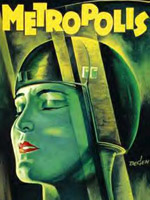
    MetropolisWell, here’s something I guess.  Rope of Silicon points us to TCM’s list of the top 15 most influential “classic” films of all time.  I actually started working up such a list for the site a while back but abandoned it for whatever reason.  It was going to include all comers, though, not just classic films.  They seem to be listed in chronological order over at TCM.com.  The 15:

    “The Birth of a Nation” (1915)
    “Battleship Potemkin” (1925)
    “Metropolis” (1927)
    “42nd Street” (1933)
    “It Happened One Night” (1934)
    “Snow White and the Seven Dwarfs” (1937)
    “Gone with the Wind” (1939)
    “Stagecoach” (1939)
    “Citizen Kane” (1941)
    “The Bicycle Thief” (1947)
    “Rashomon” (1950)
    “The Searchers” (1956)
    “Breathless” (1959)
    “Psycho” (1960)
    “Star Wars” (1977)

    My list certainly included most of those, which are by and large hard to argue with.  “Birth,” “Battleship,” “Metropolis,” “Night,” “Snow White,” “Wind,” “Kane” and “Star Wars” were definitely included in my tally.  If we were to extend it beyond the “classic” realm, I think we’d have to include “Jurassic Park” and the “Lord of the Rings” franchise.  “Toy Story” would have to have a secure place, while “Pulp Fiction” obviously sparked a revolution some would argue had roots in “sex, lies and videotape” (also a contender for an “all-time” list).

    Since TCM’s idea of “classic” obviously stretches into the late 1970s, I think it’s rather foolish to leave off “Jaws” and/or “The Godfather” considering what they meant to big business theatrical revenue before “Star Wars” came along.  And going way back, “The Great Train Robbery” had people running from the theater screaming after the final image of a bandit firing his gun at the camera.  There’s something to be said for one of the first films to enthrall like that.

    And what about “The Jazz Singer?”  How do you leave that title off a list of “classic” cinema?  I guess it had to be narrowed to 15 but there are a couple of films on that list that could have been bumped, I think.

    Let’s put it to the readership.  Assuming an “all-time” list rather than limiting it to the classics, what would you say have been the most influential films?  I could make a mean case for “Die Hard,” but I’ll anxiously await your input.  Rattle off your lists and maybe we’ll settle things with a series of polls.

  • Define ‘upset’

    Let’s get this straight: an upset and an injustice are two very different things. When a nominee that isn’t widely expected to win beats one that is, that’s an upset. When a highly deserving underdog loses to a less deserving favourite, that’s an injustice. The latter arguably happens more frequently in Oscar history than the former, but that’s no reason to blur the line.

    I mention this in connection with a poll that Sasha Stone spotted yesterday, in which the following were named the biggest Oscar upsets of all time in the Best Picture category:

    1. “Shakespeare in Love” over “Saving Private Ryan” (1998)
    2. “Crash” over “Brokeback Mountain” (2005)
    3. “Dances With Wolves” over “GoodFellas” (1990)
    4. “Rocky” over “Taxi Driver” (1976)
    5. “How Green Was My Valley” over “Citizen Kane” (1941)

    Now I remember the 1990 awards clearly — I was 8 years old, and it was the first Oscar season that I followed keenly from beginning to end. And even I, at that tender age, knew that “Dances With Wolves” was a gimme, a slam-dunk, a no-brainer. However critically acclaimed Scorsese’s masterpiece was, it hadn’t a prayer against the film that swept the Guilds and the Globes — Kevin Costner enjoyed as great a stranglehold on the Oscar as Danny Boyle does today. “GoodFellas” winning would’ve been the upset, not the other way round.

    (more…)

  • OFF THE CARPET: Memo to the Academy

    The Academy Awards–MEMO–

    TO: Members of the Academy of Motion Picture Arts & Sciences
    FROM: Kristopher Tapley

    RE: The ballot you recently received

    Ladies and gentleman,

    As you sit to ponder the year’s best in your various fields of professional expertise, you might find yourself strong-armed into the consensus view 2008’s film product has been whittled down to over the last 30 days.  You might even find yourself at a loss, cramming as much as you can after a year of constantly working with nary a moment to spare a trip to the cinema.  Such last minute jitters can yield an unconsidered and, certainly, lackadaisical approach to your annual responsibilities as AMPAS members.  But I implore you to take your time with this, be measured, and above all, take pen to paper with a level of seriousness.

    While I would never presume to tell you how to go about filling in your respective ballots, I hope you don’t find it too bold of me to offer a few closing words of encouragement and suggestion as we close the book on 2008.  The glut of film awards season fades into a numbing hum you’d perhaps rather ignore until the holidays have run their course, so come back to these words at a later date if you must.  They merely represent the humble opinion of one passionate film lover who believes in the potential of your organization and the ideals it stands for.

    (more…)

  • Just because I don’t get it, doesn’t mean it’s not good

    Citizen KaneKris is taking some heat in some quarters for his comments on “WALL-E,” and while he has never said it was a bad film, he didn’t fall over himself seeking superlatives for it either.  In fact, the movie did not do much for Kris, which is an unpopular sentiment, given the critics awards and rave reviews for the film.

    Why is this not okay with some people?  Similarly, why is not okay to say that one does not feel “Citizen Kane” is the greatest film of all time? I don’t think it is and you have no idea the heat I take for that. Kris made a bold decision, one he believed in, one he felt was right, one that was honest.

    When will people realize that at the end of the day we are all critics with an opinion, but some of us are fortunate enough to do it for a living?  Does that set us apart?  Not really.

    Watching a film is connected to the oldest of rituals, similar to the ancient Greeks filing in to see a play and watching with rapt attention the players on stage. They then left the play and discussed it, just as we do today with cinema. Maybe we like the film, maybe we don’t…it is all opinion-based and at the end of the day, no one is really wrong.

    (more…)

  • Alone: when you hate a movie everyone else seems to love

    Miramax Films\' The English PatientIn 1996 I remember sitting in a packed screening room watching “The English Patient”; it was close to the end when Ralph Fiennes leaves Kristin Scott-Thomas in the cave, promising to come back, never to return, leaving her (through no fault of his own) to perish.

    I couldn’t help thinking at the time: “For fuck’s sake woman, DIE so we can all go home.”  I hated the film — hated it, hated it, hated it — and yet the reviewes were pretty much raves.  Of course the damned thing won nine Academy Awards including Best Picture and Best Director. I did not believe the love connection between the leads (there was no heat) nor that anyone, quite frankly, could fall for an ice queen like Scott-Thomas, much less risk their life for her.

    And yet all around me was this avalanche of praise.  Even the person I did a TV show with named the film the best of the year.  I went with “Trainspotting.”  “The English Patient” was being hailed as this great historical epic while I championed “The Crucible,” which Fox fumbled in releasing, and as the critic who disliked the film, I looked very silly.

    I admire the craftsmanship with which Anthony Mingehlla made his film, but I think he surpassed it with “The Talented Mr. Ripley” and the wonderful “Cold Mountain.”  And of course “The Englsih Patient” was not the first critically acclaimed film I disliked, nor will it be the last, but it does put one in an odd position. You second guess yourself (sometimes) and wonder if you missed something along the way.

    (more…)

  • Alright…the 20 WORST endings of all time from The Times

    Olivia Newton John and John Travolta in GreaseSo The Times has followed up last week’s collective assessment of the 20 greatest movie endings of all time today with a list of the worst, and there are some reasonable choices here and there.

    Like “Grease” for starters, probably my favorite movie musical but with an undeniably wretched denouement. And then there’s the cheeky mirror of the “Planet of the Apes” saga (the original made the best list, while Tim Burton’s remake lands here), not to mention “Indiana Jones and the Kingdom of the Crystal Skull,” which would definitely be near the top of my own list (ballsy to go so recent, too).

    I also like the shout out to the never ending ending of “The Lord of the Ring: The Return of the King.”

    But beyond those and perhaps a few others, the rest of the list is populated with terrible choices (many of which landed on my own best list). “There Will Be Blood” (which was deemed the #2 film of all time by The Times’ film critic James Christopher)? “Psycho?” “2001?” Fucking “Citizen Kane” at #1???

    Lots of eyebrow raisers. And from what I can gather, merely an attempt at being controversial.

    Their choices:

    1. “Citizen Kane”
    2. “Indiana Jones and the Kingdom of the Crystal Skull”
    3. “The Lord of the Rings: The Return of the King”
    4. “2001: A Space Odyssey”
    5. “The Maltese Falcon”
    6. “Grease”
    7. “Brief Encounter”
    8. “The Great Dictator”
    9. “Saving Private Ryan”
    10. “The Great Escape”
    11. “Apocalypse Now”
    12. “Psycho”
    13. “There Will Be Blood”
    14. “Magnolia”
    15. “Blade Runner” (original release)
    16. “Monty Python and the Holy Grail”
    17. “Star Wars – Episode VI: Return of the Jedi”
    18. “Planet of the Apes” (2001)
    19. “Cast Away” (totally disagree here…I think it’s a beautiful ending)
    20. “Velvet Goldmine”

  • THE LISTS: Top 20 movie endings of all time

    Anthony Perkins in PsychoAlright, this was painstaking indeed. After The Times of London saw fit to rock out a list of the 20 best movie endings of all time last week, I thought I’d try my own hand at such a collective.

    There are some omissions that might surprise some folks (“Bonnie and Clyde,” “The Graduate,” “Carrie”). At the same time, there are films that, on any other day, would easily slip into the list (“A Clockwork Orange,” “Once Upon a Time in the West,” “Reservoir Dogs”).

    Rest assured they were taken into account, but they didn’t speak to me on whatever levels must have been necessary to push into the top 20. But I can say these are the denouements that most affected me, be it viscerally or emotionally.

    Send in your picks for the top five movie endings of all time and I’ll publish a collective readers’ list in a few weeks. Email me or post your list below in the comments section.

    Here’s what I came up with:

    20. “The Iron Giant” (Brad Bird, 1999)
    “You stay. I go. No following.”
    Animation genius Brad Bird made his feature directorial debut with this effort, packing an emotional punch by film’s end with shades of “E.T.: The Extra-Terrestrial” — and an energizing final shot to boot.

    19.”Jacob’s Ladder” (Adrian Lyne, 1990)
    “He looks kind of peaceful, the guy.”
    Capping off one of the most bizarre cinematic visions ever captured (and, ultimately, quite underrated as well), this closing scene is a twist that has been lifted in various other forms ever since. (see next)

    18. “The Sixth Sense” (M. Night Shyamalan, 1999)
    “I think I’m okay, really. I think it just went in and out.”
    Hot prospect M. Night Shyamalan tainted the original power of the twist ending by attempting to make a career of it, but in the final moments of this early effort, his buried talent poked through the surface.

    17. “The Shawshank Redemption” (Frank Darabont, 1994)
    “Get busy livin’ or get busy dyin’. That’s God damn right.”
    Less a closing scene than a closing sequence, the entire third act of Frank Darabont’s Stephen King adaptation manhandles the heartstrings and lifts the spirit.

    16. “Se7en” (David Fincher, 1995)
    “John Doe has the upper hand.”
    Andrew Kevin Walker crafted a near masterpiece that culminates as perfectly as it could have, death and despair, ambition and art, plus a Hemingway rebuttal for the ages.

    15. “The Conversation” (Francis Ford Coppola, 1973)
    “We’ll be listening to you.”
    The calmly paranoid conclusion to a mind-bender from a mid-“Godfather” Francis Coppola, this finale put Gene Hackman in a position to give perhaps the greatest performance of his career.

    The full list after the jump!

    (more…)

  • What are the best movie endings of all time?

    Kevin Spacey in The Usual SuspectsI was working on this piece yesterday (nothing major — just pulling together the YouTube clips), but I wasn’t aware how the list was going to pan out.  “Carrie” at the top?  Not so sure about that.

    But The Times critics like to be contrarian.  Just take a look at their Top 100 Films of All Time list, which places Paul Thomas Anderson’s “There Will Be Blood” rather brazenly at #2.

    Anyway, debating and sussing out the best of movie endings ever could have us chatting into the night.  Most of my favorites are recent examples, but that’s probably due to what the 1990s did to the screenwriting form.

    Scribes began giving a lot more thought to how the audience would feel when leaving the theater.  Twists and emotional-punches became a currency of sorts, which is probably why there are more films from the decade than any other on The Times’ list.

    I will say I’m glad there was room for “Seven,” “Memento” (which I re-watched recently and absolutely adore) and “E.T.,” three (perhaps) out-of-the-box choices that don’t leap to mind when the subject comes up.  And it’s impossible to argue against “The Usual Suspects,” “Butch Cassidy and the Sundance Kid” and “Planet of the Apes.”

    If I were to suggest a some additions, I might begin with “Heat,” “Citizen Kane,” “A History of Violence,” “Jacob’s Ladder” and “Boogie Nights,” to name a few.

    The Times’ list of the best movie endings of all time:

    1. “Carrie”
    2. “Butch Cassidy and the Sundance Kid”
    3. “Casablanca”
    4. “E.T.: The Extra-Terrestrial”
    5. “Chinatown”
    6. “Breakfast at Tiffany’s”
    7. “Some Like It Hot”
    8. “The Italian Job” (1969)
    9. “The Usual Suspects”
    10. “The Sixth Sense”
    11. “Thelma & Louise”
    12. “The Wizard of Oz”
    13. “Les Diaboliques”
    14. “Dr. Stranglelove”
    15. “Gone With the Wind”
    16. “The Shawshank Redemption”
    17. “Planet of the Apes”
    18. “Memento”
    19. “The Blair Witch Project”
    20. “Seven”

    I might pull together my own top ten soon enough.

    What are your favorite movie endings?