 Toronto Film Festival
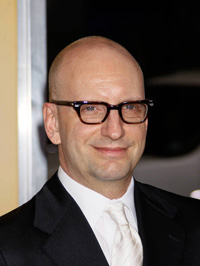
Steven Soderbergh freely admits how much luck has played into his career, beginning with winning the coveted Palme d’Or at Cannes in 1989, the victory that launched his career and his first major work, “sex, lies and videotape.”
“First of all the film was not supposed to be part of the competition but when another film was removed they bumped mine into that category,” he explains, “and then Francis Ford Coppola, who was supposed to be head of jury, couldn’t do it, so Wim Wenders took over. Without those two sets of circumstances would anything good have come out of Cannes for me? You have to ask yourself those things. Luck was with me, and I am fine with that. It’s knowing what to do with that luck.”
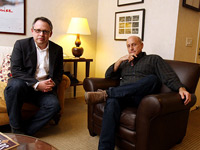
Soderbergh is a relaxed guy in this posh hotel suite. For some reason Warner Bros. chose the Royal York Hotel for their press days, away from festival village, and a cab (or subway) ride away from the action. I don’t mind the break, and frankly I admire Soderbergh very much, so I was looking forward to meeting him and speaking with him about his film “The Informant!” (opening today) and his career.
At this stage in his life, as he nears 50, Sodebrergh smiles and says he sees so much comedy in the world around him these days. “You have to see the humor in things don’t you,” he asks. “When I read ‘The Informant’ for the first time I saw it as a comedy, which many other people did not. But think about it, there have been films like this done as drama, Michael Mann’s ‘The Insider,’ which I like very much, so I chose not to go in that direction.
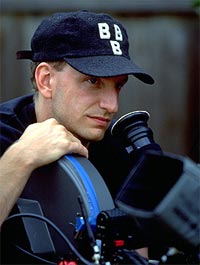 This Friday sees the release in American theaters of “The Informant!,” the nimble Matt Damon-starring corporate caper which, depending on the format in which you saw last year’s “Che,” is either the 20th or the 21st feature from one Mr. Steven Soderbergh. (I say 21st, given that “Che” clearly comprises two films utterly distinct in tone and structure, but 20th does sound more momentous for the purposes of a list. Oh, well.)
 The first time I saw “Che”

 It’s no secret that I don’t expect 2008 to be remembered as a banner year for cinema, though with that said, there are plenty of exceptional films to be remembered.
 The year is slowly coming to a close, and after this week’s year-in-review pieces, I’m happy to see so much healthy and spirited discussion on my humble picks for the year’s best films. Today I’m wrapping all of that up with a list of superlatives, some of them in your usual categories, the staples, some of them in a couple of, oh, let’s call it “fun” arenas that I like to mix in year in and year out.
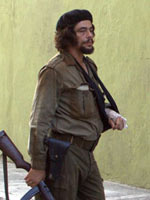 “Nothing if not the movie of the year,” wrote Scott Foundas in LA Weekly.
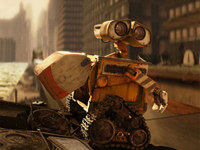
 Music is one of few of the “tech” awards cited by the Academy that tends to result in passionate discussions among moviegoers, including non-cinephiles. Awarded in the Best Original Score category, the film music composer has one of the most difficult and lonely jobs in filmmaking. Almost always arriving at the end of the editing stage, and typically the most expendable element of the mixture, he or she has to fashion music appropriate to the mood and, hopefully, serve as a nice commentary for the on-screen goings-on.
 “Norbit.” “Click.” “The Time Machine.” “Life.” What do all of these dreadful films have in common? They are Oscar nominees because of the category of Best Makeup!
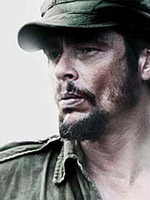 Most biographical films tend to play like sort of a “greatest hits” of that person’s life, and sadly much of the negative of that life is left out. Sir Richard Attenborough is most guilty of this with “Gandhi,” his hugely overrated epic about the Mahatma, who did everything short of walking on water in the film. The man was human, and by all historical accounts, had his issues, yet not one of them is in the film.