 Cannes Film Festival
It’s the end of the world as we know it, and Lars von Trier feels fine. Well, not “fine,” exactly: he feels as despairing and sceptical and faithless as he usually does, but that’s clearly where he’s comfortable, and where his creative faculties thrive most actively.
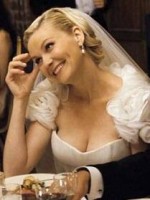
They’re certainly in rude health in “Melancholia,” a ravishing arthouse blockbuster that extends the self-therapy he began in 2009’s bracingly unhinged horror film “Antichrist,” but with more thematic cohesion and tonal restraint. The sensation-hungry, who label any new von Trier film ‘controversial’ before seeing a shred of footage, will likely be disappointed — that is, if they’re not appeased by some tame shots of Kirsten Dunst rutting on a golf course. (Luckily for them, as if realizing the deficit, the director compensated with some trademark shenanigans at the press conference.)
For the rest of von Trier’s fans, however, the film’s lack of overt audience-baiting serves to place his formal gifts in starker relief. A subdued, even elegant, vision of the apocalypse that begins as a waking dream and continues in an actuality no less feverish, “Melancholia” represents the natural culmination of the depressive doubt in self and society that has needled most of von Trier’s features. As a statement on the spiritual bankruptcy of the human race, it may well prove unfurtherable: after destroying the world we live in — a spoiler only to the most tone-deaf of viewers, I assure you — where does the man have left to go?
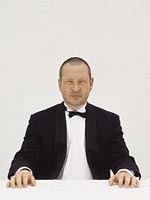
 The director: Lars von Trier (Denmark)
 I have thought about little else since seeing Lars Von Trier’s
 For those of you bored of reading the same ever-narrowing list of names in the assorted Oscar-speculation pieces across the web, David Poland’s
 Is
 I left home at 6:30am yesterday to make an early check-in to my hotel at 8:30. One bummer, my youngest daughter, Ariana, has a flu bug and I hate leaving Sherri with her on her own. She assured me it was cool, so I managed to get out the door without being overwhelmed with guilt. Kissed the girls goodbye, loaded the van with my luggage and laptop and was Toronto-bound.
 Is any other actor today building as diverse a filmography as Tilda Swinton? After serving studio time last year in the one-two shot of “Burn After Button,” this year has seen hear frighten off the purple-rinsed Academy crowd that seemingly first noticed her in “Michael Clayton” with a defiant return to arthouse “difficulty” in “Julia” and “The Limits of Control.”

 Over at the Guardian, Michael Hann is
 Edinburgh International Film Festival
 There isn’t very much more I can say about the writhing can of worms that is “Antichrist” until I actually get to see the film. (Anyone who can make this happen, you know where to find me.) But it’s worth mentioning this
 It’s somewhat surprising that our
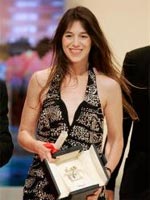 As it turned out, the most logical on-paper prediction turned out the be the right one. After emerging as the bridesmaid from several festivals past — winning the Grand Prix in 2001, Best Director in 2005 — the venerable Austrian auteur Michael Haneke has finally won the Palme d’Or for his stark moral drama “The White Ribbon.”
 It’s all over bar the voting. Tomorrow, Cannes jury president Isabelle Huppert will meet with her formidable, female-dominated team of eight – including the diverse likes of Robin Wright Penn, Asia Argento, James Gray and Hanif Kureishi – to pick over the 20 Competition titles they have seen over the last fortnight and select their collective favorites.
 Charlotte Gainsbourg seems so impossibly delicate in person that it’s hard to imagine her mutilating herself on camera. I suspect it’s even harder to watch — part of what makes her a canny choice as one of Lars Von Trier’s notoriously put-upon leading ladies.