In Contention

Tag: Chariots of Fire

  • THE LONG SHOT: British reserve

    “The British are coming!” crowed screenwriter Colin Welland from the Oscar stage in 1982, hoisting aloft his just-awarded awarded statuette for “Chariots of Fire” – and anticipating one of the bigger upsets in the history of the Best Picture race, as the modest British sports drama upended Warren Beatty’s grand political epic “Reds.”

    His rallying cry was both premature and behind the beat. Welland may or may not have been aware that the Brits had crashed this particular party several decades previously. In 1948, Laurence Olivier’s “Hamlet” became the first non-US production to land the Academy’s top prize, while the 1960s were something of a golden period for England at the Oscars: while films like “Lawrence of Arabia,” “Tom Jones” and “Oliver!” emerged triumphant, so many Brits vacuumed up the acting prizes that Hollywood industry gossips – the bloggers of yore – began to complain. “It’s not fair,” whined Hedda Hopper. “The weather’s so foul on that tight little isle of theirs, that to get in out of the rain, they gather in halls and practise ‘Hamlet’ on each other.”

    But Welland’s promise of a similar period of ubiquitous Brititude was kept only in fits and starts: Richard Attenborough, Ben Kingsley and “Gandhi” may have ruled the roost the following year, but it would be a whole quarter-century before another predominantly UK production (and coincidentally, also one with an Indian bent) took the top prize. In the early 1990s, Limey actors enjoyed a four-year run of wins in the lead acting races – from Daniel Day-Lewis through to Emma Thompson – only for their luck to dry up until Helen Mirren initiated another mini-streak 14 years later. “The British are coming… for occasional visits,” might have been a more accurate boast, if not quite as rousing.

    (more…)

  • THE LONG SHOT: When you wish upon a star

    “Mila Kunis is so winning Best Supporting Actress this year,” remarked an independent filmmaker to me over drinks today, referring, of course, to the 27 year-old’s sly breakout turn in Darren Aronofsky’s “Black Swan.” This was no idle fan statement. The man knew his Oscar onions – his theory was built upon established Academy affection for hot ingénues in sashaying support roles, as well as the current absence of any obvious frontrunners in the category.

    Still, even as he explained this, my eyebrows must have shot up somewhere past my hairline. As the writer who caught hell from many readers for daring not to predict Natalie Portman among my Best Actress nominees last month, the prospect of Kunis even getting nominated for subtly smoking work in an outré arthouse thriller hadn’t crossed my mind. I told him as much while emphasizing, as an admirer of the performance, how much I’d like to be wrong.

    “That’s what everyone says to me,” he replied. “‘Oh, she’s a revelation, I’d love to see her nominated, but she won’t be.’ Whenever I start hearing that kind of talk about a person or a film, that’s when I go to the bookies and put money on them. If everyone’s seeing the same thing in them, who’s to say the voters aren’t?”

    (more…)

  • LIFE WITHOUT OSCAR: 1981 and 1982

    Catch up with the idea behind this series here.

    Can I just take a moment here to publicize that the 1980’s are by far, my least favorite decade in cinema. Despite the great titles that I’ll be spotlighting here and my feelings that it was the best time for blockbuster filmmaking, it’s just a generally depressing era. Genuine artistic voices were in short supply so if anyone has recommendations for these years, definitely throw them my way.

    Perhaps I should start with “Chariots of Fire,” one of only a handful of Best Picture winners I have yet to see. The unheralded British production was a surprise winner over Warren Beatty’s “Reds,” which I have also not seen.

    I was, however, conceived in 1981 so cut me some slack on these titles. I’ll get to them. As I was preparing to enter the world, all four acting winners were on their way out, averaging 71 years old, including Henry Fonda’s first ever win.

    Another British production about a true story, “Gandhi,” took top honors in 1982. This was also the year “Tron” was disqualified from the Best Visual Effects category because the Academy thought using a computer was cheating.

    (more…)

  • Alone: when you hate a movie everyone else seems to love

    Miramax Films\' The English PatientIn 1996 I remember sitting in a packed screening room watching “The English Patient”; it was close to the end when Ralph Fiennes leaves Kristin Scott-Thomas in the cave, promising to come back, never to return, leaving her (through no fault of his own) to perish.
    I couldn’t help thinking at the time: “For fuck’s sake woman, DIE so we can all go home.”  I hated the film — hated it, hated it, hated it — and yet the reviewes were pretty much raves.  Of course the damned thing won nine Academy Awards including Best Picture and Best Director. I did not believe the love connection between the leads (there was no heat) nor that anyone, quite frankly, could fall for an ice queen like Scott-Thomas, much less risk their life for her.

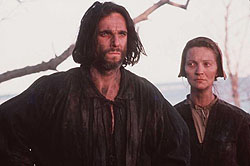
    And yet all around me was this avalanche of praise.  Even the person I did a TV show with named the film the best of the year.  I went with “Trainspotting.”  “The English Patient” was being hailed as this great historical epic while I championed “The Crucible,” which Fox fumbled in releasing, and as the critic who disliked the film, I looked very silly.

    I admire the craftsmanship with which Anthony Mingehlla made his film, but I think he surpassed it with “The Talented Mr. Ripley” and the wonderful “Cold Mountain.”  And of course “The Englsih Patient” was not the first critically acclaimed film I disliked, nor will it be the last, but it does put one in an odd position. You second guess yourself (sometimes) and wonder if you missed something along the way.

    (more…)

  • Who joins the great Best Picture snubs this year?

    It happens every year, a great film, in some cases destined to be remembered more than the eventual Oscar winner is snubbed for a Best Picture nod, or gets nominated and loses to an inferior film that happened to capture the public’s attention at that particular point in history.

    Some of the greatest films of all time lost the top award, “Citizen Kane” among them, arguably the greatest of all time (though I disagree). “The Treasure of the Sierra Madre”, easily John Huston’s best work, joins the list, as does “The Searchers,” which is in my opinion the finest western ever made and contains the greatest John Wayne performance of all time.

    Remember “Rocky” winning over “All the President’s Men,” “Network” and “Taxi Driver?” Or “Kramer vs. Kramer” over “Apocalypse Now?” In the last twenty years, Oscar has pulled some howlers, some choices that left me nearly putting my foot through the television upon the announcement. The first time I remember being really, truly angry at a lame decision was in 1981 when “Chariots of Fire” bested Warren Beatty’s “Reds,” which I believe to be among the best films of the 80s.

    (more…)