In Contention

Tag: Brenda Blethyn

  • Evening Standard Award nominees, take two

    A couple of weeks ago, we reported on the nominations for the London Evening Standard Awards — a juried critics’ honor devoted to British films and talent. As it turns out, that “nominee” list was a bit of a false alarm; rather, it was a rough longlist of names considered by the jury that the Standard released prematurely.

    The official nominations for the awards were announced today, and I have to say, it’s my favorite such list I’ve seen all season. This year’s jury can’t be accused of playing it safe: it’s certainly ballsy to omit “The King’s Speech” in the top race.

    In its place, I’m thrilled to see my #1 film of 2010, Sylvain Chomet’s “The Illusionist,” as well as Peter Mullan’s riveting youth drama “Neds,” which I reviewed back in October. Add in due respect for Mike Leigh, and I don’t think the field could better represent the year in British film.

    (more…)

  • ‘Never Let Me Go’ tops London Evening Standard noms

    The London Evening Standard Awards, a particularly bijou set of critics’ honors reserved for British titles and talent, tend to swerve a little left of the expected — chosen as they are by a jury of six disparate, but equally opinionated, critics. So it is this year: obviously “The King’s Speech” and “Another Year” feature heavily, but the list is peppered with pleasing examples of independent thinking.

    Indeed, this jury has given a sharp reprimand to the recent BIFA Awards by including Peter Mullan’s lavishly praised indie “Neds” in their Best Film lineup, a highly diverse selection that also includes Sylvain Chomet’s animated wonder “The Illusionist” (yay), Matthew Vaughan’s divisive comic adaptation “Kick-Ass” (boo) and Clio Barnard’s performance-documentary hybrid “The Arbor.”

    Frozen out in the Oscar race, “Never Let Me Go” nonetheless had a good day here with a leading five nods, thanks largely to the jury’s regard for all three of its leads.

    (more…)

  • Dr. Leigh and the women

    I often hear Mike Leigh described as a great “women’s director,” though that’s really only half the truth. Vivid, probing male characters abound in Leigh films, often as vital counterpoints to female star turns (see Eddie Marsan in “Happy-Go-Lucky” or Timothy Spall in “Secrets and Lies”) but sometimes in center stage too: in “Naked,” David Thewlis gives what might be the richest performance in any Leigh film to date. (Hefty statement. Hefty performance.)

    In other words, Leigh is not so much a great director of women as a great director of actors, period. But his actressy reputation sticks, partly because his women have an easier time impressing awards voters, but perhaps also because he’s tougher on the women he writes than most male auteurs, making harsh moral demands of some and pushing even the saintlier ones (Imelda Staunton’s Vera, Sally Hawkins’s Poppy) into behavioral extremes that render them tricky to play. There are no stock love interests, blandly supportive wives or femmes fatales in Leigh ensembles: every character, of either sex, in ensembles comes with an independent inner life.

    (more…)

  • Brenda Blethyn angles for Oscar attention in ‘London River’

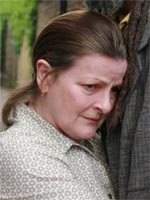
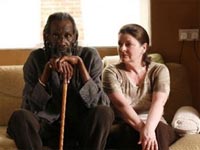
    Brenda Blethyn in London RiverAmid the surfeit of underdog titles vying for Oscar glory, a special prize for maximum cojones should go to the producers of indie Brit drama “London River,” who are mounting a campaign for Brenda Blethyn’s superb lead performance — despite the obstacle of the film lacking a US distributor.

    The film (which was disqualified as Algeria’s Oscar entry due to excessive English dialogue) has just begun a week-long qualifying run in L.A., and if you happen to be around, you owe it to yourself to give it a look.

    As I wrote in my June review of the film from the Edinburgh fest, it’s a quiet, humane piece dealing with the still-sensitive subject of the London terrorist attacks of July 2005. Despite this political currency, the film doesn’t draw overt attention to itself — but it affords Blethyn her finest showcase since “Secrets and Lies,” tempering the familiar rhythms of distraught-parent drama with less flattering streaks of prejudice and self-absorption.

    (more…)

  • The odd couple

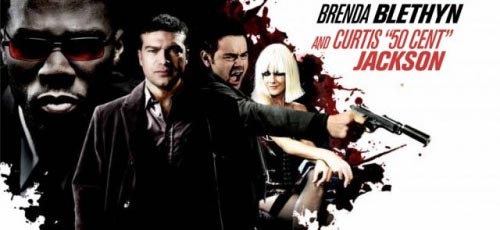
    I … have no words. Let’s hope that Oscar campaign for “London River” picks up steam, shall we?

    poster for Dead Man Running

  • The Great Performances: 1998

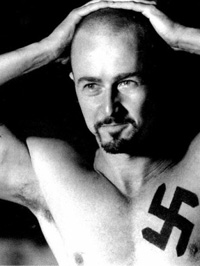
    Edward Norton in American History XFor all my bitching about Roberto Benigni winning Best Actor in 1998 for his incessant mugging in “Life is Beautiful,” I was also thrilled the Academy watched enough films and paid enough attention to realize that Edward Norton was deserving for his magnetic turn as a neo-Nazi who sees the light in “American History X.” Norton was electrifying as Derek, the charismatic leader of a group of skinheads, handpicked by the older gentleman, played with menace and sleaze by Stacey Keach, who believes in what Hitler taught and seeks to spread the word to the youth of California.

    Norton gave the best performance by an actor I saw in 1998, but the Academy got caught up in the groundswell of support of Benigni’s movie, a fable set in a death camp. I’m not a fan, either of his overwrought, over the top performance, or the film itself. No rant, you all know what I think there.

    That said, there was a bounty of great male performances in 1998, many of which went unnoticed by the Academy. They did their best to get it right, though.  Joining Norton and Benigni for nominations were Nick Nolte in “Affliction,” Ian McKellen, superb in “Gods and Monsters,” and Tom Hanks as the weary soldier in Steven Spielberg’s magnificent “Saving Private Ryan.”

    Not even nominated, however, were Warren Beatty for his brilliant turn as the truth-talking senator in “Bulworth,” Joseph Fiennes in Best Picture winner “Shakespeare in Love,” Jim Carrey in “The Truman Show,” George Clooney in “Out of Sight,” Brendan Gleason in “The General” and John Travolta in “Primary Colors” or “A Civil Action,” take your pick.  And perhaps the most deserving of all: Jeff Bridges as The Dude in “The Big Lebowski,” the actor’s finest work, in my opinion.

    Each of the aforemenetioned men gave stronger performances than the eventual Oscar winner, yet failed to nab a nomination.  Jeez!

    (more…)

  • 10/30 Oscarweb Round-up

    Sotigui Kouyate and Brenda Blethyn in London River• Brian Lowry on how The Ten is an Oscarcast producer’s nightmare. [Variety]

    • With Hugh Jackman out, Jeff Wells thinks the Oscars need to skew younger with their host. [Hollywood Elsewhere]

    • The producers of “London River” launch a deserved Oscar campaign for Brenda Blethyn, despite still lacking US distribution. [Notes on a Season]

    (more…)

  • The Great Performances: 1996

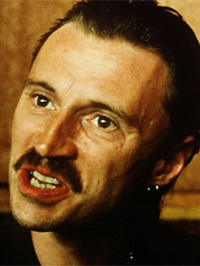
    Robert Carlyle in Trainspotting1996 was an odd year, a year when the independent cinema dominated the weak product emerging out of Hollywood. I am going to confess right off the top of this article (as I have numerous times before) that I was not a fan of “The English Patient,” which for me remains one of the most vastly over-appreciated films ever made.  I couldn’t stand Kristin Scott Thomas’s work, though I did enjoy the Dafoe/Binoche storyline.

    So with that out of the way, and firmly in mind, let’s go…

    The Best Actress race was clouded with the notion that Madonna was hell-bent on being nominated for her performance in “Evita,” which finally made it to the screen after years of starts and stops. Her performance split critics, but for me lacked the depth and edge that it was given on stage by Patti Lupone, and that Meryl Streep or Michelle Pfeiffer would have given the role. Her performance proved that Madonna should stop acting as she has little or no acting talent, and should stop making movies and trying to conquer Hollywood as she did the music industry.

    Honestly, the performance rarely rises above a really good community theater performance. Mercifully she was not nominated, but she did win the Golden Globe for Best Actress in a Comedy or Musical over the eventual Oscar winner, Frances McDormand in “Fargo.” The nominees for Best Actress included, McDormand, Kristin Scott-Thomas for the aforementionend “The English Patient,” Diane Keaton for “Marvin’s Room,” Brenda Blythyn in “Secrets and Lies,” and best of all, perhaps, Emily Watson in “Breaking the Waves.”

    (more…)

  • OFF THE CARPET: Looking at the leading ladies

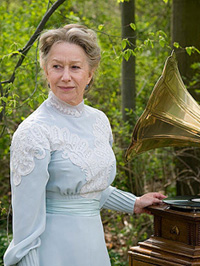
    Helen Mirren in The Last StationNow is the time when everyone begins assessing the race at its beginnings, and the gist I’m getting is that no one really knows what to write about.  Stabs at analysis end up being responses to other takes or rehashed arguments, and nothing really insightful is being brought to the table.

    And let’s face it.  As we dip into what looks to be the longest early-season lull in some time, there really is nothing insightful to offer.  So let’s just spit-ball…

    I think the Sony Classics acquisition of “The Last Station” is more significant than most seem to be aware right now.  There are only a handful who have seen it (Telluride being the film’s only festival stop so far), so that’s understandable.  And the film isn’t a knock-out, one that will be damned as merely efficient in some circles.  But with Helen Mirren in the lead actress race, it’s worth noting that suddenly that category is further framed as the old guard versus the new.

    And I may be wrong in my conviction, but I have to say it again: Mirren is VERY much in this race.  As the fiery Countess wife of a literary titan, she brings equal parts passion and delicacy to a complicated, certainly flawed character.  She’s afforded a number of moments that give her room to chew the scenery, and if Christopher Plummer happens to ride a wave of sentiment to a nomination as well, part of me feels that he will owe something to Mirren’s coattails.

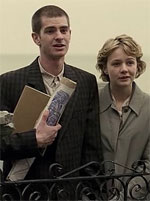
    My predictions for the leading ladies this week are Mirren, Meryl Streep, Carey Mulligan, Gabourey Sidibe and, my weak link, Marion Cotillard (who is expected to be a lead actress push for “Nine,” but things could change).  In that collective we have three former winners, two legends of the form, two newbies and one performer shifting into the second gear of her career.  I think that’s a pretty good balance.

    (more…)
  • TELLURIDE: ‘An Education,’ ‘Bright Star,’ ‘London River’

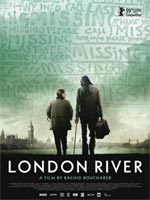
    London RiverThis year’s Telluride fest is slowly gearing up.  There are a handful of press screenings this afternoon and the opener, Marco Bellochio’s “Vincere,” is set to play at 5:00pm.  I’ll probably miss that in order to take in “The Last Station,” which if it picks up a buyer, could make good on awards potential for Christopher Plummer and James McAvoy.
    Before things get going, though, I though it best to clear the slate with a few reactions to films playing here which I’ve already seen.  More to come later this evening, I’m sure.

    “An Education” (****)

    Few films are likely to have the refined air of artistry that Lone Scherfig’s “An Education” offers.  Based on a memoir by Lynn Barber, the story is, in a nutshell, that of a young girl eager to grow up but unprepared for the disappointments of adulthood.  But the film is, of course, so much more than that.

    (more…)

  • EDINBURGH: ‘London River,’ ‘Spread’

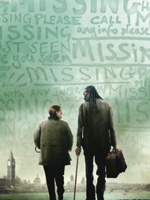
    London RiverThe past day has presented me with two films that made their first appearances at high-profile festivals early in the year: Scottish auteur David Mackenzie’s first U.S. effort “Spread” — a “look ma, I can act” venture of sorts for Ashton Kutcher — played at Sundance in January, while Rachid Bouchareb’s “London River” was a favorite (and an award-winner) at February’s Berlinale. Suffice to say that winter festival bows are all these titles have in common.

    LONDON RIVER (***)

    American filmmakers have been combing the ashes of 9/11 for inspiration for some years now, but the British have been far more reticent in taking the London bombings of July 2005. Indeed, it has fallen to Algerian director Rachid Bouchareb (a recent Oscar nominee for his excellent WWII drama “Days of Glory”) to make the first major fictional exploration of this territory, and happily he doesn’t fumble the catch by presuming importance.

    The story of two culturally opposed parents (an impoverished Francophone Muslim and a middle-class British widow) who travel to the eponymous city after the attacks, in search of their missing children, “London River” infuses a standard-issue story of parental grief with social and racial tensions that mine the Western suspicion of Islam that has become commonplace in the wake of 9/11. (“The place is crawling with Muslims!” Brenda Blethyn’s culturally sheltered rural character exclaims about London, in one of the film’s few stabs at humor.)

    (more…)