•  Scientists say “Contagion” is for real. [Associated Press]
• James Rocchi talks “The Ides of March” with Best Supporting Actress hopeful Evan Rachel Wood. [MSN Movies]
• Nicolas Winding Refn breaks down a scene from “Drive.” [Arts Beat]
• Scientists say “Contagion” is for real. [Associated Press]
• James Rocchi talks “The Ides of March” with Best Supporting Actress hopeful Evan Rachel Wood. [MSN Movies]
• Nicolas Winding Refn breaks down a scene from “Drive.” [Arts Beat]
 • Steve Pond lays it all out for “The Descendants” winning Best Picture, trying to make good on his two-year streak (though at least he had seen the other two before making those calls). [The Odds]
• At Telluride, meanwhile, Sasha Stone laid down a cool 20-spot on Viola Davis taking Best Actress. (I’m a witness.) [Awards Daily]
• That Cannes hole just wasn’t deep enough for Lars Von Trier. [Hollywood Reporter]
Paddy Considine’s directorial debut was one of the international success stories at this year’s Sundance fest, nabbing awards for both Olivia Colman and Peter Mullan’s performances, as well as one for Considine’s direction. I saw the film, a bruising, thoughtful portrait of abuse and emotional isolation in suburban England, and found the hype more than justified on the acting front. Mullan is as superbly tender-tough as we’ve come to expect from him, but it’s Olivia Colman — perhaps best known for her expert underplaying in the UK sitcom “Peep Show” — who’s the revelation here. I’ll save my full impressions of her stunning performance for a review soon, but I will say that if Meryl Streep makes half as worthy a case for an Oscar nomination later this year, I’ll eat my literal hat.
The film will get a fresh blast of wind in its sails at next month’s Toronto Film Festival; Strand Releasing already has the US distribution rights, but has yet to announce a release date. (UK audiences have only until October 7 to wait.) Meanwhile, The Guardian unveiled a trailer this morning that gives but a hint of the acting firepower on offer here. Check out the embed after the jump.
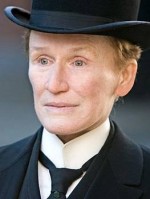 In the grand scheme of the awards season, an honour from the high-end but small-scale San Sebastian Film Festival doesn’t mean much on its own. But seen potentially as the first stop on a tour of similar recognition, the festival’s announcement of a Lifetime Achievement Award for Glenn Close — conveniently attached to the European premiere of her film “Albert Nobbs” — suggests the shape Close’s 2011 Oscar campaign could take. From the press release:
Glenn Close, one of Hollywood’s most feted actresses, will be the film personality to receive this year’s Donostia lifetime achievement award at a ceremony on September 18th at 21:30 in the Kursaal Auditorium.
In San Sebastian, the actress will introduce the European premiere (out-of-competition) of her latest film, Albert Nobbs. Helmed by Rodrigo García, the movie is set in 19th Century Ireland, a society dominated by men where women have no opportunities and are condemned to a life of servitude. The star of the film (Close) is a woman who disguises herself as a man to get a job in a hotel and earn the money she needs to fulfill her dream.
 I should really have drawn attention to this earlier, but as Jeff Wells pointed out on Hollywood Elsewhere, Lars von Trier’s Cannes hit “Melancholia” began a one-week, once-a-day screening run at Los Angeles’ out-of-the-way Laemmle Fallbrook 7 theatre on Friday — a handy opportunity for local film buffs with free afternoons to sneak a look at the film months ahead of its November 11 release in the US. (Most European viewers haven’t quite so long to wait.)
As you can gather from my enthusiastic Cannes review of the film, it’s worth getting impatient for. One of von Trier’s most elegant and elegiac works — the silly controversy over his unwise Nazi-related comments at the festival is a red herring that doesn’t reflect remotely on the surprisingly subdued film — it showcases the man in full command of his formal powers, as well as a fascinating ensemble, the pleasures of which extend beyond Kirsten Dunst’s fairly rewarded performance.
 Welcome to Oscar Talk.
In case you’re new to the site and/or the podcast, Oscar Talk is a weekly kudocast, your one-stop awards chat shop between yours truly and Anne Thompson of Thompson on Hollywood. The podcast is weekly, every Friday throughout the season, charting the ups and downs of contenders along the way. Plenty of things change en route to Oscar’s stage and we’re here to address it all as it unfolds.
A month and a half since the last off-season podcast, we take the temperature one more time this summer, right at the year’s mid-way point. There have been some Academy rule changes and some news and notes in the interim, so let’s see what’s on the docket today…
 It figures the day after I offer up my first set of Oscar predictions, a film I have an eye on as a potential awards vehicle finds distribution.
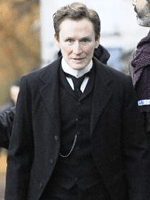
Roadside Attractions and Liddell Entertainment have picked up Rodrigo García’s “Albert Nobbs” for a fall release, and with it, you can bet a campaign for actress Glenn Close will be wind in the sails. On paper, the role seems to be the sort that could get Close that elusive first statue (much to the chagrin of Meryl Streep fans the world over, I imagine), but let’s see if the film has the goods, first.
It’s interesting to note that Close originally portrayed the character — a woman who poses as a male butler in a Dublin hotel in the 1860s — 30 years ago on Broadway in a stage adaptation of George Moore’s short story “The Singular Life of Albert Nobbs.” She won an Obie for her performance and this is a film project she’s been developing for a decade. She even co-wrote the screenplay and served as producer. Maybe an Oscar is next.
 Early in the season the lead actress category appeared to be more competitive than ever. An easy list of 10 contenders could be drawn up, many of them admittedly sight unseen, and it was anyone’s guess as to which lady could insinuate herself as the odds-on favorite to win.
Then the critics began narrowing things down, while certain films began to underwhelm and fall to the wayside. With them went a few of those potential contenders. The critics also began to mold a frontrunner, one who would eventually prove to have the vote of the industry before having that status challenged in the final lap. Indeed, it’s been a wild ride for Best Actress.
The nominees are:
Annette Bening, “The Kids Are All Right”
Nicole Kidman, “Rabbit Hole”
Jennifer Lawrence, “Winter’s Bone”
Natalie Portman, “Black Swan”
Michelle Williams, “Blue Valentine”
 • Pete Hammond reports that Tom Hanks will present Best Art Direction and Best Cinematography to start the show, so we’ll know very quickly if a sweep for “The King’s Speech” is afoot. [Deadline]
• Glenn Kenny talks up the underrated “Shutter Island” a year after its release. [The Film Talk]
• It’s been a week of celebrity Oscar picks, more than ever. Here’s Elton John’s call for Best Actress. [Inside Movies]
 A few days ago, a reader responded to a trivia note by Steve Pond, about the number of Best Actor nominees whose Christian names begin with the same letter, with the question, “Is this the point at which we are officially over-saturated with Oscar stats?”.
Well, if we weren’t there then, we might be now.
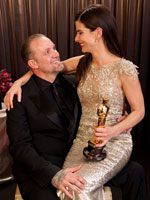
Yesterday, the Huffington Post ran an interview with an academic who has invested far too much time looking into the so-called “Oscar Curse” — the unfortunate trend that has seen many a star headed for divorce court shortly after winning the Best Actress Oscar. Recent examples include Sandra Bullock, Kate Winslet, Reese Witherspoon, Hilary Swank and Halle Berry, but a University of Toronto research project (!) suggests the curse goes further back than that.
 Even when they aren’t being read out with gale-force enthusiasm by Mo’Nique, the Oscar nominations tend to attack you with breathless speed that you need at least half an hour to decide how you feel about them at all. As usual, this morning’s announcement found me bouncing from one split-second reaction to another: Yay! No! What? That? Why? Who’s missing? What did she say? That? No! Did I call that? Yay!
As Kate Winslet would say in such situations: “Gather.” And now that I’ve stepped back, gathered and taken into account that no Oscar nomination slate in history has been without its disappointments, I can honestly say that I’m more happy than not with the list in front of me.
Some of the day’s biggest surprises didn’t elicit much of an emotional reaction from me. My eyebrows rose as high as anyone’s over Christopher Nolan’s latest failure to secure a Best Director nomination — is he the first man in Oscar history to fall three times at this hurdle after being DGA-nominated? — though I always said he couldn’t be regarded as a sure thing.
Welcome to Oscar Talk.
In case you’re new to the site and/or the podcast, Oscar Talk is a weekly kudocast, your one-stop awards chat shop between yours truly and Anne Thompson of Thompson on Hollywood. The podcast is weekly, every Friday throughout the season, charting the ups and downs of contenders along the way. Plenty of things change en route to Oscar’s stage and we’re here to address it all as it unfolds.
We’re moving into the last weekend before the Academy’s big nominations reveal on Tuesday. Anne is calling from Sundance, where the festival is just gearing up, leaving me alone in LA to my devices. But there are a number of things to address in these final pre-nod hours, so let’s see what’s on the docket today…
 • Ben Affleck’s writes up his 11 favorite heist movies. [Daily Beast]
• The Jets game was the Weinstein priority on Sunday night, not the Globes. [Page Six]
• Dave Karger gets frisky and sticks with Hailee Steinfeld in lead for his final predictions. [Inside Movies]
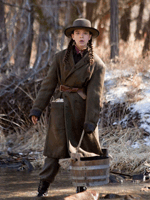 During last night’s DVD release party for “The Social Network” I ended up in a spirited debate with producer Scott Rudin about the category placement of Hailee Steinfeld in “True Grit.” Thankfully it went beyond ideas of the Hollywood star system and strategy and into the philosophy of the narrative itself.
Since it’s been such a point of discussion as of late (most recently in a heated debate between yours truly and Anne Thompson in this week’s Oscar Talk), I thought I’d pass along his reasoning for thinking the performance a supporting one. I’m sure he wouldn’t mind, so here goes…
In a nutshell, Rudin’s argument (and it’s the smartest one I’ve heard in favor of supporting placement yet), is the idea that the Mattie Ross character is really the impetus for change in Rooster Cogburn’s character. And, most importantly, she doesn’t have an arc, Rudin says, while Cogburn does. He changes, she doesn’t. So Mattie is the instigator. It’s an interesting point, but I’m still not buying it.
 All season long the question from countless readers was, “Why do you have Hailee Steinfeld listed as a supporting actress contender? Her character is the lead of ‘True Grit.’” Indeed. But I knew where Paramount was going to campaign the performance, and I expected a number of critics groups to follow that notion like sheep (and they did, save for the independently-minded Utah set).
Of course, the possibility always existed that the Academy would vote its own way.
The acting branch, remember, decides category placement when it comes to performance contenders. Just two years ago they weren’t buying the supporting campaign for Kate Winslet in “The Reader,” opting instead for lead (and she ultimately won the Oscar for Best Actress). Child performances, however, tend to struggle in the leading ranks.
 [Guy’s updated predictions here.]
Okay, I won’t lie to you: I initially conceived this column in my head last week as a Christmas Eve wishlist, but then got too busy mulling wine and Christmas shopping in Dublin snowdrifts to actually write it.
So a New Year’s Eve wishlist it is, then. Under either name, with the season currently in stasis until January’s Guild awards usher in the next phase of competition, here’s a list of ten open requests (or distant hopes) for Academy members currently hemming and hawing over their ballots.
Go forth into the world: Okay, I’ve given up my fight for a foreign-language Best Picture contender for yet another year. And despite a banner year for the form, a documentary nominee ain’t happening either. But is it too much to ask the Academy to recognize that not all notable filmmaking happens within U.S. borders? We’re looking at the sad likelihood of 90% of the Best Picture race being given over to American productions, with the lone exception, “The King’s Speech,” about as authentically British as a “Mind the Gap” T-shirt. Wouldn’t “Another Year” or “Animal Kingdom” be slightly more interesting stamps in Oscar’s passport?
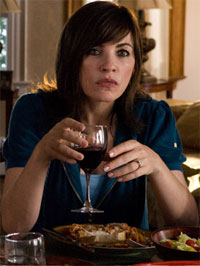 The fifth column in our new seasonal series — if you haven’t got the drill by now, we’re rounding up the most Oscar-worthy work from the oft-overlooked first half of the year — wraps up the performance categories with by far the most competitive race of all. Conventional wisdom has it that Best Actress is the most crowded field of this year’s awards derby, and as I looked over the January-to-June release schedule, I realized that’s just as true of the early birds.
Where I admit I had embroider a little to make up five-strong fields in one or two other categories, this week’s task found me scratching my head over who to leave out. Many of the year’s most lavishly acclaimed performances jostled for position: Kim Hye-ja may have taken the Los Angeles critics’ honors, but as much as I love the demented commitment of her performance in “Mother,” I was surprised to find myself leaving her on the sidelines. Tilda Swinton is on near-peak form in “I Am Love,” and yet she too finds herself in the honorable mention category.
I was all prepared to court controversy by citing Julianne Moore’s exemplary work in Atom Egoyan’s otherwise negligible “Chloe,” but there just wasn’t room to be that playful; in a regular year, “Father of My Children” star Chiara Caselli would easily have figured in at the halfway mark. Others might make cases for Noomi Rapace or Giovanna Mezzogiorno, and I’m still hamstrung by not having had access to “Everyone Else.” The bottom line is: there was a lot to sift through before arriving at the five names below. May future years also be this good to the ladies.
Welcome to Oscar Talk.
In case you’re new to the site and/or the podcast, Oscar Talk is a weekly kudocast, your one-stop awards chat shop between yours truly and Anne Thompson of Thompson on Hollywood. The podcast is weekly, every Friday throughout the season, charting the ups and downs of contenders along the way. Plenty of things change en route to Oscar’s stage and we’re here to address it all as it unfolds.
Anne and I are in a bit of a food coma today, so the podcast was a bit all over the place. We free associate from topic to topic bringing in your questions where applicable, but there’s a lot to digest. Let’s see what’s on the docket today…