In Contention

Tag: Ben Kingsley

  • Scorsese and Herzog venture into 3D

    If you can’t fix it, you’ve got to stand it. And so it is, apparently, with me and 3D.

    As I’ve written before, I’m not a big fan of Hollywood’s favorite rediscovered gimmick. As a gee-whiz novelty — expertly embellishing the odd genuine event film like “Avatar” — it works a treat. As a now-regular moviegoing ritual — awkwardly grafted onto dreary blockbusters like “Clash of the Titans” and “Alice in Wonderland,” making them even more invasive and exhausting than they need to be — it’s rapidly becoming an irritant. And until some genius fashions 3D glasses that can fit comfortably over an existing pair of spectacles, I’ll remain hostile.

    Clearly, however, I’m going to have to find a way to love the third dimension, as it continues to seep outside the effects-driven blockbuster box, and even into the arthouse. The gentrification, if you will, of 3D took a forward leap this week with the news that both Martin Scorsese and Werner Herzog will be shooting their next projects in 3D.

    (more…)

  • THE LISTS: Top 10 Oscar nominee fields

    Ralph Fiennes in Schindler's ListIn exactly one week’s time, we’ll have a brand new list of Oscar nominations to pore over, pick apart and eventually file away in our subconscious with the other 81 editions of this annual collective. For Oscar geeks, nomination day is in many ways more exciting than the ceremony itself, celebrating a broader spectrum of work and throwing up far more surprises along the way.

    For all that, once the winners are announced, the nomination list as a whole tends to be disregarded, returned to only by trivia buffs and the geekiest of Oscar geeks. (Guilty on both counts.) And that’s shame, because a field of five nominees can often be more illuminating viewed collectively than even the worthiest of individual champions.

    Today’s list, then, is devoted to that most elusive of Oscar holy grails: the perfect nominee field.

    Yes, more often than not, the Academy will nominate several notable achievements in a single category. But rarer than hen’s teeth are the robust Oscar categories that feature a full house of five outstanding nominees, five contenders that would all be worthy of a win in any other year. No unremarkable coaster nominees sliding in on the coattails of a popular picture. No bad films with an expensively studio-bought  nominations. No filler. No fat. Just five superb achievements.

    (more…)

  • The Great Performances: 2003

    Sean Penn in Mystic RiverThere is little doubt in my mind I am going to take some heat this week, so let’s kick it off right away with my belief that Sean Penn deserved his Best Actor Oscar for “Mystic River,” a performance of overwhelming ferocity and staggering emotional power.

    Yes, I too loved Bill Murray in “Lost in Translation,” and would have loved to have seen him win, but he didn’t, and frankly he lost to a stronger performance (in my opinion). I know it is a cliche to say the nomination is the reward, but I would hope that Murray would be happy with that.

    But there were so many great male performances in 2003!

    Robert Duvall was superb in “Open Range” as the wily old rancher who ends up in a gunfight for his life with his friend, played by the also fantastic Kevin Costner, by his side. Tom Cruise gave a great performance in “The Last Samurai” for director Edward Zwick, while Russell Crowe was again brilliant in “Master and Commander: The Far Side of the World,” adding to his string of stunning performances.

    (more…)

  • The Great Performances: 2001

    Gene Hackman in The Royal TenenbaumsIn one of the weakest years in memory, not just for performances but for great films, 2001 saw Denzel Washington and Halle Berry knock “two birds out with one stone,” as the former declared on Oscar night, as two African Americans won the top acting prizes for the first time ever.  And it was difficult to argue with either.

    Washington was superb in “Training Day,” clearly loving his role as crooked cop Alonzo, walking the line without ever going over the top, blowing everyone off the screen. In many ways it was a make-up award for his having lost for “Malcolm X” in 1992 to Al Pacino’s ranting work in “Scent of a Woman” and perhaps, though lesser so, for his loss for “The Hurricane.”

    Berry gave a raw, sexually charged performance in “Monster’s Ball,” one of such searing truth and rage you could never look away from the screen. Robert Duvall called her performance the finest by an American actress he had ever seen and was not the least bit surprised when she won the Oscar for Best Actress.

    My question remains: Should Denzel Washington have won over the non-nominated performances of Gene Hackman in “The Royal Tanebaums” or the vastly under-appreciated Jack Nicholson in “The Pledge,” one of his finest recent performances? Don’t think so.

    There was a lot of love shown to Tom Wilkinson for his heartbreaking work in “In the Bedroom” as well as Russell Crowe (again) for his performance in “A Beautiful Mind,” which eventually won the Best Picture Oscar. I was very surprised that Sean Penn was nominated for his performance in “I Am Sam” because though I consider Penn one of the greatest actors in the history of the cinema, his work in that film represents one of the very few times I could “see” him acting.

    (more…)

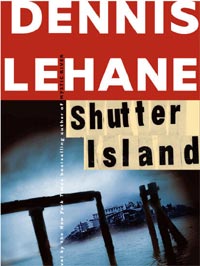
  • PAGE TO SCREEN: “Shutter Island” by Dennis Lehane

    Shutter Island by Dennis LehaneDeep into Dennis Lehane’s 2003 novel noir “Shutter Island,” there’s a wonderfully telling exchange between the two central characters. Reflecting on the gothic heights to which their situation has spiralled, one observes, “It’s all a bit Grand Guignol, don’t you think?” His partner’s reply: “I don’t know what the fuck that means.”

    Ostensibly a nod to class difference within the narrative, it’s also arguably a tongue-in-cheek dig at the novel’s self-reflexive straddling of high and low culture. “Shutter Island,” of course, is Grand Guignol of the highest order, but with an acute awareness of the term: steeped in references to throwaway pulp fiction and lurid 1950s B-movies, but written with the literary discipline and deference of a serious novelist.

    Needless to say, Boston-ish setting aside (and even then, “Shutter Island” goes to significant dramatic lengths to distance itself from the city), the novel is a very different beast from the two Lehane titles successfully given the screen treatment in recent years. For all their whodunnit trappings, “Gone Baby Gone” and “Mystic River” traded largely in earnest authenticity; “Shutter Island,” by contrast, hinges on artifice.

    Lehane has apparently stated his admiration for Graham Greene’s alternation between “novels” and “entertainments”: this, carefully wrought and quotation mark-enclosed as it is, is plainly his idea of a pure entertainment, a funhouse, a ride.

    (more…)

  • SANTA BARBARA: Writers talk writing, Cruz walks the red carpet

    Penelope Cruz talks to festival director Roger Durling at the Santa Barbara International Film FestivalYesterday was another busy event day for the Santa Barbara fest.  It was a shame the Director’s Panel was canceled, but participant Andrew Stanton switched gears to join Robert Knott (“Appaloosa”), Tom McCarthy (“The Visitor”) and Dustin Lance Black (“Milk”) for an Anne Thompson-moderated discussion on their work at the keyboard this year.

    It was a good discussion, though I couldn’t help a double take at Black’s prepubescent appearance as he waltzed casually on stage.  I mean it as a compliment.  I was also intrigued by his noting one of the things that really interested him when working on the spec “Milk” script was the famed politician’s not-so-heroic side.  “Sometimes he’d be in the bath house when he should have been home with his boyfriend,” Black said.  I say intrigued because one of the key criticisms of the film has been its overly haloed depiction of the man, a criticism that, frankly, hasn’t been properly defended by even the film’s legion of supporters (and I count myself in their ranks).

    Stanton, meanwhile, was perhaps the most thought-provoking member of the panel, finding a nice place amid Black’s low-key veneer, McCarthy’s wit and Knoll’s hilarious interjections.  And thankfully, Jeffrey Wells martyred himself by asking why Stanton continued to be “oblique” when addressing the overweight “teletubbies” of “WALL-E.”  This has been a bone of contention for me on the film for some time, not so much because I feel it undermines the film, but because I believed it to be an easy opportunity for mean-spirited “fat” jokes, so to speak.

    (more…)

  • 12/3 Oscarweb Round-up

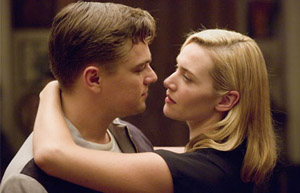
    Kate Winslet and Leonardo DiCaprio in Revolutionary Road• Jeff Wells senses the “push back” against certain contenders, steps up to bat for “Revolutionary Road.” [Hollywood Elsewhere]

    • Yours truly chats it up podcast style with John Campea to dish on how early favorites are shaping up. [The Movie Blog]

    • David Poland reports on the BFCA’s newest category: Best Action Film. [The Movie Blog]

    • T.L. Stanley talks “Elegy” with Sir Ben Kingsley. [Gold Rush]

    • David Carr reports from the sadly left-out-in-the-cold Fox Searchlight table at the Gotham Awards. [The Carpetbagger]

    • Geoffrey Macnab talks to Danny Boyle about Oscar heavy “Slumdog Millionaire.” [The Independent]

    • John Horn corners “Doubt” helmer and scribe John Patrick Shanley in the Big Apple. [Los Angeles Times]

    • Patrick Goldstein responds to some (some would say) odd Golden Globe classifications. [The Big Picture]

    • As “Milk” strives to make a difference, five films that actually did as much. [Spout Blog]

  • Looking for comedy in the awards world

    Over at his OscarWatch column, Dave Karger recently asked a question that has been bothering me for some time regarding this year’s awards race.

    Namely, how the hell are the Golden Globes going to fill out the ballot in the Comedy/Musical races?

    Best Actress looks solid enough. So far, we have two clear-cut frontrunners — Sally Hawkins and Anne Hathaway — in the Actress category, though I wonder if they will wind up placing Hathaway in the drama field, where I think she belongs. Meryl Streep will inevitably get cited for “Mamma Mia!” and I feel confident that Emma Thompson will grab a deserved nomination for “Last Chance Harvey.”

    Karger thinks Sarah Jessica Parker could round out the list, though I might look at Beyonce Knowles in “Cadillac Records” (much as the thought of her playing Etta James upsets me) or Rachel Weisz in “The Brothers Bloom” as alternative filler nominees. (The Globes don’t mind elevating supporting roles when there’s a paucity of contenders, though Weisz is a legitimate lead, in my opinion.)

    It’s the Best Actor category that’s really problematic. From what I can see, Dustin Hoffman has this in the bag for his endearing autumnal turn in “Last Chance Harvey” — not just because it’s a lovely performance, but because I can barely think of any competition for him. With the news that Josh Brolin has (rightly, I think) been denied comedic classification for “W.,” Karger thinks the other nominees might pan out like so:

    I’d also make the case for Paul Rudd, who anchors the current hit Role Models with his signature deadpan delivery, and Ghost Town‘s Ricky Gervais, who was brilliant in a sophisticated comedy that nobody saw. The HFPA could go the more obvious route with Get Smart‘s Steve Carell or Hancock‘s Will Smith, but here’s hoping they’ll think out of the box and recognize another understated humorist: Michael Cera from Nick & Norah’s Infinite Playlist. We can dream, right?

    (more…)

  • INTERVIEW: Dennis Hopper

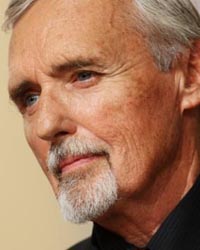
    Dennis HopperThe voice on other end of the line sounds nothing like the many wild and somewhat insane characters Dennis Hopper has portrayed throughout his career, which now spans more than 50 years. This is a man who has walked with James Dean (his mentor), John Wayne (who affectionately labeled him a “pinko”) and Francis Ford Coppola.

    As a director, Hopper was part of the movement that would bring the New American Cinema into play, closing the 1960s with his biker flick “Easy Rider,” and though he won prizes at Cannes and was hailed around the world, he has rarely directed since.

    Hopper portrayed perhaps the single most terrifying character in a film with his seething work as Frank Booth in David Lynch’s “Blue Velvet.’  The same year he was nominated for an Oscar for his work as the town drunk seeking redemption with his son through basketball in “Hoosiers.”  Even Hopper was stunned that the Academy failed to nominate him for Lynch’s film instead.  He remembers roaring, “HOOSIERS?  You’re kiddin’ me, man” when being told of the nomination. “Blue Velvet” was a film the Academy obviously feared, allowing a single nomination to David Lynch for his dreamy, surrealistic direction of the classic.

    Currently Hopper is celebrating the upcoming DVD release and a low-key Oscar campaign for Best Supporting Actor in “Elegy,” a fine little film in which he portrays the poet best friend of Ben Kingsley’s introspective professor — Sir Ben as Hopper calls him.

    “I was a big fan of Isabel’s [Coixet, the film’s director] work”, he explains. “So when my agent called and said I had an offer to be in a film with Sir Ben Kingsley and Penelope Cruz, I jumped in. It was a very human story, the sort of film I like to see, and being a big fan of Philip Roth helped me along. The film had comedy and tragedy, and most of all characters I think we can all identify with.”

    (more…)

  • Adapting Philip Roth

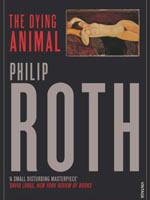
    Cover of The Dying Animal by Philip RothPhilip Roth is author of 25 novels and other works of non-fiction.  Revered in America, he has won every major American literature prize, including the National Book Foundation’s Award for Distinguished Contribution to American Letters in 2002.  Despite his literary success, his films have had a difficult journey to the silver screen.

    I joined the long line of Roth fans that were disappointed with Robert Benton’s adaptation of “The Human Stain,” the 2000 novel that received the National Book Award for the best work of American fiction. It was an extraordinary book and perhaps Roth’s finest. And I believed that it would translate nicely onto the silver screen. While the novel weaved in and out of the past and present, the transitions weren’t so frequent that it would create a problem for the screenwriter, Nicholas Meyer (Oscar-nominated for “The Seven-Per-Cent Solution.”

    Benton was able to attach an exceptional cast that included Anthony Hopkins, Nicole Kidman, Ed Harris and Gary Sinise. But when the film bombed with critics and audiences alike, it was quickly pulled from mainstream movie houses and relegated to small boutique theaters, and for short periods of time. It made only $5.3 million against a production budget of $30 million.

    Mr. Roth’s work has been adapted again by Mr. Meyer this year. Taking the pages of “The Dying Animal” and turning them into the film “Elegy,” Mr. Meyer and the film’s director, Isabelle Coixet have managed to create a finer adaptation of the text, and a far better film.

    (more…)

  • ‘Elegy’ the second film to go out to AMPAS

    Screeners of Isabel Coixet’s “Elegy” are set to go out to Academy members this week, fresh on the heels of Sony Pictures Classics’ “Frozen River,” which went out over the weekend.

    Key pushes for the film are Best Actor (Ben Kingsley),  Penélope Cruz (Best Actress), Dennis Hopper (Best Supporting Actor), Patricia Clarkson (Best Supporting Actress) and Nicholas Myer (Best Adapted Screenplay).  Let the games begin.

  • Beyond the biopic

    Halfway through watching the recently uncovered trailer for Ron Howard’s “Frost/Nixon,” I felt my stomach sinking with involuntary dread, and it took me a beat or two to figure out why.

    The problem didn’t appear to be the film itself; in fact, the relatively zippy trailer promises something somewhat tighter and wittier than I’ve been expecting from the odd (to my eyes) pairing of Ron Howard and Peter Morgan.

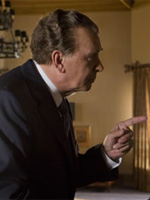
    No, what had me grimacing in anticipation of things to come were the glimpses we are offered of Frank Langella as Tricky Dick – a showcase that, in the space of two minutes, manages to tick so many Academy boxes that Langella could probably nab a nomination for the trailer alone.

    The studied gait, the mannered vocal cadences, the escalating, booming rage in his confrontations with Michael Sheen’s David Frost (anyone want to lay bets on the “when the president does it, it is not illegal” clip being used in the Best Actor presentation on Oscar night?) … all the elements appear to be in place for the kind of superficially impressive inhabitation of celebrity that has lately dazzled the voters on a yearly basis.

    Let it be said, I’m not dismissing Langella’s performance – he may be very good indeed. (Though now that The Guardian has pointed out the vocal similarities between Langella’s Nixon and Sean Connery, that discordant parallel will remain firmly lodged in my brain.) And after a long career with two recent near-misses at an Oscar nomination (“Good Night, and Good Luck” and the wonderful “Starting Out in the Evening”), I could hardly begrudge the man some recognition.

    But at the same time, if someone were to issue a moratorium on rewarding biopic performances for the next decade or so, I would be right on board. For the last ten years running, at least one of the four winning performances each year has been a portrayal of a real-life figure. Daniel Day-Lewis just broke a three-year biopic run in Best Actor category; over in Best Actress, a mere two of the last nine victors played fictitious characters.

    I’m not so contrary as to assert that none of them were deserving, but I don’t mind admitting that I’m a little fatigued. More than that, I’m exasperated at how easily, and consistently, impressed the Academy has been by this particular trick.

    (more…)

  • TIFF adds Canadian titles

    TorontoIf there is a single aspect to the Toronto International Film Festival I enjoy most, it is the fact that the programmers have never lost sight of the event’s original mandate: showcasing homegrown talent in this country.

    Alongside the films that will no doubt be in the thick of this year’s Oscar season, a number of wonderful Canadian films will also earn rave reviews, stun critics and the audiences that see them, and then quietly disappear, perhaps never to be released or heard from again. Such is the legacy of Canadian celluloid. And it is quite the maddening reality, since so many wonderful films are made here by directors other than Atom Egoyan, David Cronenberg and Deepa Mehta, which is not meant to be a slam on them.

    Already announced are the Canadian films “Adoration” — the latest from Atom Egoyan, previously an Oscar nominee for “The Sweet Hereafter” — and “Passchendale,” the opening night Gala film from director Paul Gross, which is shaping up to be the most aniticpated film of the festival thus far. Yesterday festival organizers announced a number of other titles thatw ill make their North American and world premieres in September during the ten days of TIFF.

    “Fifty Dead Men Walking” is the new film from Kari Skogland, who last helmed the adaptation of “The Stone Angel,” a premiere last year. Jim Sturgess of “Across the Universe” portrays a young man sent to infiltrate and spy on the IRA from within its ranks. Sir Ben Kingsley co-stars with Sturgess.

    Former “Dawson’s Creek” star Joshua Jackson will be seen in “One Week,” a new film from director Michael McGowan about a young man who impulsivlely buys a motorcycle and escapes his mundane life to become utterly reckless.

    Deepa Mehta, Oscar-nominated in 2005 for her seminal film “Water,” is back at the festival this year with “Heaven on Earth,” a study of a woman who travels from India to Canada and is hit with culture shock. Bollywood star Preity Zinta stars.

    Renegade director Bruce McDonald, here last year with Ellen Page and “The Tracey Fragments,” is back with his new zombie thriller “Pontypool” and we also have Canada’s first stop-motion animated feature “Edison and Leo,” which seems to have Oscar written all over it.

    From Quebec we will have “Lost Song,” a new film from the fine director Rodrigue Jean about a couiple dealing with the depression of the wife after a move to a summer cottage, and “Maman est chez le coiffeus” from Lea Pool, which explores a separation as seen through the eyes of a 12-year-old child.

    I keep looking for some major anouncements to come but as always the programmers save those for last. Keep reading for reactions to the announcements each Wednesday.

  • ‘The Road’ on page and screen

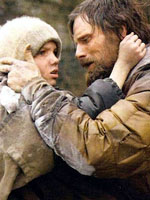
    (from left) Kodi Scott-McPhee and Viggo Mortensen in The RoadThis weekend I opened Cormac McCarthy’s Pulitzer-Prize winning novel “The Road.” For whatever reason –- fright perhaps -– I’d hadn’t read it before now despite accolades from critics and friends.

    In June, Guy Lodge wrote a thoughtful entry about Dennis Lehane and how his books have easily transitioned to the screen. He likened him to Jane Austen. Mr. Lodge accurately noted that “it seems the studios are snapping up his titles faster than he can write them.”

    And for good reason. “Mystic River” and “Gone Baby Gone” were exceptional (and successful) adaptations. “Shutter Island,” which will open in 2009 as “Ashcliff,” attracted the eye of Martin Scorsese along with an exceptional cast featuring Leonardo DiCaprio, Mark Ruffalo, Ben Kingsley, Emily Mortimer, Michelle Williams, Max Von Sydow, Jackie Earle Haley and Patricia Clarkson, to name a few. But I wonder if similar consideration might be given to Mr. McCarthy.

    John Hillcoat’s adaptation of “The Road” will hit theaters this November — just after thanksgiving. Unlike “No Country for Old Men,” the Coen brothers’ Academy Award-winning adaptation of the Cormac McCarthy novel, this film enters the market with far less fanfare. To date, it hasn’t screened for audiences or critics. It didn’t show at Cannes or Tribeca and, as of this writing, hasn’t been announced as part of the Toronto International Film Festival line-up.

    The film stars Viggo Mortensen, fresh off an Oscar nomination for “Eastern Promises,” David Cronenberg’s moody and dark film about the Russian mafia in London. Mortensen seems to have this genre down. While he was thrilling in Cronenberg’s haunting drama “A History of Violence,” the actor arguably made his name as Aragorn in those miserable elf movies from Peter Jackson. Five pages into the novel, his casting made perfect sense.

    In 2005, Hillcoat directed “The Proposition,” a brilliant western starring Guy Pearce and Ray Winstone. I found it to be one of the year’s best.

    “The Road” also stars Oscar winners Charlize Theron and Robert Duvall as well as Mr. Pearce and newcomer Kodi Smit-McPhee, an 11-year-old boy who might just steal the film. Charles McGrath, writing in The New York Times earlier this year, noted that screenwriter Joe Penhall is “for the most part extremely faithful” to the story.

    The Oscar season is crowded with adaptations of books and plays. “Revolutionary Road,” “The Reader,” “Doubt,” “Frost/Nixon,” “The Curious Case of Benjamin Button,” “House of Lies,” “Defiance” and “Miracle at St. Anna” are just a few. But if there’s such a thing as McCarthy fatigue, audiences may have it this year. Where “No Country for Old Men was violent and scary to a disturbing degree, “The Road” is – -210 pages in -– chilling and lonely. They are both beautiful works of literature, but how much stomach will the Academy have for another bleak story, particularly one set in a post-apocalyptic world?

    The critical success of “No Country for Old Men” may also work against Mr. Hillcoat. The Coens set the bar high — much higher than Billy Bob Thornton and Ted Talley when they adapted “All the Pretty Horses” in 2000. But I’m hoping that isn’t the case.

    Then again, if “The Road” isn’t enough to satisfy McCarthy fans and film lovers alike, in 2009 Ridley Scott will direct “Blood Meridian,” an adaptation of another one of his novels, with a script penned by William Monahan.

  • OFF THE CARPET: 2008, a year in advance

    Another year, another set of wins…and another look ahead at what’s in store NEXT year.

    It’s never too late to take a long gander at what we might see dominating the film awards landscape in 365 days, and with that in mind, I’ve been doing my usual mulling over the possibilities for a few weeks to put together the sadly thorough examination of the 2008-09 award season that follows. Let’s get into it. There are some major considerations to take into account. right off the top.

    Like Leonardo DiCaprio, for instance, who is set to be the entertainer of the year. With performances in “Body of Lies” (Ridley Scott) and “Revolutionary Road” (Sam Mendes), DiCaprio is working with a duo of awards-proven talent this year. Perhaps that will work against him, much like it did in 2006, and no major Oscar success will come knocking. But we’ll wait until we see the performances. Each of them could be enticing.

    This year’s Best Picture Oscar victor Scott Rudin is back again, by the way, with “Revolutionary Road,” recently inherited by Paramount Vantage and probably one of the true “frontrunners” this far out that we could put our finger on. The only other film in Vantage’s arsenal is Edward Zwick’s “Defiance,” which could simply be a commercial success, but might find its way to multiple nods like “The Last Samurai” and “Blood Diamond” in recent years.

    (more…)

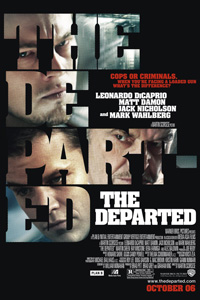
  • REVIEW: “The Departed” (****)

    Warner Bros. Pictures\' The DepartedOne of the most artistically ruthless films to be produced in decades, “The Departed” is a spike of adrenaline straight to the heart of an audience desperately in need of such rambunctious filmmaking.  A loose but paradoxically loyal remake of the Hong Kong thriller “Infernal Affairs,” the film is doused with a cast of familiar faces, each performer offering portrayals unique to anything in their respective repertoires.

    The script, tuned down to deafening perfection by screenwriter William Monahan, is as frenetic as director Martin Scorsese’s visual vernacular.  And the atmosphere, molded by Scorsese as if he were twenty years younger, is as saturating and penetrating as one could hope for out of a freewheeling, balls-to-the-wall entry in the cops and robbers genre.

    This is truly one of the best films of the year.

    Scorsese fell off his throne in the eyes of many when he began tackling epics like “Gangs of New York” and “The Aviator” in recent years.  Some felt the fixture of 1970s cinema was chasing awards glory in earnest and therefore watering down his artistic capabilities.

    Still, those films have much more to offer than most viewers allow, affording dense portraits of 19th century America and the unraveling world of Howard Hughes respectively.  But it admittedly goes without saying the director hasn’t been near the top of his game in well over a decade, and the worry was he might be slowing down.  With “The Departed,” that line of thinking flies right out the window.

    The story is one of deception and lies, the hardships of undercover life and the effect such particulars have on a human being.  The heights Michael Mann was aiming for in “Miami Vice” in this regard are cleared with considerable comfort by Scorsese’s effort.

    Leonardo DiCaprio stars as William Costigan, a good kid from a working class family who hopes to make a difference in the Massachusetts State Police.  But his superiors, Queenan (Martin Sheen) and Dignam (Mark Wahlberg), see through him immediately as just a kid playing the role of cop more so than living it.

    Undercover work in the Irish mafia, however, might be something up his alley.  After all, deception seems to be one of his outstanding qualities.

    Colin Sullivan (Matt Damon), meanwhile, is a young buck who was introduced to organized crime at an early age.  Presented as a surrogate son to Irish crime lord Frank Costello (Jack Nicholson), Sullivan also rises quickly through the ranks of the Boston Police Academy.  He is soon positioned as Costello’s mole on the inside, greasing the rails for the mob boss to live his evil and criminal life as he sees fit, without recourse or precaution.

    Leonardo DiCaprio in The DepartedAs the film pushes forward at an unforgivable pace, each respective mole becomes cognizant of the other’s existence.  The drama therefore introduces itself in the form of a race against odds (and in the most hair-raising of environments) for each to discover the other before their rapidly evaporating time expires.

    These are roles most actors spend a lifetime hoping to nail, but in “The Departed,” even the supporting elements are tough enough to chew and find significant flavor.

    Alec Baldwin, for instance, continues to tap into a post-Kim Basinger era of confident, sleazy, yet somehow appealing portrayals as Ellerby, an officer in charge of the building case against Costello.  Martin Sheen commands a father figure for DiCaprio’s Costigan with relative ease, while Mark Wahlberg sparks a curious foil to Sheen’s Queenan as a sharp-tongued Sergeant overseeing undercover operatives.

    Vera Farmiga adds another delicate and layered performance this year (along with work in Anthony Minghella’s “Breaking and Entering”) as Madolyn, a department psychiatrist who becomes involved with both Costigan and Sullivan.  And Ray Winstone fits comfortably into the mold as Costello’s right-hand man Mr. French.

    But DiCaprio and Damon’s front-and-center portrayals are what the film hinges on.

    Damon’s is a specific and moderately callous turn, one less merely villainous than it is antagonistic by necessity.  DiCaprio’s performance as Costigan, meanwhile, might be his most accomplished to date, or at least closely rivaling his work in “The Aviator” two years ago.

    An actor consistently relegated to the “pretty boy” column, DiCaprio proves time and again that he is a performer capable of reaching certain emotional depths that others in his generation can’t quite claim for themselves.  And though both of these performances are showcases for each actor, it’s still not enough to steal the show.

    If there is one thing audiences will be talking about regarding “The Departed” for years to come, it will be Jack Nicholson’s flagrant bloodlust and vicious insanity as Frank Costello.

    Costello is the vilest of human occurrences, a truly despicable creature whose sole purpose in the world is to rail against the status quo and push his own boundaries as far as he can to get the maximum stretch out of life.  As the character admits later on, “I haven’t needed the money since I took Archie’s milk money in the third grade.  I haven’t needed p***y either, but I like it.”
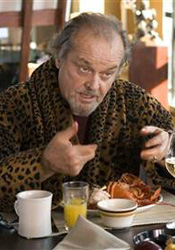
    Jack Nicholson in The DepartedIndeed, Costello is one of the true villains of the modern cinema, as morally filthy as he is fascinating.  And Nicholson wallows in the role like he was born to wear it, savoring every feral gaze and relishing every blood-splattered grin.  It might be his best work since “The Shining” 26 years ago, and a performance Academy voters are likely to eat right up like Ben Kingsely’s Don Logan in 2001’s “Sexy Beast.”

    William Monahan’s erratic screenplay is enough to give anyone an anxiety attack, but Scorsese plays the thing like a fiddle.  Utilizing a crew of usual suspects, the filmmaker finds the pulse of the tale in a hurry and never relents.

    Thelma Schoonmaker deserves awards consideration for piecing together parallel narratives while still implementing the greatest of techniques scene after scene.  Michael Ballhaus’s camera glides through each sequence and constructs time and space in a manner reminiscent of his work on “Goodfellas,” and most recently, Janusz Kaminski’s underappreciated efforts on Steven Spielberg’s “Munich.”

    And I can only hope theaters across the globe crank the volume up to the level it was at in the screening room on the Warner Bros. lot, because the soundscape of the film is as much a character in the tale as Costigan, Sullivan or Costello.

    But the real story of “The Departed” has to be Scorsese’s reclamation of his former relentless ways.  This is an effort that fills out a trilogy of sorts with “Mean Streets” and “Goodfellas,” further securing the director’s status as the greatest of urban film artists.

    What makes the accomplishment all the more appealing is the sense that Scorsese is a beast awakened, done with a slumber that appealed to some and still puzzled others.  “The Departed” is crafted like he just recently discovered the medium of cinema and all its wondrous possibilities, fresh out of film school and desperate to express himself.

    It’s energizing just thinking about it.

    And, like the best of Scorsese cinema, I expect “The Departed” could be largely ignored by the awards season outside of performance respect and potential craft consideration.  But it really doesn’t matter what happens to the film in the approaching Oscar derby, does it?

    This is as hard boiled as filmmaking can get, and it proves a talented director still has more finesse and spirited determination than half the industry around him.  So take note.  An old dog can teach as many new tricks as he can learn.