In Contention

Tag: Away from Her

  • INTERVIEW: Kristin Scott Thomas

    Kristin Scott ThomasWhen interviewing Kristin Scott Thomas, the woman who for many audiences represents the living portrait of English upper-crust serenity, Led Zeppelin isn’t exactly the first name you expect to crop up in the conversation. And yet, halfway through our Transatlantic chat, that is exactly what happens.

    “Seeing the guys, well into their sixties, just getting up on stage and doing their thing … it’s just so inspiring,” she says, referring to the British rock gods’ reunion concert that took place in London a year ago. “And spanning generations too — my son is into them. It’s a reminder that you don’t stop being interesting or relevant at a certain age. I’d love to do that.”

    As entertaining as the idea of Thomas belting out “Whole Lotta Love” to a screaming arena of thousands is, it’s a weirdly apt comparison. Where many actresses her age recede (albeit not usually by choice) into mumsy bit parts and dreary disease-of-the-week movies, Scott Thomas, now (incredibly) 48, has recently been taking on the most challenging, intriguing work of her career to date.

    As if to prove the point, she is speaking from New York, where she is tackling one of the theater’s greatest female roles in her first ever Broadway gig. Her witty, ferocious interpretation of Arkadina in Chekhov’s “The Seagull” earned her an Olivier Award for the play’s original London incarnation and is now garnering breathless raves Stateside.

    It’s her recent film work, however, that has made 2008 a banner year for the thesp. Two highly entertaining, highly contrasting supporting roles — as a worldly lesbian in the smash French thriller “Tell No One” and an icy matriarch in period comedy “Easy Virtue” — are mere appetizers to her staggering, career-peak performance as an introverted, grief-ridden ex-con, reconnecting with family and society alike, in Philippe Claudel’s superb debut feature “I’ve Loved You So Long.”
    (more…)

  • Thrilling Oscar nominees…when the Academy took a chance

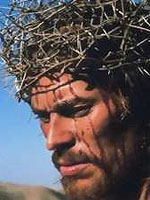
    Willem Dafoe in The Last Temptation of ChristI love it when the Academy steps out and provides us with a genuine shock that is so richly deserved you feel like weeping for joy that they got it…they really got it.

    For all the ranting I do about the Academy’s lack of vision, every so often they pull something out of the air that so defies the odds, so stuns the critics and Oscar forecasters, it is a hearty reminder that these people do love film.

    I think the first time I really stood and cheered a shocking inclusion was Martin Scorsese’s directing nomination for “The Last Temptation of Christ,” a powerful film that it took a great deal of courage to make, and an equal amount for the Academy to acknowledge given the storm of controversy the film faced upon release.

    I remember going to see “Last Temptation” on opening day and asking one of the men picketing the film what he had thought. “Oh I haven’t seen it,” he stated, “my church warned me against it.” It was a clear indication of the power of religion over the masses.

    Two years earlier I championed David Lynch’s being nominated for “Blue Velvet,” a dark and frightening film that Roger Ebert and Gene Siskel dissed at every turn. What would have made the year complete would have been a nomination for Dennis Hopper in the film as opposed to his supporting nod for “Hoosiers.”

    In 1998 as I cheered when Canada’s Atom Egoyan found his way to the Best Director list for his haunting “The Sweet Hereafter.”  The film had been named the year’s best by the Los Angeles Times and finished runner-up for Best Picture and Best Director in the New York Film Critics Circle voting. Not only was this a huge accomplishment for Egoyan, a uniquely gifted director, but for Canadian cinema.

    Just last year, Sarah Polley was nominated for her screenplay “Away From Her,” which also earned Julie Christie a nod for best actress. In my opinion Polley should have been a nominee for Best Director as well.

    I guess I wonder today, in this age of super Oscar campaigns, does the Academy really sit up and take notice of the daring work, or should most of the credit rest at the feet of savvy PR pushes?  I have to think, at least in a number of cases, it has to be the Academy.  The aforementioned films did not have the money to spend on any major campaign, of course.

    So that leaves me feeling good about the AMPAS and what they are doing, despite my moaning.  They are still watching and appreciating art in cinema, and the proof shines through form time to time.

    Any bold choices you can think of to celebrate?

  • Variety ponders the season at the mid-way point

    We’ve already been over what a thin year it’s been so far for Oscar candidates – or good films at all, for that matter. Now Variety has come to the same conclusion. In his mid-year awards-season study, Timothy M. Gray goes so far as to say that “the past six months have offered fewer potential contenders than any January-June period in memory,” and wonders if we’re seeing a return to the days when the Oscars were dominated by winter releases from the majors.

    Indeed, Gray only finds one title from the first-half of the year that he thinks has main category potential: Overture Films’ “The Visitor,” the prospects of which I discussed extensively yesterday. I’m not sure I’d boil down an entire half-year to a sole film (“In Bruges,” anyone?), but I agree that “The Visitor” has a real campaigning advantage:

    Keep an eye on Overture’s “The Visitor”: Lead actor Richard Jenkins has rightly earned awards buzz, but the film has many other virtues (Thomas McCarthy’s script and direction, the other performances, etc.). McCarthy, a talented actor in his own right, has crafted an actors’ movie — a character study with current-event concerns — that will play well on DVD, so late-year mailings could pay off.

    (Indeed, the more I think about the film’s position in the awards derby, the more it reminds me of a certain tiny spring release from last year: “Away From Her.”

    Looking forward into the rest of 2008, Gray ends up pondering most of the same questionmarks that we all are, including the following questions:

    Will the early buzz sustain for Disney-Pixar’s “Wall-E” and WB’s “The Dark Knight” and Heath Ledger?

    What effect will the Clint Eastwood double whammy — November’s “Changeling” and the December bow of Warner Bros.-Village Roadshow’s “Gran Torino,” in which he stars as well as directs — have on kudos? Similarly, Scott Rudin, who was in the winner’s circle with “No Country,” has two December openers — but will he have a third with “The Reader,” whose opening date is not yet set?

    Benicio Del Toro won Cannes’ actor award for Steven Soderbergh’s “Che,” but will it find a U.S. distrib this year and, if so, in what form will the two-part film be released?

    And then there are … other questions. In the last few years, the song category has been dominated by tunes that were production numbers (as opposed to those end-credit or background songs). So does this bode well for Disney’s “High School Musical 3” and Focus’ “Hamlet 2”? (If the song “It’s Hard Out Here for a Pimp” can win, there may be hope for the latter pic’s “Rock Me Sexy Jesus.”)

    (more…)

  • On the Candian cinema

    With the recent announcement of Paul Gross’s “Passchendaele” as the opening night film at this year’s Toronto International Film Festival (and honor traditionally handed to a Canadian endeavor), I thought I’d dedicate some space to the best of Canadian cinema.  But first, a history of sorts.

    Growing up in Ontario, Canada, I fell in love with cinema at a very young age. I loved watching those old Universal monster movies on Friday nights, or the Sunday afternoon Big Show of the Week, which was usually yet another showing of “Man of a Thousand Faces” or “Red River.” Essentially, I grew up on American films, and I believe American cinema is the most exciting on the globe.

    I say this as a Canadian who loves our national cinema, as a critic who has access to Canadian films that are often never released, and as a huge supporter of the Canadian film industry. As long as the government controls what is happening with the money that makes these films, we will never have as strong an industry as we could, and it will be forever difficult to get a film made in this country.

    Ask Sarah Polley, a national treasure and world-reknowned actress who struggled to get funds to make “Away from Her,” one of the best reviewed films of last year. The reason films get made at all is through government grants and funding. It is a dangerous catch 22.

    The first Canadian that mad an impact on me was “Goin’ Down the Road,” a wonderful picture made in 1970 by director Don Shebib (who attended film school with Francis Coppola). His picture was about Canadians, for Canadians made by Canadians and dealt with plights recognized by Canadians. But of course one did not have to be Canadian to enjoy it. In fact, the film played for more than a year in New York City in 1970 when films lasted longer than two months in theaters. More than the great documentaries from the National Film Board, this film seemed to announce to the world that Canada had a filmmaking community waiting to be unleashed.

    (more…)