 Venice Film Festival
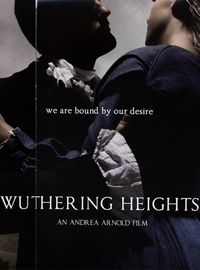
British filmmaker Andrea Arnold would have been 16 years old when Kate Bush topped the UK pop charts with “Wuthering Heights,” a swirling art-rock ballad that stripped the Emily Brontë novel for which it is named down to a few key lines and narrative details, but evoked its grand-scale tragic romance in more intuitive terms. In its wake, a new generation of schoolgirls clutched Brontë’s words tightly to their chests.
We can only speculate how Arnold came to the novel, but her bold, forbidding and impressively reconceptualized “Wuthering Heights” appears to take the Kate Bush course of adaptation: gutted of most of its words, with some choice ones added (I haven’t read it in some time, but I’m pretty sure Brontë didn’t write the line, “Fuck you all, cunts”), the novel serves as a theoretical starting point for an artwork that redraws the story with the most immediate sensory tools of its medium. This is a “Wuthering Heights” of weather and flesh and grass and locked eyes, one that has the simple common sense and staggering cinematic wherewithal to know that great adaptations don’t beat great writers at their own game; they play a new game entirely.
 “Why Venice and not Toronto?” a colleague asked when I mentioned I was heading to the Lido for the world’s oldest film festival for the third straight year. Given the North American bent of this site, it was a fair question, but also one I found easy to answer — and not just for the dully practical reason of relative airfare expense.
 These days, so much media speculation precedes the announcement of any major festival lineup that the eventual unveiling comes almost as an anti-climax — or at least it would do if the long-expected films weren’t so appetizing in the first place. As was the case with the Toronto lineup on Tuesday, the just-revealed programme for this year’s Venice Film Festival is as heavy on highlights as it is light on surprises, and that’s good enough for this Lido-bound journo.
 With precisely three weeks to go until Oscar nomination morning, we continue to flag up worthy work from 2010’s first half, much of it lost (or, indeed, never present) amid the crush of more recent awards contenders. You know the January-to-June drill by now: beyond that, we can get as far-fetched as we like.
 Michael Fassbender is unemployed.

 The British Independent Film Awards really spread the wealth this year, with only two films —
 You’ve heard me natter on enough for months about how
 I’ve already
 I
 It’s been a couple of months since I
 Edinburgh International Film Festival
 As it turned out, the most logical on-paper prediction turned out the be the right one. After emerging as the bridesmaid from several festivals past — winning the Grand Prix in 2001, Best Director in 2005 — the venerable Austrian auteur Michael Haneke has finally won the Palme d’Or for his stark moral drama “The White Ribbon.”
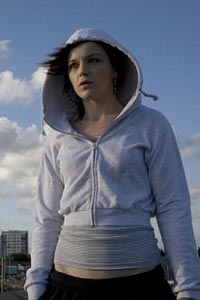
 Only two films in so far, but it seems we have a formidable contender for the festival’s top honors in the shape of Andrea Arnold’s “Fish Tank.” The film has just screened for the press, and Arnold — who won the bronze-medal Jury Prize in 2006 with her debut feature “Red Road” — has evidently built on that success, but it seems the real revelation is the film’s 17 year-old star, Katie Jarvis.
 With the Cannes Film Festival only two days away, it’s time to take a long hard look (or just a look, if you prefer) at the 20 films in contention for the Palme d’Or, a typically eclectic bunch married by only one factor: all but one are from directors who have been in the race before. (And people accuse the Oscars of playing favorites.)