 Venice Film Festival
An uncharacteristically dark Venetian downpour greeted this morning’s premiere screening of “Tinker, Tailor, Soldier, Spy,” and if some flashbulbs of lightning last night hadn’t already previewed the turn in weather, I’d suspect the pervasively, necessarily drab atmospherics of Tomas Alfredson’s artful John le Carré adaptation of bleeding out from the screen and into the beyond.
Looking for all the world as if the print has been stewed in black tea before being left to gather a few months’ worth of dust in the projection room — and that’s a good thing, I hasten to add — the film proves a happy marriage between two very different brands of understated precision: the British scholarliness of le Carré’s dense espionage lore and the icier Scandinavian calm that Alfredson brought to his breakout vampire drama, “Let the Right One In.”
In many ways, Alfredson directs le Carré’s self-described “little gray men” of Britain’s MI6 intelligence service as they are themselves vampires of the Cold War: lurking in irremovable half-light, striking efficiently and selectively, and only notionally acquainted with the concept of sunlight, these thickly-tweeded spies appear to bear the burden of their profession as a lifelong alibi for the avoidance of intimacy, social functionality and even standard-issue conversation.
 American viewers already frustrated about waiting two months longer than the Brits to lay eyes on Tomas Alfredson’s
 Cannes Film Festival
 Some categories haven’t had that much renewal since I last reviewed them. Best Original Score is an exception. Principally, this is because the category is very difficult to judge before hearing the scores, not to mention last minute personnel changes (as composers always seem to be the most disposable members of film crews).
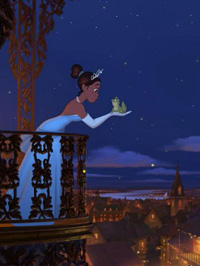 As long as humanity has been recording history, music has been immensely important in society. Not only can it be joyous and entertaining, but it can capture the mood and feel of a time and a place. Cinema has been no exception in this regard.
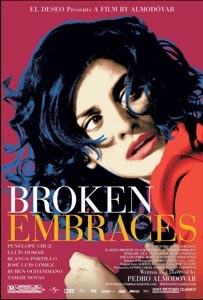 Mateo Blanco, the fictitious, sightless filmmaker who is both the ostensible hero of Pedro Almodóvar’s 17th feature film, “Broken Embraces,” and a highly refracted alter ego of Almodóvar himself, runs his career by one golden principle: “no sequels, remakes or biopics.”
 Brad Brevet over at Rope of Silicon has