In Contention

Category: Page to Screen

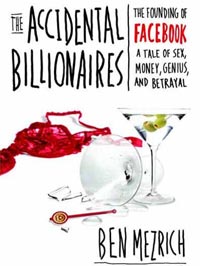
  • PAGE TO SCREEN: “The Accidental Billionaires” by Ben Mezrich

    (NOTE: This week’s Page to Screen text is the source material for David Fincher’s upcoming film “The Social Network.”)

    If, with its short, sketchy chapters and preponderance of surface-level description, Ben Mezrich’s “The Accidental Billionaires” resembles less a work of literary non-fiction than a treatment for a more substantially developed screenplay, that’s probably precisely what the author intended: after all, the movie rights to Mezrich’s thin, gossipy account of the birth of Facebook were snapped up well before he’d even finished writing it.

    Mezrich has turned this trick before: his 2003 bestseller “Bringing Down the House,” the story of a group of Massachusetts Institute of Technology students who managed to swindle millions out of top Las Vegas casinos, was recently turned into a reasonably profitable (if rapidly forgotten) film, “21.” Mezrich’s work certainly commands more respect from Hollywood than it does from literary critics.

    A former sci-fi author, Mezrich delights in fudging (and often blatantly fabricating) the facts in his non-fiction work: a disclaimer at the start of “The Accidental Billionaires” acknowledges that numerous “conversations and scenes [have been] recreated and compressed,” verbs that sound decidedly euphemistic by the time the writer is casually describing the interior thoughts of people he admits to never having met. (Mark Zuckerberg, the young Facebook founder at the center of Mezrich’s story, refused any meetings or interviews with the author, giving this already skimpily researched volume a distinctly lopsided perspective.)

    (more…)

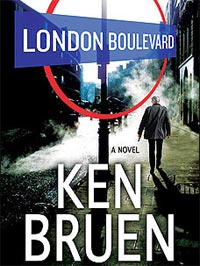
  • PAGE TO SCREEN: “London Boulevard” by Ken Bruen

    When Oscar-winning screenwriter William Monahan (“The Departed”) brings Irish crime writer Ken Bruen’s 2001 novel “London Boulevard” to screen in his directorial debut, he won’t be adapting the text so much as returning it to its natural source.

    A short, sharp, deliciously black-hearted thriller that reads not unlike a readymade screenplay in its brisk, dialogue-dominated prose, Bruen’s novel makes its debt to Hollywood clear not only in its construction (brief, propulsive chapters of only a couple pages’ length resemble individual cinematic scenes) and its assorted winking namechecks of bygone films and stars, but in its very conception.

    The title – not a location (locals will know that there is no London Boulevard in the British capital) but a metaphor of sorts – is our first clue to what Bruen is up to: the novel is itself an adaptation, and Billy Wilder’s gothic Hollywood noir “Sunset Boulevard” is the source material.

    The novel’s allusions to the 1950 classic aren’t exactly subtle. Where Wilder’s film gave us Joseph C. Gillis, a destitute L.A. screenwriter who seeks shelter in the mansion of faded movie goddess Norma Desmond to escape the repo man, “London Boulevard” crosses the Channel, jumps a half-century forward, and replaces Gillis with Mitchell, a middle-aged ex-con who dodges the ghosts of his past (and his own compulsive criminal urges) by shacking up in the plush Holland Park pad of Lillian Palmer, a washed-up theater diva plotting her triumphant West End return.

    (more…)

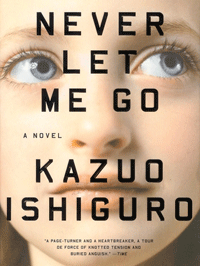
  • PAGE TO SCREEN: “Never Let Me Go” by Kazuo Ishiguro

    SPOILER ALERT: By necessity, this article must reveal some key plot developments of the novel, though no more than you might have gleaned from the film’s recent trailer.

    “(T)hough the tears rolled down my face, I wasn’t sobbing or out of control,” writes Kathy, the young female narrator of Kazuo Ishiguro’s 2005 novel “Never Let Me Go,” on its final page. She’d certainly be entitled to a good sob: over the course of 31 years and 282 pages, she has had the possibility of real life – with its attendant romance and independence and uncertainty – dangled in front of her, only to be unceremoniously denied at every turn, a Pinocchio figure resigned to eternal wooden form.

    That Kathy (to be played by Carey Mulligan in Mark Romanek’s upcoming film) remains so stoic and accepting in the face of even the novel’s most crushing revelations makes her very much of a piece with other Ishiguro protagonists; in many ways, she’s something of a modern-day sister (or daughter) to Stevens, the emotionally stunted butler later played by Anthony Hopkins in “The Remains of the Day,” the only other screen adaptation of the British-Japanese novelist’s work to date.

    Stevens denied himself feeling, but the disability of Kathy – and her classmates at Hailsham, the plush private college where they spend their entire childhood – is less autonomous than that: if her responses aren’t entirely human, it’s because she’s not entirely human herself.

    You may have heard “Never Let Me Go” described as a work of science fiction, and if you haven’t read it – and, say, are only going on the high-end, contemporary-set romance (albeit with mildly gothic overtones) of the film’s trailer – you could be forgiven for being a bit puzzled by that classification.

    (more…)

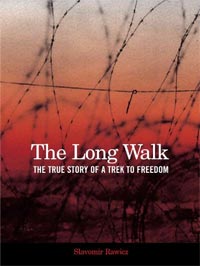
  • PAGE TO SCREEN: “The Long Walk” by Slavomir Rawicz

    In one of the year’s more groan-worthy feats of movie marketing magic, Disney recently slapped their plucky horse ’n’ housewife drama “Secretariat” with a paradox of a tagline in “The Impossible True Story.” No sooner had they done so than assorted sniggering blogger types responded with a perfectly reasonable question: if the story is impossible, how can it be true?

    That said, whoever ends up handling Peter Weir’s currently distributor-less “The Way Back” may rather wish they had bagged this ropey tagline first. Adapted from the ghostwritten 1956 memoir by Slavomir Rawicz, a former Polish cavalry officer and Gulag labor camp survivor, the film tackles a story that is indeed “impossible” in the Disney-dictionary sense – read: extraordinary – but also, to some extent, in the literal one: two years after his 2004 death, Rawicz’s account was entirely discredited by historians.

    In the book, following the 1939 invasion of Poland, a 25 year-old Rawicz is arrested, tortured and unjustly convicted of treason by the Soviets. Sentenced to 25 years’ hard labor in the remote Gulags of Siberia, he is placed in a POW chain-gang and subjected to a gruelling two-month journey northwards, whereupon the scarcely less arduous drill of prison life begins.

    (more…)

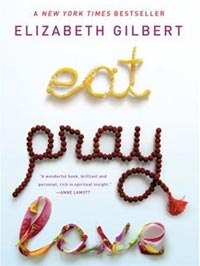
  • PAGE TO SCREEN: “Eat, Pray, Love” by Elizabeth Gilbert

    (Apologies for the delay in posting this column. Page to Screen will return to its regular Tuesday spot next week.)

    Chick-lit, the unflatteringly named brand of light confessional writing intended to universalize the problems of modern professional women, has been a beast of a publishing phenomenon since the near-simultaneous arrival on the scene of Helen Fielding’s “Bridget Jones’s Diary” and Candace Bushnell’s “Sex and the City” in the late 1990s.

    Marked by clear Transatlantic cultural differences, those volumes were nonetheless linked by their semi-autobiographical nature, their urban media milieu, a similar issue slate of sex, career, mild vice and the ongoing hunt for Mr. Right/Darcy/Big and a tone of chatty journalese – both, after all, were spinoffs of popular newspaper columns.

    They also have one other crucial thing in common: massively successful screen translations that continue to bear fruit. A third big-screen Bridget Jones outing is currently in the works, and you may have heard something about a film called “Sex and the City 2” this summer.

    In Fielding and Bushnell’s wake, then, have come a legion of female writers and journalists converting their personal experiences into bestseller status and swift deals with Hollywood: the success of such titles as “The Devil Wears Prada,” “Julie & Julia,” “Confessions of a Shopaholic,” and the male co-authored “He’s Just Not That Into You” hardly discourage the trend. (You could even argue for last year’s “An Education” as an arthouse twist on the formula.)

    (more…)

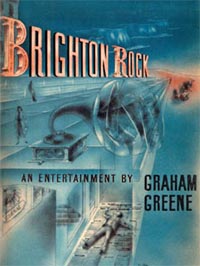
  • PAGE TO SCREEN: “Brighton Rock” by Graham Greene

    Welcome to 2010’s first installment of Page to Screen, our summer series in which I spotlight the source material behind some of the year’s most notable forthcoming adaptations.

    After a spectacularly prescient 2009 season – in which I blew my load over “Chéri,” largely dismissed the awards potential of “Up in the Air” and didn’t even notice “A Single Man” hovering in the wings – I’m all set to further prove the vast creative chasm that can lie between paper and celluloid, amplified by the fact that this year presently looks shorter on prestige literary adaptations than most.

    When in doubt, however, it is best to begin with a classic – and if there are many 2010 titles adapted from classier sources than Graham Greene’s 1938 novel “Brighton Rock,” I am not yet aware of them.

    “An Entertainment” is the rather perverse subtitle Greene attached to his novel on its initial publication, thus distinguishing it from what he regarded as more serious literary output; he could be as snootily blasé about his own oeuvre as a studio-dabbling auteur. Certainly, the descriptor isn’t unmerited: “Brighton Rock” is a tight, terse little underworld thriller, easily devoured in a single day of reading, with a blatant view, even then, toward the mainstream movie-house.

    (more…)

  • PAGE TO SCREEN: “Push” by Sapphire

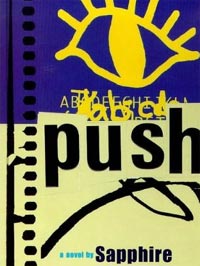
    Push by SapphireAs is clear from their determination to cling to the ungainly handle “Precious: Based on the Novel Push by Sapphire,” the team behind the upcoming big-screen adaptation of New York poet Sapphire’s well-regarded 1996 novella are keen to acknowledge the film’s literary heritage. (And not just because a lousy February release stole their original title.)

    It’s not surprising. “Push” was a minor publishing phenomenon in the 1990s that has since become a solid modern entry in the canons of both African-American and youth literature – the book wears its debt to Toni Morrison and Alice Walker proudly on its sleeve – so the film obviously wants to announce itself to Sapphire’s devoted readership.

    More subliminally, however, I suspect the film’s prominently advertised literary cache aims to differentiate it from any number of urban-leaning titles with similar themes but minimal artistic cred – and to lend it a varnish of prestige to awards voters wary of the subject matter.

    A glance at the bare-bones synopsis for “Push” or “Precious” – illiterate, physically and emotionally abused Harlem girl recovers sense of self-worth thanks to inspirational teacher – offers little indication of how the final work will be superior to Hollywood schlock of the “Dangerous Minds” ilk, or even Lifetime TV territory. (On the surface, this could easily turn into a facsimile of “Life is Not a Fairytale: The Fantasia Barrino Story,” minus the eventual fame and fortune.)

    (more…)

  • PAGE TO SCREEN: “Shutter Island” by Dennis Lehane

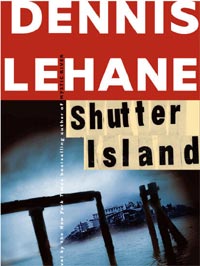
    Shutter Island by Dennis LehaneDeep into Dennis Lehane’s 2003 novel noir “Shutter Island,” there’s a wonderfully telling exchange between the two central characters. Reflecting on the gothic heights to which their situation has spiralled, one observes, “It’s all a bit Grand Guignol, don’t you think?” His partner’s reply: “I don’t know what the fuck that means.”

    Ostensibly a nod to class difference within the narrative, it’s also arguably a tongue-in-cheek dig at the novel’s self-reflexive straddling of high and low culture. “Shutter Island,” of course, is Grand Guignol of the highest order, but with an acute awareness of the term: steeped in references to throwaway pulp fiction and lurid 1950s B-movies, but written with the literary discipline and deference of a serious novelist.

    Needless to say, Boston-ish setting aside (and even then, “Shutter Island” goes to significant dramatic lengths to distance itself from the city), the novel is a very different beast from the two Lehane titles successfully given the screen treatment in recent years. For all their whodunnit trappings, “Gone Baby Gone” and “Mystic River” traded largely in earnest authenticity; “Shutter Island,” by contrast, hinges on artifice.

    Lehane has apparently stated his admiration for Graham Greene’s alternation between “novels” and “entertainments”: this, carefully wrought and quotation mark-enclosed as it is, is plainly his idea of a pure entertainment, a funhouse, a ride.

    (more…)

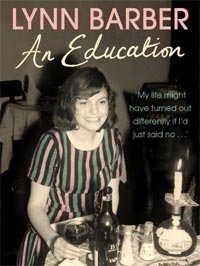
  • PAGE TO SCREEN: “An Education” by Lynn Barber

    An Education by Lynn Barber“I was damaged by my education,” writes renowned British journalist Lynn Barber at the end of the captivating centerpiece essay in her newly published memoir “An Education,” a sober conclusion to a personal account that otherwise brims with breezy anecdotal humor.

    The eponymous “education” is not academic, though she makes clear her lingering resentments over that too. Rather it’s an emotional – I’d say sentimental, but Barber treats it with too much venom for that – education, covering not only romantic and sexual instruction, but a deeper acquaintance with the betrayals and hypocrisies of adulthood.

    The ostensible antagonist of the piece is the older lover who courts and ultimately cons the naïve 16 year-old Barber, but it becomes clear that she is using this story as a lens through which to examine the failings of her own parents, who allowed – encouraged, even – the end of a schoolgirl’s innocence.

    It’s a forthright, often cruelly funny reflection that braids unconditional affection with anger, and it’s little wonder that producer Amanda Posey immediately saw its cinematic potential when the essay was published in literary magazine Granta in 2003.

    (more…)

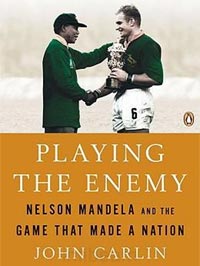
  • PAGE TO SCREEN: “Playing the Enemy” by John Carlin

    Playing the Enemy by John CarlinThere are few things as antithetical to great drama as an unmitigated hero, a character rendered almost inhuman by unfailing nobleness and valor. In fiction and non-fiction alike, we are inevitably more compelled by the flawed and conflicted of our kind – whether in lurid warts-and-all celebrity biographies or more subtly probing character studies. In film, true-life heroes often make for worthily sanitized Oscar bait (from “Gandhi” to “Milk”), but they rarely provoke great art.

    Few figures bear out this truth as handily as Nelson Mandela – a man who is surely the greatest political hero of our time, but who has nonetheless inspired a number of crashingly dull books and films. It’s not that the man wants for character or complexity: Mandela’s deserved (if artfully self-engineered) modern sainthood belies his early days as a fierce firebrand, but few biographies (and to date, no biopic) have bridged that gap, or made much of an attempt to study the man beneath the myth.

    So it comes as no surprise that John Carlin’s “Playing the Enemy,” which forms the inspiration for Clint Eastwood’s recently-titled film “Invictus,” does little to change this, casting the first black president of South Africa less as a freestanding character than as a perma-haloed symbol of democratic benevolence. Of course, in this instance, Carlin’s intent was not to write another Mandela biography – just as it should be stressed that Eastwood’s film isn’t really a Mandela biopic.

    In narrowing his focus to South Africa’s monumental victory in the 1995 Rugby World Cup, the currency of which extended beyond simple sporting patriotism to a kind of symbolic consolidation of the country’s international post-apartheid rehabilitation, Carlin’s aim is precisely to dehumanise Mandela to an extent. At the book’s core is the somewhat tenuous thesis that Mandela almost single-handedly enabled this against-the-odds triumph via an elaborately strategized charm offensive – though Carlin pays sporadic attention to Mandela the man, his chief interest lies in the mid-1990s invention of Mandela the brand, and the influence it could wield.

    (more…)

  • PAGE TO SCREEN: “The Lovely Bones” by Alice Sebold

    The Lovely BonesRemarkable cinema can be born of lesser literary source material, and vice versa. An arresting narrative hook can be enough for an adept screenwriter and filmmaker to fashion into an evocative cinematic vision; the artistry (or otherwise) of the prose is of secondary importance.

    Sterling cast and credentials aside, it is for this reason that I hold out much hope for Peter Jackson’s adaptation of Alice Sebold’s “The Lovely Bones,” a wildly popular novel that is nonetheless more exciting in its conceptualization than in its clunky execution. The novel offers bold visual and structural possibilities, not to mention a strong emotional charge, for Jackson and his collaborators to draw upon, but is weighed down by a maudlin, sometimes lurid literary sensibility that could benefit from the more interpretive route of visual storytelling.

    The story, in short, requires a subtler hand than Sebold’s to move into the realm of art; whether Peter Jackson, hardly the gentlest of directors recently, is the man for the job is something I’m intrigued to see. The Jackson of “Heavenly Creatures” could tease out the candid, often mordantly humorous tone that occasionally surfaces in the novel to good effect. The Jackson of “King Kong” risks drowning the delicate core narrative in effects-heavy supernatural dazzle, not unlike how Sebold ultimately smothers her story in spiritual bathos in an utterly unhinged final act. As a match of filmmaker and source material, it’s a double-or-nothing proposition.

    Perhaps that sounds unduly harsh on a debut fiction effort that has redeeming features beyond its overriding stylistic stickiness. Its essential gimmick – as you no doubt know, it’s narrated by the spirit of Susie Salmon, a murdered 14 year-old girl, observing how her family members variously handle the crisis on earth – is distinctive and immediate, and should translate well to film with judicious use of voiceover.

    (more…)

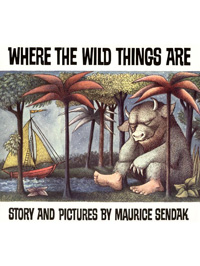
  • PAGE TO SCREEN: “Where the Wild Things Are” by Maurice Sendak

    Cover of Where the Wild Things Are by Maurice SendakOf all the literary adaptations reaching our screens this year, none is as seemingly impossible – and yet, simultaneously, rife with possibilities – as Spike Jonze’s long-awaited realization of “Where the Wild Things Are.” A work that occupies multiple positions within the popular culture pantheon – grade-school standard, highbrow literary classic, cult hipster item, fine-arts touchstone, pop psychology standby – it arguably nourishes a broader audience than any children’s text published since.

    As such, Jonze’s film has been complicated throughout by shifting lenses of expectation: as a family film perhaps more eagerly awaited by parents than their children, as a mainstream entertainment aiming to appease art house mavens and indie kids, it is essentially required, like its literary source, to be all things to all people.

    His own artistry notwithstanding, Sendak achieved such catholic appeal through the sparseness of his approach. With a narrative of fewer than 400 words – not even half the length of this very article – “Where the Wild Things Are” is an exceptionally porous feat of storytelling that accommodates a wide range of interpretations and identifications from the reader. It is plainly a metaphor-driven story, yet there isn’t enough text to articulate or prescribe the symbolism that is otherwise so lavishly illustrated.

    Sendak employs minimalism to expansive effect: the unadorned narrative allows the imagination to  roam, enabling the reader to take only what s/he wants from the story. Yet a literal reading thereof – such as may be absorbed by younger readers – is no less compelling in terms of tension and atmospherics, than one more interpretive.

    (more…)

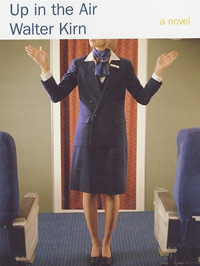
  • PAGE TO SCREEN: “Up in the Air” by Walter Kirn

    Cover of Up in the Air by Walter Kirn“Airworld” is novelist Walter Kirn’s term for the impermanent realm of regional American air travel, a sleek network of bland local airports and adjacent beige hotel rooms, linked by the plush grey trails of business-class flights. It forms the scattered but otherwise constant home to thousands of American corporate drones, and is the simultaneously alien and mundane setting for “Up in the Air” – soon reaching your screens courtesy of writer-director Jason Reitman and star George Clooney.

    Droll, dry and ultimately rather heartless, it’s clear that Kirn (“Thumbsucker”) positioned his novel as a kind of “Bonfire of the Vanities” for post-millennial readers, a work that diagnoses the ills of corporate America and chimes in with a wider sense of social malaise.

    The novel, however, had the misfortune of hitting the shelves shortly before the events of 9/11 forever shifted the rules of his own Airworld. By the time it appeared in paperback, not only had Kirn’s milieu rapidly dated, but few readers were keen to enter that territory, and “Up in the Air” never took off as was perhaps intended.

    Whether by accident or design, Reitman’s adaptation of the novel also comes along at a time when the material couldn’t be more touchily topical, albeit for different reasons. Its anti-hero of sorts is Ryan Bingham, a 35 year-old human resources exec and first-class Airworld citizen, whose field of expertise is “Career Transition Counseling” – in other words, someone brought in by companies to tactfully fire employees, a self-proclaimed Grim Reaper to white-collar America.

    It’s a nervy subject for a feature film in the midst of a global economic recession that is providing plenty of business for men like Bingham, if few others; but whether audiences will be any more willing to embrace this than they were Kirn’s novel remains to be seen, and will largely depend on the warmth and lightness of touch Reitman and his universally liked leading man can bring to the material.

    (more…)

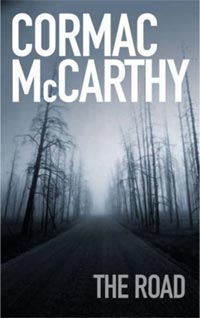
  • PAGE TO SCREEN: “The Road” by Cormac McCarthy

    The RoadWe’re working from the outside in on this one, folks. You may recall that Brian Kinsley offered a thorough examination of Joe Penhall’s “The Road” screenplay for this column back in September last year, which already addressed many of the challenges inherent in this particular adaptation.

    However, in keeping with Page to Screen’s return to discussing source material rather than scripts – and with John Hillcoat’s film on a lot of people’s minds this week – I thought it a good time to take another look at Cormac McCarthy’s much-garlanded novel. I should specify that I have neither read Penhall’s adaptation nor seen the film; the novel is the only text with which I am engaging at this point.

    It seems only fair to start with a blunt, and admittedly very guilty, confession: I don’t very much like McCarthy’s novel.

    Before the irate attack begins, let me clarify that this statement is not in any intended as a challenge to “The Road’s” literary worth, much less its potential for successful filmmaking. It is, in its paradoxical construction of loose, virtual shaggy-dog-style narrative and terse, urgent prose, an indisputably awe-inspiring novel, one that at once gazes into the back-to-back mirrors of who we are and who we will be, and arrives at some discomfitingly vivid prophecies in the process.

    I commend McCarthy’s avoidance of didacticism and rationalisation: the novel’s grim, apocalyptic future is presented as a terrifying inevitability rather than a cautionary allegory, offering no concrete indication of what led humanity to the long-desecrated point at which the narrative begins.

    That may not make the novel as ideologically constructive as the kind of “it takes a village” finger-pointing that colors so many other literary and cinematic warnings of man’s imminent self-destruction – the film, when it finally arrives, would surely make for an interesting double-feature with Andrew Stanton’s “WALL-E” – but it is certainly a much more jolting, unnerving experience for it.

    (more…)

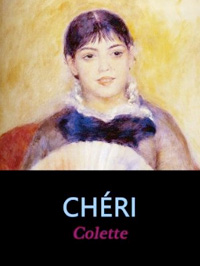
  • PAGE TO SCREEN: “Chéri” by Colette

    Cover of Cheri by ColetteMerely casual acquaintances of French literature will likely associate the name Colette with her short story “Gigi” – or rather, the flouncy musical film adaptation thereof that swept the board at the 1958 Academy Awards. A sunny, sanitized interpretation of an intricate study in sexual politics, it captured the author’s sensibility in its lavish set-dressing, but little else.

    I doubt 1950’s Hollywood would have known where to begin with “Chéri,” a darker portrait of the louche demimonde of Parisian courtesans – and we are close to finding out if they do even now. Certainly, those who approach the novel with the jolly peals of laughter from the meringue-light trailer for Stephen Frears’ upcoming film still ringing in their ears, may be taken off-guard by the elegiac, often cruel comedy of manners that awaits them.

    Though “Chéri” is a slender, subtle volume, it’s easy to see what drew Frears and screenwriter Christopher Hampton to the material. Much like their previous collaboration, 1988’s “Dangerous Liaisons” (and other Hampton works such as “Atonement” and “Total Eclipse”), this is a story of sexual awakening gone awry — which is not to say that the novel lacks for romance. Amid the rueful cynicism lies a rather tender love story between two people who only realize they are in love a full six years into their relationship.

    The affair between Fred, an aimless 25 year-old dandy known to all by his family nickname Chéri, and Léa, a wealthy courtesan twice his age, is introduced in the novel as a pragmatic transaction: the beautiful yet increasingly insecure Léa feeds vicariously off her lover’s youth, offering material rewards and a sexual (if not sentimental) education in exchange.

    As such, “Chéri” is truly a coming of age story, a gender-reversed “Pygmalion” even, in which an older, more worldly woman grooms a boy for marriage, before releasing him into gentlemanly society. The twist comes when, the ink barely dry on the certificate of his marriage to sweet, shy debutante Edmée, Chéri discovers that carnal and sensual affections are not merely transferrable between different women. Léa, meanwhile, having undertaken this schooling for multiple men in her career and living by the philosophy that “being disinterested is its own reward,” realizes that she’s more emotionally invested in Chéri’s maturation than she knew at the time.

    (more…)

  • PAGE TO SCREEN: “Che” by Peter Buchman

    Page to Screen at In Contention“To the people of Santa Clara, this is Commandant Che Guevara. The enemy would have us live in fear. But it is they who should be afraid. Because the power of the people is irresistible. Blockade the streets. Open your homes to rebel soldiers. And if you have a gun, pick it up. If there was ever a time to fight for your liberty, that time is now.”

    Consider myself a former believer in the church of Steven Soderbergh. When the director won his much deserved Oscar for “Traffic” I thought for sure we were seeing the emergence of one of the most important American directors in quite some time. And then what happened? The movies he was making — the “Ocean’s” trilogy, “Bubble,” “The Good German” and more — all sounded so interesting and promising on paper, and in the opinion of this writer, all ended up entirely soulless and lacking.

    So I have been cautiously anticipating the Che Guevera one-two punch of “The Argentine” and “Guerrilla.” You’ll have to forgive me (but I’m sure you’ll understand) if I certainly wasn’t in anticipating Peter Buchman’s scripts. He debuted with “Jurassic Park III” (how the hell do you get to start your career with a “Jurassic Park” movie?!) and followed it up with the excruciating “Eragon.” Not exactly the man I’d select for this task, to be certain.

    But thankfully, “The Argentine” and “Guerrilla” — collectively, “Che” — are far superior works than Buchman’s previous two scripts. What we have here are handsomely crafted pieces that are easily malleable for a director like Soderbergh to reconstruct the way he wants, which according to the reviews I’ve read, seems to be exactly what he’s done. Scenes from “Guerrilla” appear in the first half of the film (what I presume will be “The Argentine” section), predominately Guevera’s famous speech at the United Nations in New York City.

    (more…)

  • PAGE TO SCREEN: “Gran Torino” by Nick Schenk

    Page to Screen at In Contention“I didn’t buy all this stuff blockhead.  I’ve lived here for fifty years.  A man stays in one place long enough he tends to attract a decent set of tools.”

    There are a lot of admirable things about “Gran Torino,” a simple yarn precariously told by screenwriter Nick Schenk.  It wallows unforgiveably in the bigotry of its central character, Walt Kowalski (to be played by Clint Eastwood), pushing that boundry to laughable distances at times.  But thematically, it works.

    Walt hates gooks, chinks, slopes, call the Asians who’ve moved onto his block what you will.  He’s a Pabst-chugging, VFW-trolling, inner-child- and soft-undberlly-suffocating ex-military man with a chip on his shoulder for religion and a dysfunctional relationship with his children.  He’s pretty standard, by all indications.

    We come into Walt’s life at the funeral for his deceased wife, Dorothy, and we’re given the immediate indication that this won’t be a weeping widower.  Walt looks on as a fresh-faced preacher hangs a string of fancy words out over the crowd, and in ironic disgust he can only mutter, “Jesus.”

    When a Hmong family moves next door, it seems to be the last straw for Walt, who has watched the neighborhood’s decline for a number of years.  His house is pristine amid the rubble of homes unkempt by their Asian inhabitants, so it’s one more log for his racist fire.

    The thematic thread woven into the character from the start is Walt as the fixer.  A former Ford employee of 30 years, Walt’s prized posession is the 1972 Gran Torino sitting under a tarp in his garage.  He has a tool collection to rival a small construction outlet and is persistent with maintenance and upkeep.  The tendency drifts to the people in his life as well, always finding a solution to whatever he perceives as a problem.  It’s the workhorse in him — even if, ultimately, he won’t be able to fix himself.

    (more…)

  • PAGE TO SCREEN: “The Road” by Joe Penhall

    Page to Screen at In Contention“You think I come from another world, don’t you? Filled with all these strange things you’ve never seen…Well I do, I guess.”

    Cormac McCarthy’s “The Road” debuted last year to one of the biggest literary love fests in recent memory. From Oprah to Pulitzer, the author had one hell of a year, not to mention the Golden Globe- and Oscar-winning adaptation of “No Country for Old Men.” And so, after failed attempts like “All The Pretty Horses” (still one of my picks for director’s cut I want to see the most), McCarthy’s books are hitting the film world hard. Adaptations are coming from Todd Field and Andrew Dominik, and in just a few months, “The Road” hits screens from director Joe Hillcoat (he of the fantastic “The Proposition”) and screenwriter Joe Penhall.

    And rest assured, fans — from the looks of this script, you have very little to worry about.

    A quick catch-up for those who don’t know what “The Road” is about: It’s a post-apocalyptic world. Character names are omitted, leaving mere pronouns as items of identification. A man (to be played by Viggo Mortensen) and his son (Kodi Smit-McPhee) make their way toward the coast, hoping to find warmer weather in the desolate despair that surrounds them. The script is as sparse as the book; I honestly couldn’t tell you if there was a single scene added.

    Much has been made about the enlarged role of the man’s wife (Charlize Theron), but that really only adds up to a good cameo for Theron, each scene meatier than the last. Theses were the few sequences that seemed new to me, flashbacks of events before whatever terrible event took place, quite subtle and unassuming. No dialogue, no big moments, just a couple in love going through their routine lives, enjoying each other.

    These sequences, told from The Man’s perspective, add to the heroism of the character. However, the argument could be made that The Wife still comes across as difficult to like and even easier to hate, for reasons that would be spoilerific if you’ve not read the book. I’m sure Theron will bring her A-Game to the role (in a weak year, it’s a definite contender for a supporting actress nomination, based solely on the fact that every scene she has is a perfect contender for an Oscar clip), but I wished I could sympathize with her just a little on the page.

    Along the road our duo meets a variety of folks, including more good cameo time for Robert DuVall and Guy Pearce toward the film’s conclusion. While their parts are fine and good, I can’t help wondering if their casting will be more distracting than helpful (neither character has more than five-to-10 pages).

    The bigger encounters The Man and The Boy face are much more horrifying and emotionally wrenching, chief among them being an ungodly terrifying scene in which the two stumble upon a group of cannibals and the dying humans they eat alive in their basement. I was sweating just reading these pages (as I was in the book), and it has the potential to be one of the most nerve wracking sequences in film history. It’s moments like this that make me wonder about the film’s Oscar prospects. These scenes are pitch black and hopeless, and much more in the horror vein than any Oscar-bound movie that I can remember, including “The Silence of the Lambs.”

    The movie’s secret weapon, and the root of whatever failure and sucess it might face, is the casting of The Man and The Boy. I’ve never seen Kodi Smit-McPhee in anything, but needless to say if he pulls off the role, it’s impossible to imagine him not garnering an Academy Award nomination. It’s the type of role that is the only legitimate threat to Heath Ledger in my opinion.

    Whereas Ledger’s performance is one of showmanship and iconography, Smit-McPhee has the opportunity to pull heart strings and in a non-cloying or baity way to boot. Just like people were reduced to puddles reading the book, I imagine the film could play out in the same fashion, and that really rests squarely on this young man’s shoulders.

    Luckily for Smit-McPhee, one of our greatest actors shares every scene with him. Viggo Mortensen is perfectly cast. Was anyone even surprised when he was announced as The Man? It’s a challenging role for any actor, but one can’t help but see it as something as a culmination of the excellent work he’s been doing since appearing in that little fantasy film a few years ago.

    There’s real pain and bravery to The Man, a character whose sole existence is to take his son closer to a better life one step at a time. It’s a beautifully written role (again, like always, we have McCarthy to thank for that) and it’s hard seeing Mortensen not receive his second nomination in two years. It’s the type of role AMPAS dies to award, a family hero, deglamed, beloved actor, etc., and Mortensen has been quietly building up his reputation year after year. With three films this year to support his campaign, I’d have to say you’d be pretty ignorant to vote against his odds at this point.

    A potential downfall of “The Road” could simply be that it lacks the beautiful wordplay of McCarthy. Some of the great lines, “If he was not the word of God, then God had never spoke” or “There is no God and we are his prophets” are not present, and I’m sure that’s bound to disappoint the loyalists. Personally, I didn’t mind it so much. “The Road” is an incredibly faithful adaptation that is more than just a cut-and-paste rehash of the book. Joe Penhall has clearly taken the time and care to craft the story into as livid an adaptation as possible.

    As a big fan of the novel, I guess I can say that my fears have been laid to rest. While the success of the film on the screen lies in the work of the actors, at least we can rest assured that they’ll be working from a damn fine piece of writing.